
Course Description
This course will offer a history of books in Korea since 700 CE, with contextual reference to developments in China and Japan, and to parallels in the West. We will cover the conception, production, transmission, and consumption of traditional Korean books, as well as western-style books published in the period of transition to the modern era. Key topics will include but not be limited to: economic factors underlying woodblock printing and type casting; government, religious and commercial publishing; questions of authentication and cataloguing; texts and paratexts; book illustration; libraries and collections; and the history of scholarship on Korean books and manuscripts.
In this course, we will examine the material qualities of Korean books, the impetus to book production caused by the adoption of Buddhism on the Korean peninsula, and the remarkable survival of the Tripitaka Koreana at Haein Temple. As part of our discussion of printing technologies, we will address experimentation with cast metal types for printing during the Mongol occupation of the thirteenth century. We will also explore the remarkable printing enterprises of the fifteenth-century kings of the Chosŏn dynasty, who enthusiastically edited and printed distinctive books in their effort to reform the country’s government and culture. Court records, including the distinctive Korean ŭigwe ritual manuscripts and printed books, will be described and examined, along with practical and recreational books used by the scholar officials who served in the capital and around the country. These include maps, medical texts, encyclopedias, dictionaries, novels, and technical manuals.
The unusual history and features of the invented Korean script known today as Han’gŭl will be discussed using Chosŏn period books that comprise both Chinese characters and Korean script. The coming of the outside world to Korea in the 1880s introduced new ideas and new printing practices, often associated with Christian missionaries, which will be introduced with examples.
In addition to describing the physical aspects of traditional Korean books and their evolution over many centuries, books as bearers of text and transmitters of knowledge will be introduced in the context of Korea’s complex history. Visual images and actual specimens, including rare books and facsimiles from the outstanding collections of the Harvard-Yenching Library, will be used to reinforce presentations and stimulate discussion.
This course is intended for anyone interested in the cultural history of the book in East Asia, and is especially suitable for persons knowledgeable of other book cultures. Required readings are all in English and knowledge of Korean, Chinese, or Japanese is not necessary. Advanced readings in languages other than English will be made available to anyone requesting them.
Faculty
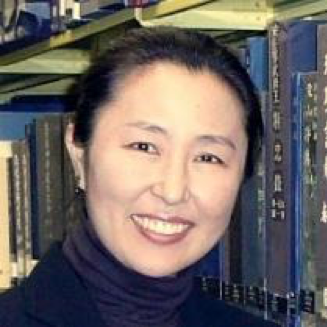
Mikyung Kang
Mikyung Kang is Librarian for the Korean Collection at the Harvard-Yenching Library, Harvard University, where she develops the Korean language collection, provides in-depth reference and consultation services, and conducted library …
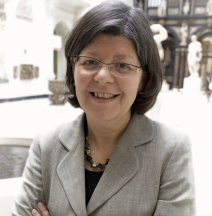
Beth McKillop
Beth McKillop’s career began at the British Library, where she was curator of Chinese and Korean collections. In 2004 she moved to be Keeper of the Asia Department at the …
Advance Reading List
Preliminary Advices
Please note: Some readings will be made available to admitted students via Dropbox.
Required Reading
Fujimoto, Yukio. “Old Korean Books Preserved in Japan.” The Memoirs of the Toyo Bunko 69 (2011): 1–17.
Ok, Young Jung. Early Printings in Korea. Seongnam: The Academy of Korean Studies Press, 2013.
Pak, Youngsook. “Goryeo Illuminated Buddhist Scriptures: Transmission of Text and Images.” In Goryeo Dynasty: Korea’s Age of Enlightenment, 918–1392, edited by Tom Christensen, 95–105. San Francisco: Asian Art Museum, 2003.
Park, Byeng-Sen. Korean Printing From its Origins to 1910. Seoul: Jimoondang, 2003.
Sohn, Pow-key. Early Korean Typography. Seoul, n.p., 1982.
Song, Minah. “The History and Characteristics of Traditional Korean Books and Bookbinding.” Journal of the Institute of Conservation 32:1 (2009): 53–78.
Tsien, Tsuen-Hsuin. Paper and Printing. Joseph Needham, Science and Civilisation in China, vol. 5, pt. 1. Cambridge: Cambridge University Press, 1985 (Third printing, revised 1987, and later printings). Read pp. 319–331 and other sections relating to Korea.
Note: the three essays below are conveniently available in Michael F. Suarez, S.J. and H. R. Woudhuysen, eds. The Book: A Global History. Oxford: Oxford University Press, 2013 (pp. 573–621).
McKillop, Beth. “The History of the Book in Korea.” In The Oxford Companion to the Book, edited by Michael F. Suarez, S.J. and H. R. Woudhuysen, 366–373. Oxford: Oxford University Press, 2010.
Edgren, J. S. “The History of the Book in China.” In The Oxford Companion to the Book, edited by Michael F. Suarez, S.J. and H. R. Woudhuysen, 353–365. Oxford: Oxford University Press, 2010.
Kornicki, P. F. “The History of the Book in Japan.” In The Oxford Companion to the Book, edited by Michael F. Suarez, S.J. and H. R. Woudhuysen, 375–385. Oxford: Oxford University Press, 2010.
Recommended Reading
Chong, Hyung-u. “Kim Chong-ho’s map of Korea.” Korea Journal 13:11 (1973): 37–42.
Courant, Maurice. Bibliographie Coréenne. Paris, 1894–1901. Four volumes. Available online via HathiTrust: Volume 1, Volume 2, Volume 3, Supplément.
Courant, Maurice. “Introduction to Courant’s Bibliographie Coréenne.” Translated by W. Massy Royds in Transactions of the Korea Branch of the Royal Asiatic Society XXV (1936): 1–100.
Kim, Man-jung. “A Nine Cloud Dream.” In Virtuous Women: Three Classic Korean Novels: A Nine Cloud Dream, The True History of Queen Inhyŏn, The Song of a Faithful Wife, Ch’un-hyang. Seoul: Royal Asiatic Society, 1983 (third printing).
Kim, Won-young. Early Moveable Type in Korea. Seoul, National Museum of Korea, 1954.
Kim Haboush, JaHyun. “Creating a Society of Civil Culture: The Early Joseon, 1392–1592.” In The Art of the Korean Renaissance, 1400–1600, edited by Soyoung Lee, 3–13. New York, Metropolitan Museum of Art, 2009.
Kim Haboush, JaHyun, trans. The Memoirs of Lady Hyegyŏng: The Autobiographical Writings of a Crown Princess of Eighteenth-Century Korea. Berkeley: University of California Press, 1996 (second edition, 2013).
Kim-Renaud, Young-Key, ed. King Sejong the Great: The Light of 15th Century Korea. Washington, D.C.: International Circle of Korean Linguistics, 1992.
Kornicki, Peter Francis. Languages, Scripts, and Chinese Texts in East Asia. Oxford: Oxford University Press, 2018.
Ledyard, Gari. “Cartography in Korea.” The History of Cartography Volume 2, Book 2, edited by J. B. Harley and David Woodward, 235–345. Chicago: University of Chicago Press, 1987.
Lee, Ki-baik. A New History of Korea. Translated by Edward W. Wagner and Edward J. Schultz. Cambridge: Harvard University Press, 1984 and later editions.
McGovern, Melvin. “Early Western Presses in Korea.” Korea Journal 7:7 (July 1967): 21–23.
McGovern, Melvin. Specimen Pages of Korean Movable Types. Dawsons Book Shop: Los Angeles, 1966.
National Museum of Korea. Book Culture of Korea, Hanguk-ŭi chaek munhwa. Seoul: The Museum, 1993. Exhibition catalogue in Korean with English caption translations and summary.
Oh, Young Kyun. Engraving Virtue: The Printing History of a Premodern Korean Moral Primer. Leiden: Brill, 2013.
Pal, Pratapaditya and Meech-Pekarik, Julie. Buddhist Book Illuminations. New York: Ravi Kumar Publications, 1988. Read chapter 6, “China and Korea.”
Pratt, Keith and Richard Rutt. Korea: A Historical and Cultural Dictionary. Richmond: Curzon Press, 1999 (also London: Routledge, 2013).
Shin, Michael D., ed. Korean History in Maps: From Prehistory to the Twenty-First Century. Cambridge, Cambridge University Press, 2014.
Sohn, Pow-key. Early Korean Printing. London: Victoria and Albert Museum, 1984.
Sohn, Pow-key. “Invention of the Movable Metal-type Printing in Koryo: Its Role and Impact on Human Cultural Progress.” Gutenberg Jahrbuch 73 (1998): 25–30.
Course Evaluations
Course History
-
2020–
Mikyung Kang and Beth McKillop co-teach this course.
-
2019
Beth McKillop teaches this course.