
Course Description
Length: 10 hours Format: Online This course will explore the history of textual technologies in the region now referred to as Spanish America, from the pre-contact period to the colonial period (c. 300 BC to c. 1700 AD). The framework of “textual technologies”—as opposed to “the book”—encompasses the variety of material modes of writing and recording employed before and after 1492. We will cover a broad range of topics, from stone inscriptions and painted texts on artifacts of a variety of materials to knot-tying, writing with ink on linen paper, and manual printing on the moveable-type press. This online course is a condensed version of a longer in-person course to take place at The Latin American Library (LAL) at Tulane University in New Orleans in 2022. Among the central questions the course will explore are: How did the diverse cultures of Spanish America—both pre- and post-contact—materialize sacred texts, histories, genealogies, tributes, cartographies, geographies, accountings, and politics? How have scholars historically categorized, classified, and interpreted Latin American writing, texts, maps, and books, and in what ways have Eurocentric epistemologies influenced and inhibited these conceptualizations? How did cross-cultural encounters figure in Latin American textual technologies, and what frameworks and theories have been used to account for the text as site of contact? What social and political roles did Latin American textual technologies play in different temporal and geographic contexts? The course will leverage the rich special collections and archives of the LAL. Readings and discussions will revolve around such highlights as rubbings of Maya monuments and stelae; original and facsimile Mesoamerican painted manuscripts and maps; American incunabula (1559–1600) and early imprints from other countries in the region; early Spanish American notarial, administrative, and ecclesiastical manuscripts; and early European imprints about the Spanish Indies. There are few repositories in the United States with such a range and depth of materials to study the history of the Latin American text. This course will mix a variety of pedagogical approaches such as lectures, group discussions, and small-group analysis of rare materials. A reading knowledge of Spanish is desirable, but not required. Please note that most of the rare books and manuscripts we will be working with will be in Spanish and Indigenous languages of the Americas. Secondary readings will be in English and Spanish. Click here to view the course description for the in-person version of this course, “Spanish American Textual Technologies to c.1820.”Faculty
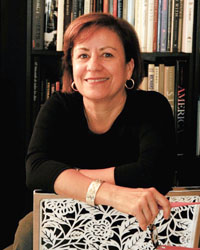
Hortensia Calvo
Hortensia Calvo has been the Doris Stone Director of The Latin American Library at Tulane University since 2003. She holds a Licenciatura in Philosophy from the Universidad de Los Andes …
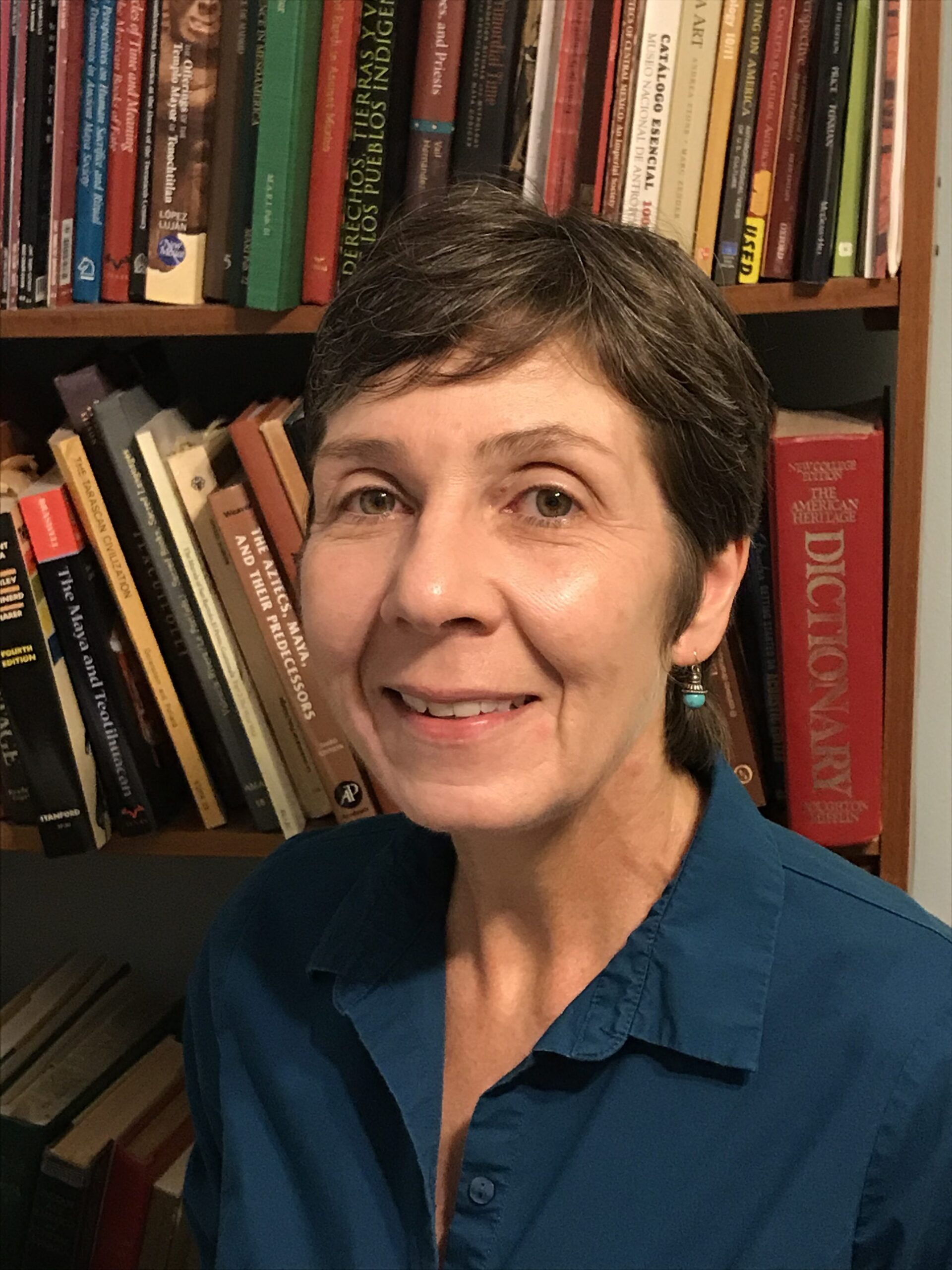
Christine Hernández
Christine Hernández serves as Curator of Special Collections of The Latin American Library at Tulane University and has coordinated digitization initiatives at The Latin American Library since 2012. She received …

Rachel Stein
Rachel Stein has been Research & Instruction Librarian at The Latin American Library at Tulane University since 2018. She holds a Ph.D. in Latin American and Iberian Cultures from Columbia …
Advance Reading List
Readings
Aveni, Anthony. “Mesoamerican Mathematics.” Mesolore, Brown University, http://mesolore.org/scholars/lectures/19/Mesoamerican-Mathematics-by-Anthony-Aveni
Boone, Elizabeth Hill. “History and Historians.” Stories In Red and Black: Pictorial Histories of the Aztecs and Mixtecs, 13–27. Austin: University of Texas Press, 2000. https://hdl.handle.net/2027/heb.33637
Boone, Elizabeth Hill. “Writing in Images.” Stories In Red and Black: Pictorial Histories of the Aztecs and Mixtecs, 28-63. Austin: University of Texas Press, 2000. https://hdl.handle.net/2027/heb.33637
Calvo, Hortensia. “The Politics of Print: The Historiography of the Book in Early Spanish America.” Book History 6 (2003): 277–305.
Chocano Mena, Magdalena. “Colonial Printing and Metropolitan Books: Printed Texts and the Shaping of Scholarly Culture in New Spain, 1539–1700.” CLAHR: Colonial Latin American Historical Review 6, no. 1 (1997): 69–90.
Escalona, Enrique, dir. Tlacuilo. 1988. https://www.youtube.com/watch?v=jB-V_vDReNM&t=8s
Guibovich Pérez, Pedro. “The Printing Press in Colonial Peru: Production Process and Literary Categories in Lima, 1584–1699.” Colonial Latin American Review 10, no. 2 (December 2001): 167–88. https://doi.org/10.1080/10609160120093769
Hamann, Byron. “Mesoamerican Screenfolds.” Mesolore, Brown University, http://mesolore.org/tutorials/learn/10/Mesoamerican-Screenfolds
Rappaport, Joanne, and Tom Cummins. Introduction to Beyond the Lettered City: Indigenous Literacies in the Andes, 1–26. Narrating Native Histories. Durham: Duke University Press, 2012.
Vail, Gabrielle, and Christine L. Hernández. Introduction to “Part III: Archaeoastronomy, Codices, and Cosmologies” in Astronomers, Scribes, and Priests: Intellectual Interchange between the Northern Maya Lowlands and Highland Mexico in the Late Postclassic Period, 263–78. Washington, DC: Dumbarton Oaks, 2010.
Vail, Gabrielle, and Christine L. Hernández. “Introduction to the Maya Codices.” Re-Creating Primordial Time: Foundation Rituals and Mythology in the Postclassic Maya Codices, 1–22. Boulder: University Press of Colorado, 2013. https://doi.org/10.2307/j.ctt5hjz2g
Vail, Gabrielle, and Christine L. Hernández. “Mexican Codices and Mythological Traditions.” Re-Creating Primordial Time: Foundation Rituals and Mythology in the Postclassic Maya Codices, 23–44. Boulder: University Press of Colorado, 2013. https://doi.org/10.2307/j.ctt5hjz2g
Course Evaluations
Course History
- 2021
Hortensia Calvo, Christine Hernández, and Rachel Stein teach this course online (10 hours).