
Course Description
The material conditions to be considered include: the representational strategies variously deployed in mapping (notably graphics, words, numbers, and performance); the processes of manuscript reproduction and of printing (woodblock, copperplate, lithography, cerography, &c.); physical situations (in books and on walls; atlases and separates); the social mechanisms of map circulation (marketplace, private distribution, public sphere); and the appreciation of material conditions within digital environments.
Patterns in the material conditions of maps form the basis for distinguishing the broad arenas (modes) and more particular discourses within which people have produced, circulated, and consumed information about the world. The differences between modes are hinted at by everyday English terms: map (world and regional mapping), chart (marine mapping), and plan (maps of places and territory). Map history is thus the history of the changes within and interactions between these modes. While the course addresses the changing constitutions of the primary mapping modes within the early modern and modern West, its principles are equally applicable to non-Western mapping.
Onsite analysis of materials will be extensively augmented by online imagery; while it is not necessary to bring a laptop into the classroom, students might wish to do so. In their personal statement, applicants are encouraged to describe the nature of their developing interest in map history and (if relevant) explain briefly the causes of this interest and the purposes to which they propose to put the knowledge gained from the course.
Faculty
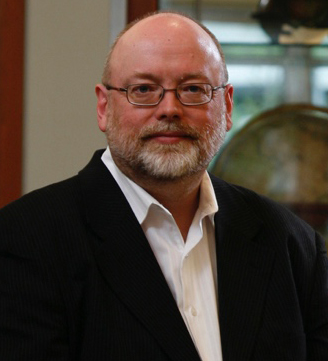
Matthew Edney
Matthew Edney studied geography at University College London (B.Sc. 1983) and the University of Wisconsin (M.S. 1985; Ph.D. 1990). After teaching at SUNY Binghamton, he moved in 1995 to the …
Advance Reading List
Required Reading
Brückner is online; other readings are in the RBS Google Drive folder for H-65.
- Brückner, Martin. 2008. “The Material Map: Lewis Evans and Cartographic Consumer Culture, 1750–1775.” Common-Place 8, no. 3. https://commonplace.online/article/the-material-map/
- Dym, Jordana and Carla Lois. 2021. “Bound Images: Maps, Books, and Reading in Material and Digital Contexts.” Word & Image 37, no. 2: 119–41.
- Edney, Matthew H. 2024. “Processual Map History.” In The Routledge Handbook of Cartographic Humanities, ed. Tania Rossetto and Laura Lo Presti, 38–46. London: Routledge.
- Edney, Matthew H. 2025. A Pageant of Spectacles: Chromolithography in America. An Exhibition at the Osher Map Library and Smith Center for Cartographic Education, University of Southern Maine, 30 November 2023–29 June 2024. Portland: Osher Map Library and Smith Center for Cartographic Education, University of Southern Maine. [preprint]
- Krogt, Peter van der. 1996. “Amsterdam Atlas Production in the 1630s: A Bibliographer’s Nightmare.” Imago Mundi 48: 149–60.
Recommended Reading
- Akerman, James R. and Robert W. Karrow, eds. 2007. Maps: Finding Our Place in the World. Chicago: University of Chicago Press.
- Edney, Matthew H. 2019. Cartography: The Ideal and Its History. Chicago: University of Chicago Press.
- Harley, J. B., David Woodward, G. Malcolm Lewis, Mark Monmonier, Matthew H. Edney, Mary S. Pedley, and Roger J. P. Kain, eds. 1987–2027. The History of Cartography. 6 vols. in 12 bks. Chicago: University of Chicago Press. Free, online access at www.press.uchicago.edu/books/HOC/ (currently vols. 1–3, 6)
Atlases
{Tolias, 2022, #98667} {Koyoumjian, 2020, #36562} {Crowley, 2016, #12145} {Van Duzer, 2015, #12462} {Krogt, 2009, #8499} {Worms, 2002, #7169}
Course Evaluations
Course History
-
2022–
Matthew Edney teaches this course as “Material Foundations of Map History, 1450–1900.”
-
2010
Alice Hudson teaches this course as “Introduction to Printed Maps.”
-
2009
Alice Hudson teaches this course as “Introduction to the History, Collection, Description and Use of Maps.”