
Course Description
This seminar focuses on the Book of Hours—the medieval “bestseller”—popular for three hundred years, from the mid-thirteenth to the mid-sixteenth century. The course will consider both the textual and pictorial contents of horae. Textual concerns include the range and variety of prayers within the typical manuscript. Students will learn how to determine a book’s usage, including the localization of its calendar. Because the Book of Hours is also important for the history of art, variations in artistic styles will also be a major concern (concentrating on French and Flemish illumination from the late fourteenth to the early sixteenth centuries). The phenomenon of printed horae will also be introduced. The course will consist of lectures, discussions, and hands-on classroom exercises. We will use facsimiles, slides, electronic resources, and original manuscripts from the Morgan’s rich holdings. Students will be expected to make a presentation. Some knowledge of Latin and the ability to read Gothic script are helpful but not required. Previous RBS courses on manuscripts are also helpful but not required.Faculty
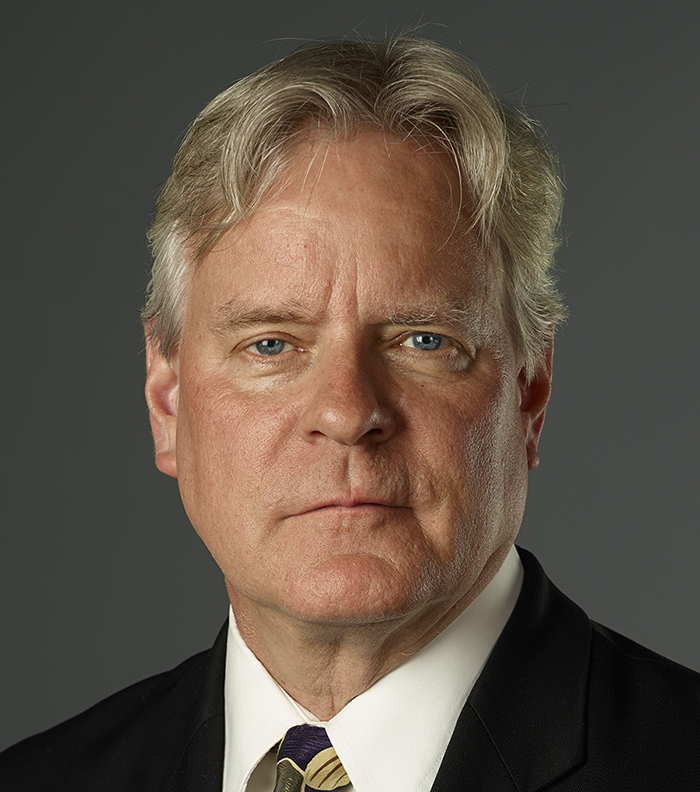
Roger S. Wieck †
Roger S. Wieck (d. 2026) was the Melvin R. Seiden Curator and Department Head of Medieval and Renaissance Manuscripts at the Morgan Library & Museum in New York. He also …
Advance Reading List
Required Readings
Before coming to class, students should read:
Swanson, R.N. Religion and Devotion in Europe, c.1215–c.1515. Cambridge: Cambridge University Press, 1995.
Duffy, Eamon. The Stripping of the Altars: Traditional Religion in England, c.1400–c. 1580. New Haven: Yale University Press, 1992; reprinted 1994. Read Part I, “The Structures of Traditional Religion.”
Wieck, Roger. The Medieval Calendar: Locating Time in the Middle Ages. New York: The Morgan Library & Museum, 2017.
Please also read either:
Wieck, Roger. Time Sanctified: The Book of Hours in Medieval Art and Life. New York: George Braziller, 1988 (second edition 2001).
or
Wieck, Roger. Painted Prayers: The Book of Hours in Medieval and Renaissance Art. New York: George Braziller, 1997.
Students should buy and bring to class:
A pre-Vatican II edition of an Hours of the Virgin (also called the Little Office of the Blessed Virgin Mary) in Latin and English; an added plus if the edition includes the Office of the Dead, Penitential Psalms, and Litany.
Either Time Sanctified or Painted Prayers (see above).
Post-class Bibliography
Duffy, Eamon. Marking the Hours: English People and Their Prayers, 1240–1570. New Haven: Yale University Press, 2007 (paperback edition 2011).
Reinburg, Virginia. French Books of Hours: Making an Archive of Prayer, c.1400–1600. Cambridge: Cambridge University Press, 2012 (paperback edition 2014).
Useful facsimiles:
The Lessing J. Rosenwald Collection, Library of Congress. Horae Beatae Mariae ad usum Romanum, France, 1524. CD-ROM, 2002. Latin and English texts are searchable. Readily available.
Csappodi, Csaba, A Paris Book of Hours. Budapest, 1985. This is a facsimile of a printed horae (with slender commentary). Scarce, but regularly pops up on eBay.
Course Evaluations
Course History
- 2018
Roger S. Wieck teaches this course for the first time.