
Course Description
Curators must possess a range of professional skills and competencies in order to build, explicate, preserve, promote, and administer effectively the collections in their care. Gaining these proficiencies, however, can prove difficult: the curricula of library science programs often do not deal directly with curatorial practice, and attaining the requisite training or knowledge on the job is not always possible.
Special Collections Curatorship surveys the responsibilities that are typically shouldered by curators, acquainting students with the issues, procedures, considerations, and challenges common to the profession along with the principles that undergird the field. Topics to be covered include collection development, collection assessment, preservation and conservation, security and collection management, insurance and the valuation of collection items, exhibitions, exhibition loans, donor cultivation and development activities, digitization and the digital humanities, programming and instruction, public relations, professional ethics, and job search strategies, among others.
This course is designed primarily, though not exclusively, for early- to mid-career librarians and archivists seeking to move into curatorial roles as well as for academics interested in pursuing curatorial careers in special collection and archival settings. Individuals who do not fit the aforementioned descriptions, but who feel that they would benefit from the content of this course, are also encouraged to apply. In their personal statements, applicants should describe any relevant education and experience, noting how the course fits into their current responsibilities and/or career aspirations.
Faculty
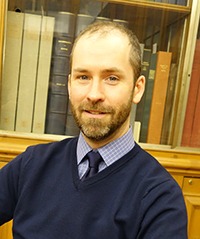
Michael Inman
Michael Inman is Curator of Rare Books for the New York Public Library, a position he has held since 2008. Prior to this appointment, he worked for six years as …
Advance Reading List
Required Reading
Please read the following before coming to class.
Association of College and Research Libraries. “ACRL Code of Ethics for Special Collections Librarians.” Chicago: ACRL, 2003. Web. 17 Feb. 2020.
Association of College and Research Libraries. “ACRL Guidelines: Competencies for Special Collections Professionals.” Chicago: ACRL, 2017. Web. 17 Feb. 2020.
Association of College and Research Libraries. “ACRL/RBMS Guidelines for Interlibrary and Exhibition Loan of Special Collections Materials.” Chicago: ACRL, 2012. Web. 17 Feb. 2020.
Association of College and Research Libraries. “ACRL/RBMS Guidelines for Primary Source Literacy.” Chicago: ACRL, 2018. Web. 17 Feb. 2020.
Association of College and Research Libraries. “ACRL/RBMS Guidelines Regarding Security and Theft in Special Collections.” Chicago: ACRL, 2009. Web. 17 Feb. 2020.
Association of College and Research Libraries. “Your Old Books.” Chicago: ACRL, 2005. Also available as a PDF version. Web. 17 Feb. 2020.
Association of College and Research Libraries and Society of American Archivists. “ACRL/SAA Joint Statement on Access to Research Materials in Archives and Special Collections Libraries.” Chicago: ACRL; SAA, 2020. Web. 17 Feb. 2020.
Association of Research Libraries. Celebrating Research: Rare and Special Collections from the Membership of the Association of Research Libraries. Washington, DC: ARL, 2007. In particular, please read the library overviews and collection profiles. Web. 17 Feb. 2020.
Carter, John. ABC for Book Collectors. 9th ed. New Castle, DE: Oak Knoll, 2016. New and used print copies are readily available from Oak Knoll Books and Amazon, among other booksellers. Also, the 8th edition of this work is available online as a PDF. Web. 17 Feb. 2020.
Society of American Archivists. “SAA Core Values Statement and Code of Ethics.” Chicago: SAA, 2011. Web. 17 Feb. 2020.
Suggested Reading
N.B. The following pieces are grouped according to each day’s topics(s) of discussion. Please glance over as many of them as time allows before coming to New York. Additional readings may be distributed in class throughout the week.
Monday
Association of College and Research Libraries. “Careers FAQ.” Chicago: ACRL, 2019. Web. 17 Feb. 2020.
Association of Research Libraries. “Unique Role of Special Collections: Statement of Principles. ” Washington, DC: ARL, 2003. Web. 17 Feb. 2020.
Belanger, Terry. “Rare Books and Special Collections in American Libraries: Seeing the Sites.” RBML 1.1 (1986): 11-24. Web. 17 Feb. 2020.
Dimunation, Mark. “Red Wine and White Carpets: What We Didn’t Learn in Library School, or When the Dog and Pony Goes Bad.” RBM 7.1 (2006): 73-84. Web. 17 Feb. 2020.
Joyce, William L. “The Evolution of the Concept of Special Collections in American Research Libraries.” RBML 3.1 (1988): 19-30. Web. 17 Feb. 2020.
Schreyer, Alice D. “What’s So Special about Special Collections Librarians? ” RBM 7.1 (2006): 49-54. Web. 17 Feb. 2020.
Tuesday
Association of College and Research Libraries. “Guidelines on the Selection and Transfer of Materials from General Collections to Special Collections.” Chicago: ACRL, 2008. Web. 17 Feb. 2020.
Beasley, Gerald. “Curatorial Crossover: Building Library, Archives, and Museum Collections.” RBM 8.1 (2007): 20-28. Web. 17 Feb. 2020.
Oram, Richard W. “Current Professional Thinking on the Deaccessioning of Rare Books in Academic Libraries.” RBML 12.1 (1997): 9-18. Web. 17 Feb. 2020.
Smyth, Elaine B. “A Practical Approach to Writing a Collection Development Policy.” RBML 14.1 (1999): 27-31. Web. 17 Feb. 2020.
Society of American Archivists. “So You Want to Be an Archivist: An Overview of the Archives Profession.” Chicago: SAA, 2015. Web. 17 Feb. 2020.
Society of American Archivists. “What Are Archives and How Do They Differ from Libraries? ” Chicago: SAA, 2015. Web. 17 Feb. 2020.
Society of American Archivists. “Guidelines for Reappraisal and Deaccessioning.” Chicago: SAA, 2017. Web. 17 Feb. 2020.
Whiteman, Bruce. “Cooperative Collection Building: A Response to Gerald Beasley.” RBM 8.1 (2007): 29-34. Web. 17 Feb. 2020.
Wednesday
Erway, Ricky. “Rapid Capture: Faster Throughput in Digitization of Special Collections.” Dublin, OH: OCLC Programs and Research, 2011. Web. 17 Feb. 2020.
Northeast Document Conservation Center. “NEDCC Preservation Leaflets.” Andover, MA: NEDCC, 2015. Web. 17 Feb. 2020. In particular, please look at 1.3, 2.1, 2.2, 2.4, 2.5, 3.1, 3.3, 4.1, 4.4, 5.2, 5.3, 6.5, 6.6, 7.6. (Ideally, you should read as many additional leaflets as time allows. All are relatively brief.)
Ogden, Sherelyn. “Security from Loss: Water and Fire Damage, Biological Agents, Theft, and Vandalism.” RBML 11.1 (1996): 43-47. Web. 17 Feb. 2020.
Sheehan, Jennifer K. “Making the Most of What We Have: A Framework for Preservation Management in Rare Book Collections.” RBM 10.2 (2009): 111-121. Web. 17 Feb. 2020.
Steele, Victoria and Stephen D. Elder. Becoming a Fundraiser: The Principles and Practice of Library Development. 2nd Ed. Chicago: ALA, 2000. 21-37. Web. 17 Feb. 2020.
United States. Library of Congress. “Risk Management.” Washington, DC: Library of Congress, 2015. Web. 17 Feb. 2020.
University of Michigan. “University of Michigan Disaster Response & Recovery Plan for Library Collections.” Ann Arbor, MI: U of Michigan, 2019. Web. 17 Feb. 2020.
University of Washington Libraries. “Disaster Response Plan for Library Collections.” Seattle, WA: U of Washington, 2018. Web. 17 Feb. 2020.
Thursday
Bahde, Anne. “Taking the Show on the Road: Special Collections Instruction in the Campus Classroom.” RBM 12.2 (2011): 75-88. Web. 17 Feb. 2020.
Bahde, Anne and Heather Smedberg. “Measuring the Magic: Assessment in the Special Collections and Archival Classroom.” RBM 13.2 (2012): 152-174. Web. 17 Feb. 2020.
Dekydtspotter, Lori Lynn, and Cherry Williams Dunham. “Alchemy and Innovation: Cultivating an Appreciation for Primary Sources in Younger Student.” RBM 14.2 (2013): 67–81. Web. 17 Feb. 2020.
Dooley, Jackie. “Ten Commandments for Special Collections Librarians in the Digital Age.” RBM 10.1 (2009): 51-60. Web. 17 Feb. 2020.
Pendergast, Ryan and Kristen Totleben. “Course Design, Images, and the Class-Curated Exhibit.” RBM 19.2 (2018): 133-153. Web. 17 Feb. 2020.
Priddle, Charlotte. “Bridging the Internal Gap: Special Collections and ‘In-Reach’. ” RBM 16.1 (2015): 35-47. Web. 17 Feb. 2020.
Silva, Judy L. and Barbara McIntosh. “An Independent Study Course by an Academic Library Department: Teaching with the Gems of Special Collections.” RBM 20.2 (2019): 95-118. Web. 17 Feb. 2020.
Schaffner, Jennifer, Francine Snyder, and Shannon Supple. “Scan and Deliver: Managing User-initiated Digitization in Special Collections and Archives.” Dublin, OH: OCLC, 2011. Web. 17 Feb. 2020.
Smith, Steven Escar. “From ‘Treasure Room’ to ‘School Room’: Special Collections and Education.” RBM 7.1 (2006): 31-39. Web. 17 Feb. 2020.
Traister, Daniel. “Public Services and Outreach in Rare Book, Manuscript, and Special Collections.” Library Trends 52.1 (2003): 87-108. Web. 17 Feb. 2020.
Taylor, Michael L. “Special Collections Exhibitions: How They Pay Dividends for Your Library.” RBM 19.2 (2018): 121-132. Web. 17 Feb. 2020.
Also, for Thursday’s class session, please investigate as many digital humanities projects as time allows. Examples would include:
“NYC Space / Time Directory.” New York: The New York Public Library, 2020. Web. 17 Feb. 2020.
“Yale University Digital Humanities Lab: Projects.” New Haven, CT: Yale U, 2020. Web. 17 Feb. 2020.
“Duke University: Digital Humanities Initiatives.” Durham, NC: Duke U, 2020. Web. 17 Feb. 2020.
“Digital Humanities Projects at Stanford.” Stanford, CA: Stanford U, 2020. Web. 17 Feb. 2020.
Friday
American Library Association. “Copyright Tools.” Chicago: American Library Association, 2020. Web. 17 Feb. 2020.
Cornell Copyright Information Center. “Copyright Term and the Public Domain in the United States.” Ithaca, NY: Cornell U, 2015. Web. 17 Feb. 2020.
Miller, Lisa, et al. “Capture and Release”: Digital Cameras in the Reading Room.” Dublin, OHhio: OCLC, 2011. Web. 17 Feb. 2020.
The New York Public Library. Rare Book Division. “Register to Use Materials in the Brooke Russell Astor Reading Room for Rare Books and Manuscripts.” New York: The New York Public Library, 2020. Web. 17 Feb. 2020.
Olivieri, Blynne and Angela M. Mehaffey. “Interlibrary Loan of Special Collections Materials: An Overview and Case Study.” RBM 16.2 (2015): 113-126. Web. 17 Feb. 2020.
Priddle, Charlotte and Laura McCann. “Off-Site Storage and Special Collections: A Study in Use and Impact in ARL Libraries in the United States.” College & Research Libraries 76.5 (2015): 652-670. Web. 17 Feb. 2020.
Smith, Kevin L. “Copyright Risk Management: Principles and Strategies for Large-Scale Digitization Projects in Special Collections.” Research Library Issues no. 279 (June 2012): 17 – 23. Web. 17 Feb. 2020.
Society of American Archivists. “Typical Usage Guidelines in Archival Repositories.” Chicago: SAA, 2015. Web. 17 Feb. 2020.
Society of American Archivists. “Guidelines for Accessible Archives for People with Disabilities.” Chicago: SAA, 2017. Web. 17 Feb. 2020.
University of Chicago. Special Collection’s Research Center. “Using the Special Collections Reading Room.” Chicago: U of Chicago Library, 2015. Web. 17 Feb. 2020.
The University of Texas. Harry Ransom Center. “Reading and Viewing Room (RVR) Regulations.” Austin: U of Texas, 2015. Web. 17 Feb. 2020.
Course Evaluations
Course History
-
2015–
Michael Inman teaches this course.
-
2010
The course title is changed to “Special Collections Librarianship.”
-
2009
Susan M. Allen teaches this course.
-
2001–2012
Alice Schreyer teaches this course annually (2009 excepted).
-
1993–2000
Daniel Traister teaches this course, generally once per year.
-
1985–1991
Daniel Traister & John Parker co-teach this course, as “Introduction to Rare Book Librarianship.”
-
1984
Daniel Traister & John Parker co-teach this course, as “Introduction to Rare Book Librarianship for Archivists.”
-
1983
Daniel Traister & John Parker co-teach this course, as “Interpreting Rare Books and Manuscripts to their Community.”