
Course Description
Special collections libraries have always held a wide-range of format types, each with its own affordances. This course will consider the more distinctive issues and considerations related to collecting and providing access to born-digital materials. (Born-digital materials are those that began life on a computer, rather than as digitized surrogates of real-world artifacts.) Contemporary collections of “papers” are often hybrid collections, with diskettes, CDs, hard drives, and sometimes entire computers commingling with more traditional kinds of archival content. Many collection creators have a more intimate relationship with their websites, social media, and mobile devices than with the paper in their lives. Publishers now release some titles either first or only as e-books—and the variety of e-book formats has proliferated. This course will focus on the nature of born-digital materials and on the complexities of providing access to this increasingly essential aspect of the cultural record alongside of more traditional kinds of manuscript materials and special collections.
Questions to be explored include what constitutes rarity and scarcity in the digital world; legal restrictions on collecting and cataloging e-books; practical strategies for access to born-digital content and the nature of the reading room experience; research scenarios and scholarly use; ethical challenges; the challenge of the “cloud”; the role of fans, hobbyists, and other public communities as resources; and above all, the abiding materiality of cultural heritage, even in its digital form. Case studies will be drawn from real-world examples, especially those involving literary materials, computer games, and digital art. Hands-on activities will be based on RBS’s growing collection of vintage computers and obsolescent formats.
The course is aimed at archivists, manuscript curators, and others charged with managing this important new class of cultural record, as well as scholars who might expect to make use of born-digital material in their research. To that end, our questions around born-digital materials will also be placed in relevant contexts from new media studies and the digital humanities. Preservation strategies, cataloging, and processing workflows will not be discussed in any detail. We will engage the body of practice around digital forensics where appropriate, but the course is not a how-to in specific tools.
Participants are required to bring a laptop with them to class.
Faculty
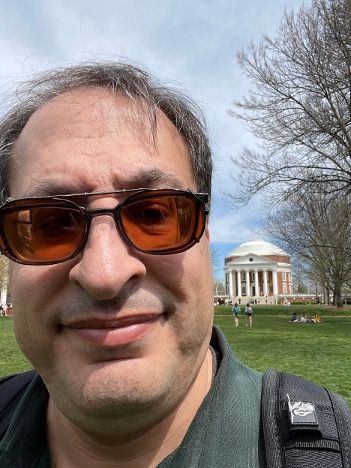
Matthew G. Kirschenbaum
Matthew Kirschenbaum rejoined UVA in 2025 as Commonwealth Professor of Artificial Intelligence and English after 25 years at the University of Maryland, where he finished as a Distinguished University Professor. He …
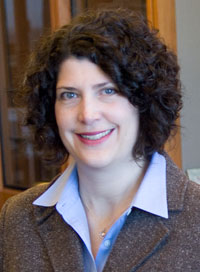
Naomi Nelson
Naomi Nelson is Associate University Librarian and Director of the David M. Rubenstein Rare Book & Manuscript Library at Duke University. She came to Duke from Emory University’s Manuscript, Archives, and Rare …
Advance Reading List
Advance Reading List
Textbook (please read in its entirety before the start of the course)
Owens, Trevor. The Theory and Craft of Digital Preservation. Johns Hopkins University Press, 2018.
In addition, please read the following before coming to Charlottesville:
Bailey, Jefferson. “Disrespect des Fonds: Rethinking Arrangement and Description in Born-Digital Archives.” Archive Journal (June 2013).
Blanchette, Jean-François. “A Material History of Bits.” Journal of the American Society for Information Science and Technology 62:6 (June 2011): 1042–1057.
Galey, Alan. “The Enkindling Reciter: E-Books in the Bibliographical Imagination.” Book History 15 (2012): 210–247.
Jules, Bergis, Ed Summers, and Dr. Vernon Mitchell, Jr. Ethical Considerations for Archiving Social Media Content Generated by Contemporary Social Movements (white paper, April 2018). Documenting The Now Project.
Redwine, Gabriela, et. al. “Born Digital: Guidance for Donors, Dealers, and Archival Repositories.” CLIR Pub 159. Washington, D.C.: CLIR, 2013.
Reside, Doug. “File Not Found: Rarity in an Age of Digital Plenty.” RBM: A Journal of Rare Books, Manuscripts, and Cultural Heritage 15:1 (2014): 68–74.
Finally, please note that participants are required to bring a laptop (not just a tablet) with them to class. You should have the permissions and authority to install some small software utilities on it.
Course Evaluations
Course History
- 2017–
Matthew Kirschenbaum and Naomi Nelson co-teach this course, as “Born-Digital Materials in Special Collections.”
- 2010–2014
Matthew Kirschenbaum and Naomi Nelson co-teach this course, as “Born-Digital Materials: Theory & Practice.”