
Course Description
“Be prepared for, and excited about, a very inter-disciplinary conversation!” — 2016 student
This course considers histories of books, texts, and reading using the lens of connected history. The new global history has brought an ever-increasing scholarly focus on exchanges, on trade and colonialism, and on the movements of peoples, ideas, and goods in and across spaces. Here we will investigate what these approaches may mean for book history. Working with, but also against, the national book histories that are so essential to the field of book history itself, we will focus upon topics including textual geographies (geographies of the book and geographies within books); translation, textual migration, and adaptation; and forms of orality in written and printed texts.
We will discuss some essential texts in book history, including works by Petrucci, Febvre and Martin, Eisenstein, Johns, and McKenzie. We will also focus on close studies of texts and books from the early modern period with complex, connected histories. These case studies will bridge the European nation-states and cross from “Old” to “New” Worlds. Authors we will discuss include Cervantes, Shakespeare, Lope de Vega, Castiglione, and Las Casas. Here, the resources of the Kislak Center for Special Collections, Rare Books and Manuscripts will be of vital importance: the seminar will leave ample time for examination of works in multiple languages and in multiple editions.
Participants are invited to propose their own research on related topics (not necessarily limited to early modern Europe). Time will be set aside during the week for discussion of individual research projects.
Click here to view the course description for the virtual version of this course, “Textual Connected Histories: Books and Reading in the Early Modern European World.”
Faculty
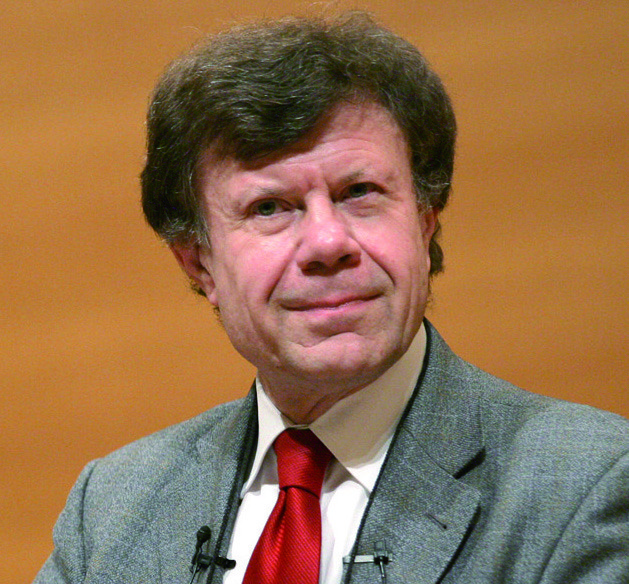
Roger Chartier
Roger Chartier is a Professeur in the Collège de France, Directeur d’études at the École des hautes études en sciences sociales, and Annenberg Visiting Professor of History at the University …
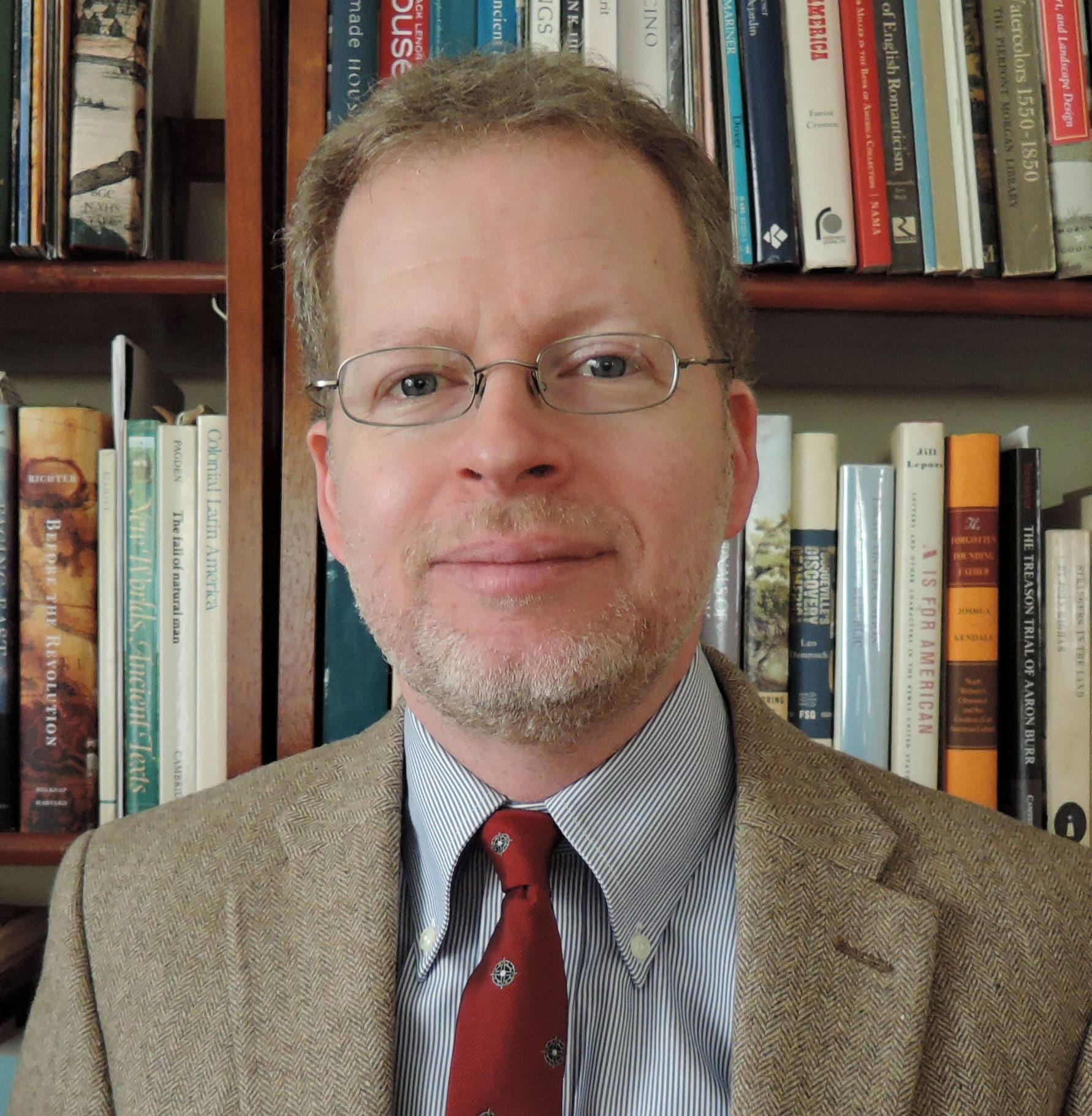
John H. Pollack
John H. Pollack is Library Specialist for Public Services at the Kislak Center for Special Collections, Rare Books and Manuscripts at the University of Pennsylvania, a position he has held …
Advance Reading List
Preliminary Advices
The following are suggested and background readings which will give context to the course material. Extracts from many of these sources will be made available as part of the course workbook. Students are encouraged to examine these readings to the extent feasible prior to the course.
Geographies: The “Printing Revolution”
Febvre, Lucien and Henri-Jean Martin. L’Apparition du livre. Translated as The Coming of the Book: The Impact of Printing, 1450–1800. Paris: Michel, 1958. Reprinted, London: Verso, 1990; 2010.
Eisenstein, Elizabeth. The Printing Revolution in Early Modern Europe. Cambridge: Cambridge University Press, 1983. Second edition published by Cambridge University Press, 2005.
“AHR Forum: How Revolutionary Was the Print Revolution?” American Historical Review 107:1 (February 2002): 84–128.
Petrucci, Armando. “Pouvoir de l’écriture, pouvoir sur l’écriture dans la Renaissance italienne.” Annales: Economies, Sociétés, Civilisations 43:4 (1983): 823–847.
Hindman, Sandra L., ed. Printing the Written Word: The Social History of Books, circa 1450–1520. Ithaca: Cornell University Press, 1991.
Leonard, Irving A. Books of the Brave: Being an Account of Books and Men in the Spanish Conquest and Settlement of the Sixteenth-Century New World. Cambridge: Harvard University Press, 1949. Reprinted, Berkeley: University of California Press, 1992.
Amory, Hugh and David D. Hall, eds. A History of the Book in America, Volume 1: The Colonial Book in the Atlantic World. Worcester & Cambridge: American Antiquarian Society & Cambridge University Press, 2000; reprinted in paper by University of North Carolina Press).
Darnton, Robert. A Literary Tour de France: Publishing and the Book Trade in France and Francophone Europe, 1769–1789. Published 1 September 2014. http://www.robertdarnton.org.
Burrows, Simon, et al. The French Book Trade in Enlightenment Europe. Mapping the Trade of the Société Typographique de Neuchâtel. Published 2012. http://www.fbtee.uws.edu.au.
Darnton, Robert. Review of The French Book Trade in Enlightenment Europe [web resource], by Simon Burrows, et al. Reviews in History (Review 1355, December 2012). http://www.history.ac.uk/reviews/review/1355.
Cartographies: Maps in Books
DeJean, Joan. Tender Geographies: Women and the Origins of the Novel in France. New York: Columbia University Press, 1991.
Harley, J. B., and David Woodward, eds. The History of Cartography. Chicago: University of Chicago Press, 1987–. See especially Volume 3, Cartography in the European Renaissance. Volumes 1–3 are available online at http://www.press.uchicago.edu/books/HOC/index.html.
Moretti, Franco. Atlante del romanzo europeo, 1800–1900. Torino: G. Einaudi, 1997. Translated as Atlas of the European Novel, 1800–1900. London: Verso, 1998.
Los mapas del Quijote. Madrid: Biblioteca Nacional, 2005. http://www.bne.es/es/Actividades/Exposiciones/Exposiciones/Exposiciones2005/mapasquijote/.
Lestringant, Frank. Mapping the Renaissance World: The Geographical Imagination in the Age of Discovery. Berkeley: University of California Press, 1994.
Lestringant, Frank. Cannibals: The Discourses and Representations of the Cannibals from Columbus to Jules Verne. Berkeley: University of California Press, 1997.
Two collections of maps in facsimile:
Hofmann, Catherine,Hélène Richard, and Emmanuelle Vagnon, eds. The Golden Age of Maritime Maps: When Europe Discovered the World. (Translation of L’Age d’or des cartes marines). New York: Firefly Books, 2013.
Braun, Georg and Franz Hogenberg. Cities of the World: Complete Edition of the Colour Plates, 1572–1617. Köln: Taschen, 2008. Facsimile edition of Civitates orbis terrarum.
Orality, Script, Print
McKenzie, D. F. “Speech—Manuscript—Print.” In Making Meaning: ‘Printers of the Mind’ and Other Essays, 237–258. Amherst, MA: University of Massachusetts Press, 2002.
McKenzie, D. F. “Orality, Literacy, and Print in Early New Zealand.” In Bibliography and the Sociology of Texts, 77–130. Cambridge: Cambridge University Press, 1999,
Goody, Jack. The Domestication of the Savage Mind. Cambridge: Cambridge University Press, 1977.
Fox, Adam. “Ballads, Libels, and Popular Ridicule in Jacobean England.” Past and Present 145 (1994): 47–83.
Degh, Linda. Folktales and Society: Story-telling in a Hungarian Peasant Community. Bloomington: Indiana University Press, 1989.
Across Genres
Patterson, Annabel. Reading Holinshed’s Chronicles. Chicago: University of Chicago Press, 1994.
Chartier, Roger Chartier. Cardenio entre Cervantès et Shakespeare: histoire d’une pièce perdue. Paris: Gallimard, 2011. Translated by Janet Lloyd as Cardenio between Cervantes and Shakespeare: The Story of a Lost Play. Cambridge, MA: Polity Press, 2012.
Blair, Ann Blair. “Humanist Methods in Natural Philosophy: The Commonplace Book.” Journal of the History of Ideas 53:4 (1992): 541–551.
Blair, An., “Reading Strategies for Coping with Overload Information ca. 1550–1700,” Journal of the History of Ideas 64:1 (2003): 11–28.
Knight, Jeffrey Todd. Bound to Read: Compilations, Collections, and the Making of Renaissance Literature. Philadelphia: University of Pennsylvania Press, 2013.
Price, Leah. The Anthology and the Rise of the Novel: From Richardson to George Eliot. Cambridge: Cambridge University Press, 2000.
Translation
Chartier, Roger. “Translation.” In The Author’s Hand and the Printer’s Mind: Transformations of the Written Word in Early Modern Europe, 98–120. Cambridge: Polity Press, 2014.
Burke, Peter. The Fortunes of the Courtier: The European Reception of Castiglione’s Cortegiano. University Park: Pennsylvania State University Press, 1995.
Course Evaluations
Course History
-
2021
Roger Chartier and John H. Pollack teach this course online as “Textual Connected Histories: Books and Reading in the Early Modern European World” (10 hours).
-
2016–
Roger Chartier and John H. Pollack teach this course in person.