
Course Description
An intensive investigation of the world of print in the eighteenth century, this class will emphasize the material realities of the book in this period as well as consider its role as a major agent of communication. Innovations in printing and illustration will be studied. The rise of scientific and academic publishing, the appearance of the encyclopedia, the immediacy of newspaper and pamphlet publishing, the nature of the book trade, the notion of authorship, the development of copyright protections, and the emergence of modern literary forms will be central to the class investigations. Set amongst significant historical events, from the Enlightenment to the American and French revolutions, the nature and impact of the printed object—from poster and broadside to elaborate plate books—will be discussed. Using the vast resources of the Library of Congress’ Rare Book and Special Collections Division, students will study hands-on every aspect of the materiality of eighteenth-century books. Students will also be introduced to important reference works and other resources for the study of the period. The class will be run as a seminar, so students will be encouraged to discuss their own interests and research projects with the group as a whole. This course is aimed at scholars, librarians, collectors, and others who are already familiar with the broad outlines of early modern book history but who wish to focus on what is specific to the eighteenth century. In their personal statement, applicants are requested to summarize briefly their background in the field, current research projects, and topics or issues that they would particularly like the course to address.Faculty
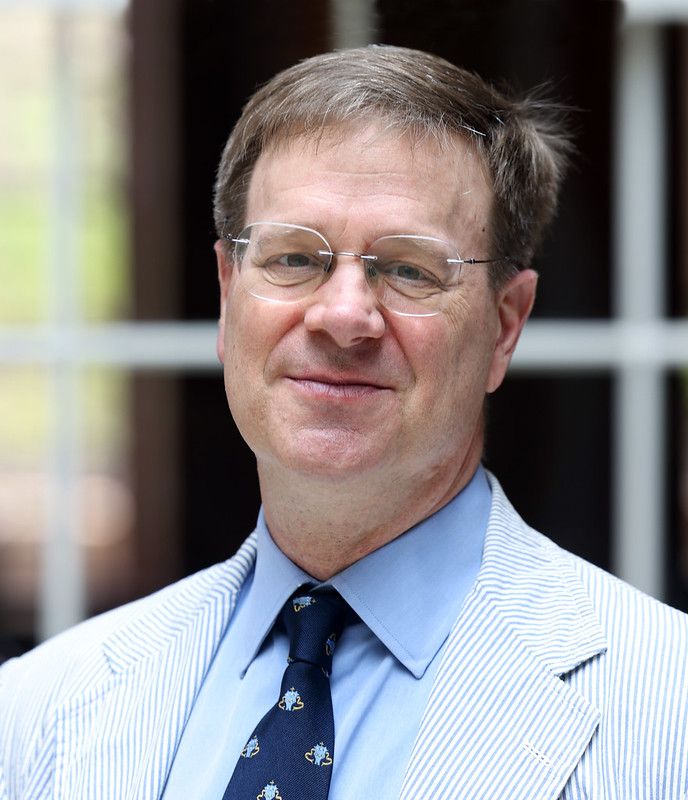
Michael F. Suarez, S.J.
Michael F. Suarez, S.J. has served as Director of Rare Book School, Professor of English, University Professor, and Honorary Curator of Special Collections at the University of Virginia since 2009. …
Advance Reading List
Required Reading
Amory, Hugh and David D. Hall, eds. A History of the Book in America, Volume 1: The Colonial Book in the Atlantic World. Worcester & Cambridge: American Antiquarian Society & Cambridge University Press, 2000; reprinted in paper by University of North Carolina Press). See especially chapter 5 (in 3 parts: by David D. Hall, John Bidwell, and James Raven), pp. 152–198; chapter 8.1 (by James N. Green), pp. 248–297, and chapter 9 (by Hugh Amory), pp. 314–346.
Brewer, John. The Pleasures of the Imagination. London: Harper Collins, 1997. Read chapters 3 and 4, pp. 125–197. (You may wish to read other chapters as needed.)
Carter, John. ABC for Book Collectors. London: Hart-Davis, 1952. 9th edition, revised by Nicolas Barker and Simran Thadani. New Castle, DE: Oak Knoll Press, 2016. The 8th edition (2004) is available free of charge as a PDF. An elegant and witty guide to essential terminology. Use any later edition.
Chappell, Warren and Robert Bringhurst. A Short History of the Printed Word. Revised and updated edition. Vancouver: Hartley & Marks, 2000. Read chapter VII, pp. 158–190. (You may wish to read earlier sections as needed.)
Gaskell, Philip. A New Introduction to Bibliography. New York & Oxford: Oxford University Press, 1972, corrected 2nd printing, 1974; paperback edition, New Castle, DE: Oak Knoll Press, 1995.Use any printing except the 1st, uncorrected printing (1972). Please read pp. 1–185 (“Book Production: The Hand-Press Period 1500–1800”), 313–335, and 368–380, but don’t get bogged down in the technical details.
Suarez, Michael F., S.J. and Michael L. Turner, The Cambridge History of the Book in Britain, Volume V, 1695–1830. Oxford: Oxford University Press, 2009. Read chapter 3 (by James Raven), pp. 85–117. (You may wish to read other chapters as needed.)
Course Evaluations
Course History
- 2017
Mark Dimunation & Michael F. Suarez, S.J. co-teach this course.
- 2015
Mark Dimunation teaches this course for the first time.