
Course Description
“I came away with a broader understanding of how the biblical texts have been transmitted and used over time and place.” —2017 student
In this course, we will be drawing on the extensive materials at Penn to explore how “the bible” was constituted through a variety of material forms for liturgical use, devotional practices, scholarly exegesis, the education of children, and as a literary resource. One question will be to what extent “the bible” was a post-Reformation invention, given that it was not particularly useful for liturgical practices in the Middle Ages. We will focus on Genesis, the Psalms, and the Gospels from the Middle Ages onwards, focusing on English translations from Wycliffe to the Brick Testament (made out of Lego). No language skills are required, but you may find some online resources for the Latin Bible useful (e.g., http://www.latinvulgate.com and http://medievalist.net/search.htm).
Special topics will include: the bible as scrolls and as codex; the invention of the pocket bible; the development of biblical reference systems; the dissemination of the scriptures through a range of “non-biblical” forms (books of hours; children’s primers; sermons; anthologies; commonplace books); printing and publishing the bible (including in North America); “illustrations” as counter-texts; commentary and exegesis.
We will pay particular attention to typological reading (for which a good starting point is George Herbert’s “The Bunch of Grapes” in a modern annotated edition). To what extent does typology challenge dominant modern notions of reading, usually based upon the reading of novels? To what extent was the book-form (first mentioned by Martial in the first century CE and thus virtually coterminous with Christianity) ideally suited for discontinuous reading, whether through the collation of the “same” passage in the four gospels or through the typological collation of Old Testament and New Testament passages? Finally, to what extent was the reading of the bible transformed by post-novel reading practices?
Faculty
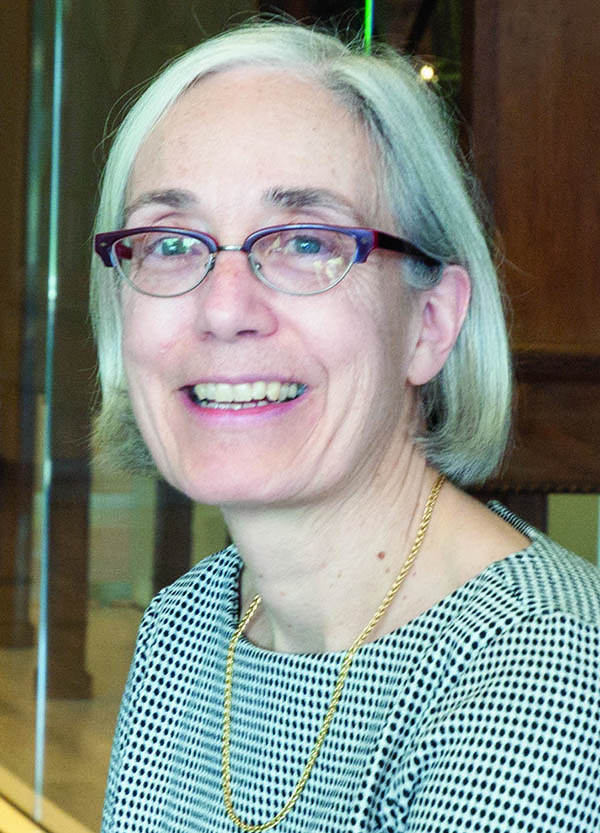
Lynne Farrington
Lynne Farrington is Senior Curator, Special Collections in the Kislak Center for Special Collections, Rare Books and Manuscripts at the University of Pennsylvania, where she has worked since 1992. She …

Peter Stallybrass
Peter Stallybrass is Annenberg Professor in the Humanities Emeritus at the University of Pennsylvania, where he founded and directed the History of Material Texts seminar for 26 years. Peter has …
Advance Reading List
Required Reading
The asterisked books you should buy and bring with you to class.
* The Bible. Use any edition you like and read the following passages. Bring the Bible you use with you to class.
Genesis, chapters 1–3
Exodus, chapters 16–20; 23; 32–34
I Samuel, chapters 17–21
II Samuel, chapters 11–12; 14:25–15:18; chapter 18
Esther (complete)
Psalms 1 and the Seven Penitential Psalms (6, 32, 38, 51, 102, 130, and 143; in the Septuagint numbering, which was followed in Catholic versions, the numbers are 6, 31, 37, 50, 101, 129, and 142)
Song of Songs (complete)
Isaiah, chapters 7 and 63
Ezekiel, chapters 2–3:14
Christ’s nativity: Matthew, chapters 1–2; Luke, chapters 1–3;
John, chapter 1:1–1:14
Christ’s death and resurrection: Matthew, chapters 26–28;
Mark, chapters 14–16; Luke, chapters 22–24; John, chapters 18–21
I Corinthians, chapters 13–15
II Corinthians, chapter 3
Revelation, chapter 10
* de Hamel, Christopher. The Book: A History of the Bible. London: Phaidon, 2005. An excellent introduction with great illustrations, and easily available new and second-hand for under $20. Certainly worth owning. Bring this with you.
* The New-England Primer: hundreds of editions, a cheap facsimile of the 1843 stereotype edition still in print. Please buy a copy of any edition (new or used) and bring it with you.
The following readings will be made available to admitted students via Dropbox:
Costley, Clare. “David, Bathsheba, and the Penitential Psalms.” Renaissance Quarterly 57 (2004): 1235–1277.
Stallybrass, Peter. “The Materiality of Reading.” Unpublished paper, available as a typescript.
Stallybrass, Peter. “Image against Text: On Not Reading Genesis.” Unpublished paper, available as a typescript.
Nord, David Paul. “Benevolent Books: Printing Religion and Reform.” In A History of the Book in America, Volume 2: An Extensive Republic: Print, Culture and Society in the New Nation, 1790–1840, edited by Robert A. Gross and Mary Kelley, 221–246. Chapel Hill: University of North Carolina Press, 2010. Particularly relevant, given the spectacular resources in Philadelphia for the American Sunday School Union. Connie King at the Library Company of Philadelphia is the best possible guide to these collections.
Suggestions for Further Reading
Cavallo, Guglielmo and Roger Chartier, eds. A History of Reading in the West, trans. Lydia G. Cochrane. Amherst. MA: University of Massachusetts, 1999. An outstanding overview. Worth browsing for relevant materials.
Sherman, William H. Used Books: Marking Readers in Renaissance England. Philadelphia: University of Pennsylvania Press, 2007. A ground-breaking study of marginalia, much of it in religious books. His chapter on “Marking the Bible” will be available to admitted students via Dropbox.
Saenger, Paul. “The Impact of the Printed Page.” Bulletin du Bibliophile, 2 (1996): 237–301. A useful introduction to the navigational aids in printed books and manuscripts that were of particular importance to the development of the bible in the fifteenth and sixteenth centuries.
Amory, Hugh. Bibliography and the Book Trades: Studies in the Print Culture of Early New England. Philadelphia: University of Pennsylvania Press, 2004. Read pp. 1–79. Excellent, including the introduction by David Hall.
Brown, Matthew P. The Pilgrim and the Bee: Reading Rituals and Book Culture in Early New England. Philadelphia: University of Pennsylvania Press, 2007. A fine exploration of reading practices in New England.
Course Evaluations
Course History
-
2023-
Lynne Farrington & Peter Stallybrass co-teach this course in person.
-
2021
Peter Stallybrass teaches this course online (22 hours), assisted by Lynne Farrington.
-
2018–2022
Peter Stallybrass teaches this course in person, assisted by Lynne Farrington.
-
2015–2017
Peter Stallybrass teaches this course in person.