
Course Description
This course, an amalgam of basic bibliography and teaching with primary-source printed books, is limited to Lang Fellows, and is the first of two RBS courses for the M. C. Lang Fellowship in Book History, Bibliography, and Humanities Teaching with Historical Sources. (The second course is an elective.)
Learning in all cases will be hands-on, in keeping with the core pedagogical method of Rare Book School, so that participants—and, eventually, their students—will be well prepared to make an informed, tactile connection with history when examining original materials. The course begins with a survey of the key processes that are necessary for the making of a book: papermaking, typefounding, composition, printing, binding, and illustration processes. Students will learn through examples about the constituent elements of books and how to “read” their meanings and significance. They will also undertake a series of in-class exercises (that they themselves could make use of for their own courses and demonstrations) in bibliography, the formal analysis of printed artifacts. Among the topics included are edition, impression, issue, state, format, and basic collation. We will also consider questions of authorship, patronage, intellectual property (chiefly privilege and copyright) and censorship, as well as elementary business concepts for book history: viz., capitalization, the share-book system and other means of distributing risk, subscription publishing, book lotteries, warehousing, banking and letters of credit, vertical integration, advertising, and distribution networks. We will consider cases in which the author closely participated in the design and making of particular books, and other instances in which authors were surprised by the form that their words actually took. Naturally, class time will also be given to such matters as considering readings best suited to undergraduates in different kinds of courses, thinking about specific exercises that could be performed outside of class (e.g., writing the “biography of a book” as a final paper, or putting on a student-led exhibition), scrutinizing a variety of sample syllabi, and building bespoke teaching collections at a relatively low cost.
In the course, students will chiefly learn about teaching bibliography and book history, less through “meta” conversations and more through a series of book-laden experiences that will help them see how such teaching might best be done. The same will be true for learning about subject-specific teaching through the medium of original sources—using, for example, Aldus and his publications, or Ratdolt’s Euclid (1482) to teach students about the Renaissance and what was being “reborn.” Using the resources of UVA Special Collections and RBS, students will prepare a short lesson and teach the group. At every turn, Fellows will discover through the guided examination of books the core truth that the thoughtful examination of original editions can reveal information that is absent in a later reprint, online digital surrogate, or facsimile. At the end of the course, Lang Fellows will be well equipped to think more creatively and capaciously about how to marshal local collections and personnel for primary-source teaching with historical collections, design their own syllabi to use the bibliographical knowledge and implement the practical approaches they have learned, and mobilize local resources to facilitate learning about book-production processes and how the products of those processes embody cultural meanings.
Faculty
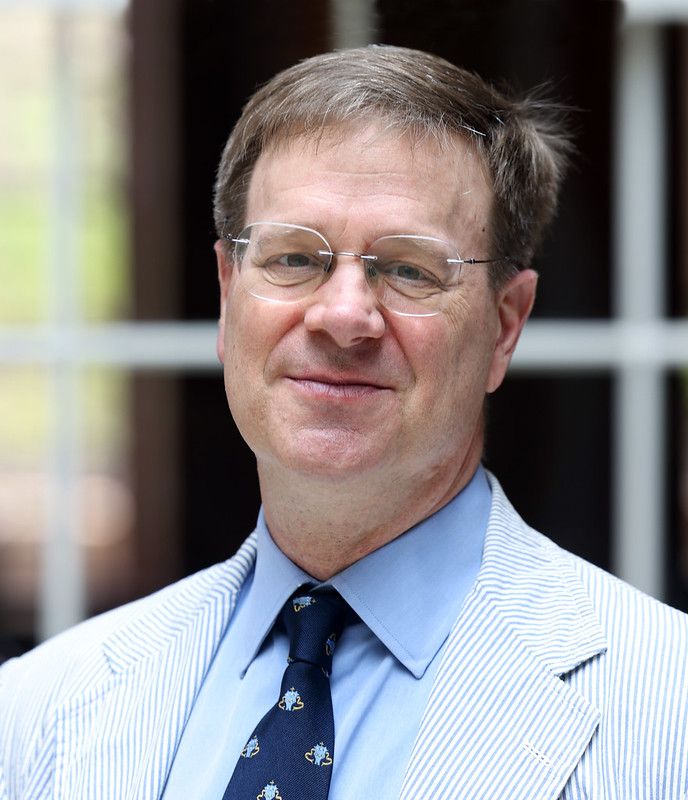
Michael F. Suarez, S.J.
Michael F. Suarez, S.J. has served as Director of Rare Book School, Professor of English, University Professor, and Honorary Curator of Special Collections at the University of Virginia since 2009. …
Advance Reading List
Required Reading
There are 11 required reading assignments of varying length and difficulty. Please be sure to give yourself adequate time to learn from these excellent texts.
- Adams, Thomas R. and Nicolas Barker. “A New Model for the Study of the Book,” in A Potencie of Life: Books in Society; The Clark Lectures, 1986–1987, edited by Nicolas Barker. London: British Library, 2001. Frequently reprinted.
- Darnton, Robert. “What is the History of the Book?” Daedalus 111, no. 3 (Summer, 1982). Frequently reprinted.
- Gaskell, Philip. A New Introduction to Bibliography. Oxford: Oxford University Press, 1972; corrected edition, 1974. Several subsequent British and American reprintings with minor corrections; paperback edition published in 1995 by Oak Knoll Press. This is a dense book that will take considerable time to read. Be sure to allocate adequate time. Best read after reading Williams and Abbot (below).
- Houtson, Keith. The Book: A Cover-to-Cover Explanation of the Most Powerful Object of Our Time. New York: W. W. Norton, 2016.
- Levy, Michelle, and Tom Mole. The Broadview Introduction to Book History. Guelph: Broadview Press, 2017
- Mole, Tom. The Secret Life of Books: Why They Mean More than Words. London: Elliott & Thompson, 2019.
- McKenzie, D. F. Bibliography and the Sociology of Texts. London: British Library, 1986; reprinted by Cambridge UP, 1999. Pay particular attention to titular essay.
- Raven, James. What is the History of the Book? (What is History?). Cambridge, UK: Polity, 2018.
- Tanselle, G. Thomas. Bibliographical Analysis: A Historical Introduction. Cambridge & New York: Cambridge University Press, 2009.
- Werner, Sarah. Studying Early Printed Books, 1450–1800: A Practical Guide. Hoboken: Wiley, 2019.
- Williams, William Proctor, and Craig S. Abbot. An Introduction to Bibliographical and Textual Studies. New York: Modern Language Association of America, 2009.
Recommended Reading
In no way should you get stressed out about not doing any of this reading, but you must come to class having read all the required reading.
- Cowley, Des, and Clare Williamson. The World of the Book. Victoria, Australia: The Miengunyah Press, 2010.
- Finkelstein, David, and Alistair McCleery. An Introduction to Book History. New York & London: Routledge, 2005. This text is best as a review, rather than an introduction, since it presupposes a knowledge of the conversation.
- Finkelstein, David, and Alistair McCleery. The Book History Reader. 2nd ed. New York & London: Routledge, 2006.
- Hawkins, Ann R., ed. Teaching Bibliography, Textual Criticism and Book History. London: Pickering & Chatto, 2006. Additional pedagogical web-essays at Pickering & Chatto.
- Howsam, Leslie, ed. The Cambridge Companion to the History of the Book. Cambridge & New York: Cambridge University Press, 2014.
- Hume, Robert. “Aims and Uses of Textual Scholarship.” Papers of the Bibliographical Society of America 99, no. 2 (June 2005): 197–230.
- Kelemen, Erick. Textual Editing and Criticism. New York & London: W.W. Norton and Company, 2009.
- Levy, Michelle, and Tom Mole. The Broadview Reader in Book History. Guelph: Broadview Press, 2014.
- McKenzie, D. F. Making Meaning: “Printers of the Mind” and Other Essays, edited by Peter D. McDonald and Michael F. Suarez, S.J. Amherst, MA: The University of Massachusetts Press, 2002.
- McGann, Jerome J. The Textual Condition. Princeton, NJ: Princeton University Press, 1991. Read “The Socialization of the Text” pp. 69–83.
- McGann, Jerome J. Black Riders: The Visible Language of Modernism. Princeton: Princeton University Press, 1993.
- Shillingsburg, Peter. From Gutenberg to Google. Cambridge & New York: Cambridge University Press, 2006.
- Suarez, S.J., Michael F., and H. R. Woudhuysen. The Book: A Global History. Oxford: Oxford University Press, 2014.
Recommended Browsing
- Greetham, D. C. Textual Scholarship. New York & London: Garland, 1994.
- De Hamel, Christopher. The Book: A History of the Bible. London & New York: Phaidon, 2001.
- Eisenstein, Elizabeth. The Printing Revolution in Early Modern Europe. Cambridge & New York: Cambridge University Press, 1983.
- Ezell, Margaret. Social Authorship and the Advent of Print. Baltimore: Johns Hopkins University Press, 1999. Read pp. 1–40.
- Jackson, H. J. Marginalia. New Haven: Yale University Press, 2001.
- Manguel, Alberto. A History of Reading. New York: Penguin, 1997.
- Olmert, Michael. The Smithsonian Book of Books. Washington, DC: Smithsonian Institution, 1992.
- Sher, Richard B. The Enlightenment and the Book: Scottish Authors and Their Publishers in Eighteenth-Century Britain, Ireland, and America. Chicago: The University of Chicago Press, 2006.
- Woudhuysen, Henry. Sir Philip Sidney and the Circulation of Manuscripts. Oxford: Clarendon Press, 1996. Read the Introduction, pp. 1–21.
See also: - Journals to browse, according to interest: Papers of the Bibliographical Society of America; Book History (an annual published by SHARP); Publishing History; The Library.
- Any of the various national histories of the book, such as the History of the Book in Britain, History of the Book in America, or L’Histoire de l’edition francaise.
Course Evaluations
Course History
-
2022–
Michael F. Suarez, S.J. teaches this course in person in Charlottesville, VA.
-
2021
Michael F. Suarez, S.J. teaches two sections of this course online, one for the 2020 cohort of Lang Fellows, the other for the 2021 cohort of Lang Fellows.