
Course Description
“This course was very useful and packed with information.” — 2016 student
The course has three goals: literacy (learning to read different scripts and expand abbreviations); attribution (learning to use different script characteristics to determine an approximate date and place of origin); and description (learning to identify the hands of different individuals within a particular codex or group of related codices). The course will also include an introduction to codicology and bibliographic description of medieval manuscripts and fragments. While we will have the opportunity to work with manuscripts and fragments from UVA collections, most of the specimens for in-class use and homework assignments will be digital, so students should bring their own laptops or tablets.
Latin fluency is not a pre-requisite for the class, but it is helpful to have had at least some exposure to Latin. In their personal statement, applicants should describe the degree of their present knowledge of Latin and their reasons for wishing to take this course.
Faculty
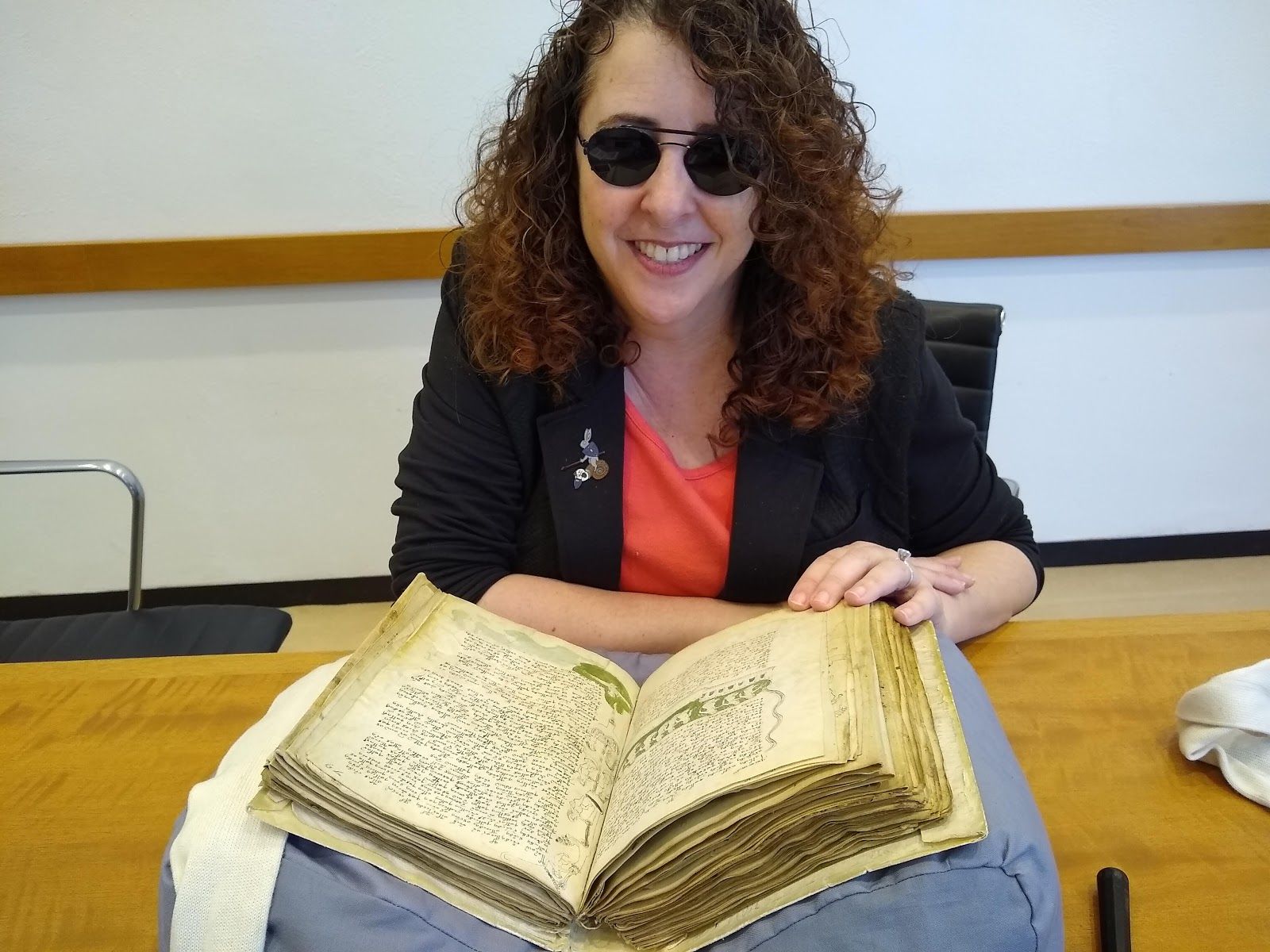
Lisa Fagin Davis
Lisa Fagin Davis received her Ph.D. in Medieval Studies from Yale University in 1993. She is a paleographer, codicologist, and bibliographer with a particular interest in pre-1600 manuscript fragments and …
Advance Reading List
Required Readings
- R. G. Babcock and F. Coulson, eds., The Oxford Handbook of Latin Palaeography (Oxford University Press, 2020) (shared drive):
- Frank T. Coulson, “Introduction,” pp. xix–xxii.
- Teresa de Robertis, “Old Roman Cursive,” pp. 39–59.
- Teresa de Robertis, “New Roman Cursive,” pp. 60–78.
- David Wright, “Capital Scripts,” pp. 79–97.
- R. G. Babcock, “Uncial Script,” pp. 98–108.
- Section I.3: Early Medieval Hands (Beneventan, Visigothic, Luxeuil, Merovingian, St. Gall, and Insular).
- Albert Derolez, “The Nomenclature of Gothic Scripts,” pp. 301-320.
- Marie-Hélène Tesnière, “Gothic Script in France in the Later Middle Ages (XIIIth-XVth Centuries),” pp. 321-360.
- Richard H. Rouse and Mary A. Rouse, “Book Production in Paris,” pp. 813-822.
- Teresa De Robertis, “Humanistic Script: Origins,” pp. 511–521.
- Teresa De Robertis, “Humanistic Script: Italy,” pp. 522–552.
- David Ganz, “Early Caroline: France and Germany,” pp. 237–261.
- Selected readings from R. Clemens and T. Graham, An Introduction to Manuscript Studies (Cornell University Press, 2007) <https://www.dropbox.com/sh/9g8ov5h4p6k62zr/AAD4WoItBGagFWYkJjJqGY84a?dl=0>
- “Writing Supports,” pp. 3–17.
- “Punctuation and Abbreviation,” pp. 82–93.
- “The Gospels of Saint Augustine” in C. de Hamel, Meetings with Remarkable Manuscripts, pp. 10-53.
- David Ganz, “Book production in the Carolingian empire and the spread of Caroline minuscule” in R. McKitterick (Ed.), The New Cambridge Medieval History, Vol. II, pp. 786-808.
- Erik Kwakkel, “Biting, Kissing and the Treatment of Feet: The Transitional Script of the Long Twelfth Century” in Erik Kwakkel, Rosamond McKitterick & Rodney Thomson, Turning Over a New Leaf: Change and Development in the Medieval Book (Leiden University Press, 2012), pp. 79-125.
Course Evaluations
Course History
-
2023–
Lisa Davis Fagin teaches this course.
-
2006–2018
Consuelo Dutschke teaches this course.
-
1994
Albert Derolez teaches a precursor course, “Introduction to Latin Paleography.”