
Course Description
“A thrilling introduction to both codicology and digital humanities for someone with any humanistic background.” —2017 student This course is designed to introduce students of both the digital humanities and manuscript studies to the concepts and realities of working with medieval manuscripts in the twenty-first century. Through the course, students and faculty will examine materials from the collections of the Kislak Center for Special Collections, Rare Books and Manuscripts, as well as digitized versions of those materials and others. Students in the course will consider four issues relating to using medieval manuscripts in a digital world. The first issue is theoretical, considering the relationship between medieval manuscripts and their digital counterparts, and questioning the notion of digital surrogacy. What does “digital surrogacy” mean and how might it affect our consideration of the physical objects represented through the surrogate? The second issue is the practical one of imbuing best practices when creating digital assets out of medieval manuscripts. If we are to digitize manuscripts, how can we ensure that those digital versions are the best they can be? And again: what does that mean? The third issue concerns the present landscape for digital medieval manuscripts (and medieval studies more generally), including current publication technologies and the place of Open Data. The fourth issue is that of building resources with and for digitized medieval manuscripts. What tools are available to enable us to create something new? As a final project, students and faculty in the course will work together to build something new—either “hacking” an application to display and sort medieval manuscript data, or creating an exhibition using an existing platform (such as Omeka). The specific direction of the final project will depend upon the skill sets available in the room. Students should plan to bring a laptop with them to class. In their personal statement, applicants should indicate their background, special interests, and expectations from the course. They should clearly state their experience working with manuscripts or manuscript-related courses they have taken, as well as any experience using digital technologies. Although it is expected that some students will have some technological experience, it is not a requirement for the course.Faculty
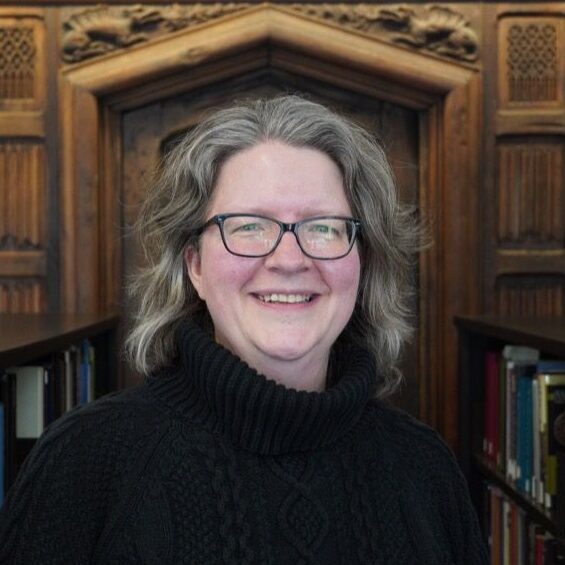
Dot Porter
As Curator of Digital Research Services at the Schoenberg Institute for Manuscript Studies, Dot Porter works with a wide-ranging digital humanities research and development team within the context of a …
Advance Reading List
Required Reading
Borland, Jennifer. “Unruly Reading: The Consuming Role of Touch in the Experience of a Medieval Manuscript.” In Scraped, Stroked, and Bound: Materially Engaged Readings of Medieval Manuscripts, edited by Jonathan Wilcox, 97–114 and plates 225–230. Turnhout: Brepols, 2013. Available for download via academia.edu.
Echard, Sian. Printing the Middle Ages. Philadelphia: University of Pennsylvania Press, 2008. Read “Coda. The Ghost in the Machine: Digital Avatars of Medieval Manuscripts,” pp. 198–216.
Edwards, A.S.G. “Back to the real?” Times Literary Supplement (7 June 2013). http://www.the-tls.co.uk/articles/public/back-to-the-real/.
Holsinger, Bruce et al. “Medieval Studies in the Age of Big Data: A Serial Forum.” Burnable Books (13 December 2012). https://web.archive.org/web/20160712025923/http://burnablebooks.com/medieval-studies-in-the-age-of-big-data-a-serial-forum/. (This is just the introduction; see also posts in the forum).
Houston, Kerr. “Surface and Substance.” Material Collective (15 January 2015). http://thematerialcollective.org/surface-substance/.
Jacobs, James A. “‘An alarmingly casual indifference to accuracy and authenticity.’ What we know about digital surrogates.” Free Government Information (1 March 2015). http://freegovinfo.info/node/9572.
Kichuk, Diana. “Loose, Falling Characters and Sentences: The Persistence of the OCR Problem in Digital Repository E-Books.” Portal: Libraries and the Academy 15:1 (2015): 59–91. doi:10.1353/pla.2015.0005.
Schöch, Christof. “Big? Smart? Clean? Messy? Data in the Humanities” Journal of Digital Humanities 2:3 (Summer 2013).
http://journalofdigitalhumanities.org/2-3/big-smart-clean-messy-data-in-the-humanities/.
Treharne, Elaine. “Fleshing out the Text: the Transcendent Manuscript in the Digital Age.” postmedieval: a journal of medieval cultural studies 4:4 (December 2013). http://www.palgrave-journals.com/pmed/journal/v4/n4/full/pmed201336a.html.
Recommended Reading
Clemens, Raymond and Timothy Graham. Introduction to Manuscript Studies. Cornell: Cornell University Press, 2007.
Course Evaluations
Course History
- 2014–2019
Will Noel and Dot Porter co-teach this course.