
Course Description
Many sessions will focus on censorship in early modern Europe, including the Inquisition and its practices, the impact of the printing press, the economic incentives and profit motives which shaped the entangled histories of censorship and copyright law, and traditions of clandestine literature in the Renaissance and Enlightenment. Some sessions will jump forward to compare patterns revealed by early modern censorship to modern examples ranging from internet censorship and videogames to document destruction and library book challenges, with special attention to wartime censorship, comic books, digital-rights management, and free speech on our own campus. Patterns in the recurring activities and goals of censoring bodies over time and space reveal the motives which lead people to support censorship, even in cultures that claim to value free expression.
Faculty
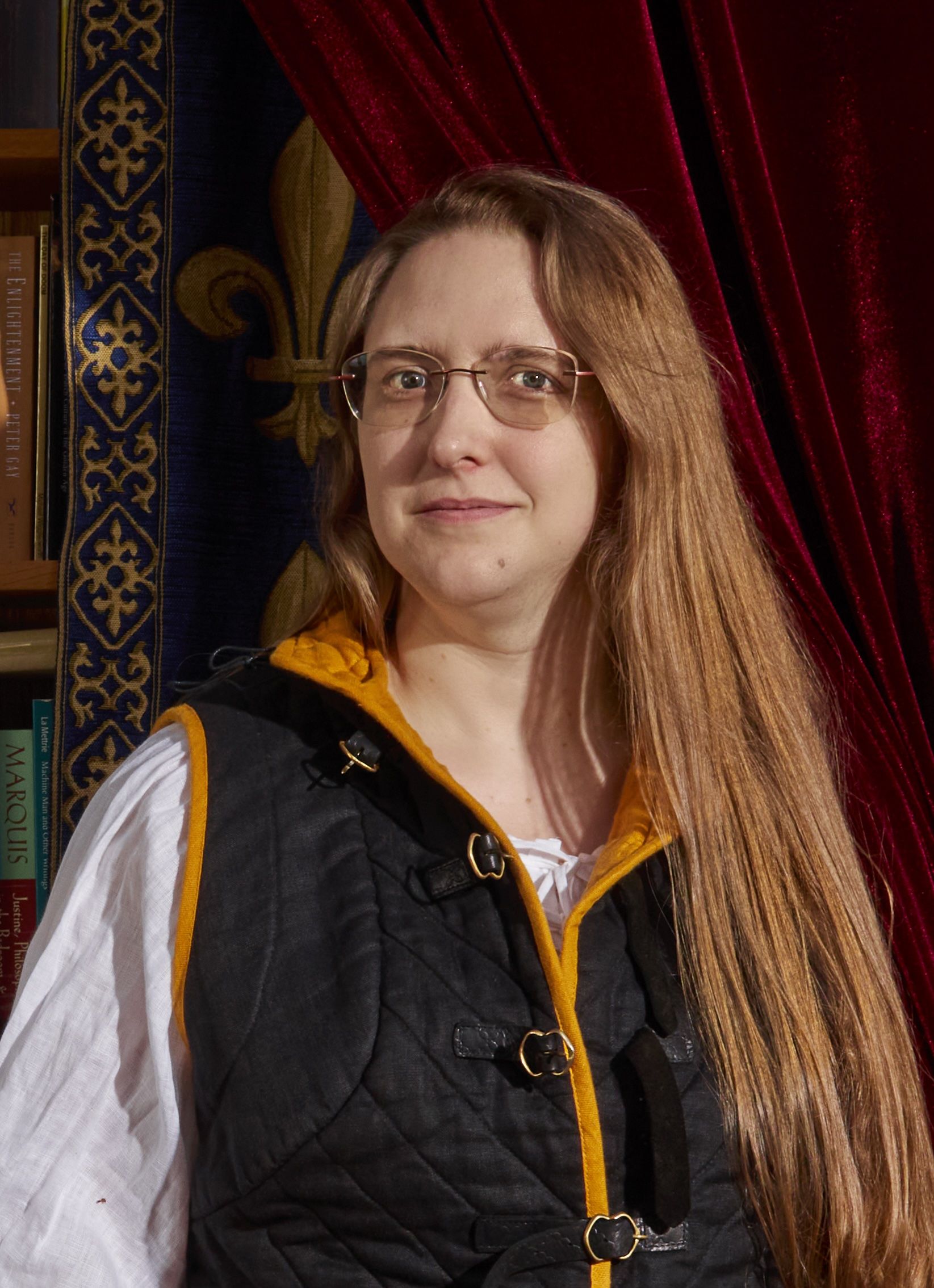
Ada Palmer
Ada Palmer is a historian focusing on the history of censorship and radical thought. Her current research treats censorship and radical heterodoxy, especially the ways censorship evolves and changes during …
Advance Reading List
All readings are optional, but a short suggested chapter to accompany each day is listed below.
For Tuesday
- Black, Christopher F. “Censorship,” in The Italian Inquisition. New Haven: Yale University Press, 1941. Pp. 158–207.
- Look at Exhibit Catalog for Censorship and Information Control from the Inquisition to the Internet.
For Wednesday
- Findlen, Paula, and Hannah Marcus. “Science under Inquisition, Heresy and Knowledge in the Catholic Reformation in Rome.” Review of Ugo Baldini and Leen Spruit, The Catholic Church and Modern Science: Documents from the Archives of the Roman Congregations of the Holy Office and the Index.
- Look at: Milton. Areopagitica . (just read enough to get a sense of his arguments). Abridgment provided among the downloadable readings, but you can read less or read the unabridged text.
- Optional: Johns, Adrian. Piracy: the Intellectual Property Wars from Gutenberg to Gates. Chapter 1 (A General History of the Pirates).
For Thursday
- Orwell, George. “The Prevention of Literature,” in Orwell’s Nineteen Eighty-Four: Text, Sources, Criticism, ed. Irving Howe. London: Harcourt, 1963. Pp. 262–273.
- Look at: American Library Association Office of Intellectual Freedom. Top Ten Frequently Challenged Books Archive 2024.
- Optional: Gaiman, Neil. “Why Defend Freedom of Icky Speech?” Neil Gaiman’s Journal, 2008.
- *A powerful articulation, but must be complexly reassessed given events with the author.
- Optional Alternative: Lynn Hunt ed. The Invention of Pornography. “Introduction: Obscenity and the Origins of Modernity, 1500–1800.”
For Friday
- Orwell, George. Nineteen Eighty-Four. Excerpt: read chapters 1, 4, 5 (Partial), Appendix on Newspeak.
Recommended Follow-Up Reading
Top Recommendations
- Black, Christopher F. “Censorship,” in The Italian Inquisition. New Haven: Yale University Press, 1941. Pp. 158–207.
- _______, The Roman Inquisition.
- Darnton, Robert. Censors at Work: How States Shaped Literature. First edition. New York, NY: W.W. Norton & Company, 2014.
- Doctorow, Cory, Amanda Palmer, and Neil Gaiman. Information Doesn’t Want to Be Free: Laws for the Internet Age. San Francisco: McSweeney’s, 2014.
- Doctorow, Cory. Content: Selected Essays on Technology, Creativity, Copyright, and the Future of the Future. 1st ed. San Francisco: Tachyon Publications, 2008.
- Eisenstein, Elisabeth. The Printing Press as an Agent of Change. Cambridge: Cambridge University Press, 1980.
- Johns, Adrian. Piracy: The Intellectual Property Wars from Gutenberg to Gates. Chicago: University of Chicago Press, 2009.
- Marcus, Hannah Florence. Forbidden Knowledge: Medicine, Science, and Censorship in Early Modern Italy. 2022.
- Orwell, George. “The Prevention of Literature,” in Orwell’s Nineteen Eighty–Four: Text, Sources, Criticism, ed. Irving Howe. London: Harcourt, 1963, 262–273.
- _______. Nineteen Eighty–Four. Chapters 1, 4, 5 (Partial), Appendix on Newspeak.
- Slauter, Will. “Copyright and the Political Economy of News in Britain, 1836–1911,” extract from chapter 5 of Who Owns the News? A History of Copyright (Stanford University Press, 2019), forthcoming as an article in Victorian Periodicals Review 51, no. 4 (Winter 2018).
Long List
- “Magic in History” series, Penn State.
- American Library Association. “Top Ten Most Challenged Books Lists, 2000–2009” March 26, 2013. http://www.ala.org/advocacy/bbooks/frequentlychallengedbooks/top10
- Belew, Kathleen. Bring the War Home, chapter 4, “Mercenaries and Paramilitary Praxis,” pp. 77–102.
- Chuchiak IV, John F., ed. The Inquisition in New Spain, 1536–1820.
- Comic Book Legal Defense Fund. “History of Comics Censorship.” cbldf.org/resources/history–of-comics-censorship/
- Comic Book Legal Defense Fund. Banned Books Week Handbooks, 2017, 2018.
- Copeland, David. The Idea of a Free Press: The Enlightenment and its Unruly Legacy. Evanston: Northwestern University Press, 2006. Pp. 139–213, 249–62. (The whole book is online).
- _______. The Media’s Role in Defining the Nation: The Active Voice. New York: Peter Lang, 2010.
- Craze, Joshua. “Excerpts from a Grammar of Redaction.” (From “Grammar of Redaction,” New Museum Temporary Center for Translation 2014.) In Archival Dissonance: Knowledge Production and Contemporary Art, ed. Anthony Downey. London: I.B. Tauris/Ibraaz, 2015.
- Davidson, Nicholas. “The Strange Case of the Roman Inquisition.” Conference paper.
- Doniger, Wendy. “Banned in Bangalore,” The New York Times, March 5, 2014.
- _______. “India: Censorship by the Batra Brigade,” The New York Review of Books, May 8, 2014.
- Findlen, Paula and Hannah Marcus. “Science under Inquisition: Heresy and Knowledge in Catholic Rome.” Isis 103 (2012), 376–382.
- Foucault, Michel. “What is an Author?” The Essential Foucault, ed. Paul Rabinow and Nikolas Rose. New York: New Press, 2003: 377–91.
- Freedom House. “Freedom on the Net 2017.”
- Friedman, Andrea. Prurient Interests: Gender, Democracy and Obscenity in New York City, 1909–1945. Chapter 2: “‘The Habitats of Sex Crazed Perverts’: Campaigns Against Burlesque,” 62–94.
- *Gaiman, Neil. “Why Defend Freedom of Icky Speech?” Neil Gaiman’s Journal. http://journal.neilgaiman.com/2008/12/why-defend-freedom-of-icky-speech.html
- *A powerful articulation, but must be complexly reassessed given events with the author.
- Hunt, Lynn, ed. The Invention of Pornography.
- Hunter, Michael and David Wootton, eds. Atheism from the Reformation to the Enlightenment. (Especially the chapters by David Wootton and Nicholas Davidson.)
- Indian Writers’ Forum. “Statement from the Indian Writers’ Forum,” 23 July 2018.
- Johns, Adrian. “The Information Defense Industry and the Culture of Networks.” A Modern 2 (2013). http://amodern.net/article/the-information-defense-industry-and-the-culture-of-networks/
- _______. Death of a Pirate: British Radio and the Making of the Information Age. 1st ed. New York: W.W. Norton & Co, 2011.
- _______. The Nature of the Book: Print and Knowledge in the Making. Chicago: University of Chicago Press, 1998.
- Kors, Alan Charles and Harvey A. Silverglate. The Shadow University: The Betrayal of Liberty on America’s Campuses. New York: Free Press, 1998.
- Kors, Alan Charles. Atheism in France, 1650–1729. Princeton, N.J: Princeton University Press, 1990.
- _______. Epicureans and Atheists in France, 1650–1729. Cambridge, United Kingdom: Cambridge University Press, 2016.
- _______. Naturalism and Unbelief in France, 1650–1729. Cambridge, United Kingdom: Cambridge University Press, 2016.
- Liebman. The Jews in New Spain: Faith, Flame, and the Inquisition.
- Marcus, Hannah. “The Mind of the Censor: Girolamo Rossi, a Physician and Censor for the Congregation of the Index.” Early Science and Medicine, v. 23 (1–2) 2018,14–33.
- Matytsin, Anton M. The Specter of Skepticism in the Age of Enlightenment.
- Mill, John Stuart. On Liberty, chapter 2.
- Nesvig, Martin. Ideology and Inquisition: The World of the Censors in Early Mexico.
- Nicholson, Stephen. “Not Recommended for Licence: British Theatre Under the Lord Chamberlain,” in Global Insights on Theatre Censorship, ed. Catherine O’Leary, Diego Santos Sánchez, and Michael Thompson. New York: Routledge, 2016. Pp. 221–233.
- Nicholson, Steve. “Staging Hitler, Not Staging Hitler,” in Rebecca D’Monte ed., British Theatre and Performance 1900–1950 (Methuen Bloomsbury, 2015), 223–240.
- _______. The Censorship of British Drama, 1900–1968. Exeter: University of Exeter Press, 2003–2014.
- Nielsen Hayden, Teresa. Making Book. “On Copyediting,” pp. 119–144, and “The Pastafazool Cycle,” pp. 154–158.
- Priolkar. The Goa Inquisition.
- Rocke, Michael. Forbidden Friendships.
- Shepard, Kenneth. Anti-Atheism in Early Modern England 1580–1720.
- Sinnreich, Aram. Mashed Up: Music, Technology, and the Rise of Configurable Culture. Amherst: University of Massachusetts Press, 2010.
- _______. The Piracy Crusade: How the Music Industry’s War on Sharing Destroys Markets and Erodes Civil Liberties. Amherst: University of Massachusetts Press, 2013. Chapter 8, “Guilty until Proven Innocent: Anti–Piracy and Civil Liberties” and chapter 9, “Is Democracy Piracy.” Pp. 160–200.
- Slauter, Will. “Upright Piracy: Understanding the Lack of Copyright for Journalism in Eighteenth-Century Britain,” Book History, 16 (1), 34–61.
- Stow, Kenneth R. “The Burning of the Talmud in 1553, in the Light of Sixteenth Century Catholic Attitudes toward the Talmud.” Bibliothèque d’Humanisme et Renaissance, T. 34, No. 3 (1972): 435–459.
- Tiffert, Glen. “Turning Scholars into Unpersons.” Hoover Digest, 2013 n. 3. Pp. 107–114.
- Vaidhyanathan, Siva. Copyrights and Copywrongs: the Rise of Intellectual Property and How it Threatens Creativity. New York: New York University Press, 2001.
- _______. The Googlization of Everything (And Why We Should Worry). Berkeley: University of California Press, 2012.
Course Evaluations
Course History
-
2025–
Ada Palmer teaches this course in person.