
-
DateMonday, 1 June 2026
-
time5:30 p.m. ET
-
Location Room 330, UVA’s Shannon Library (160 McCormick Rd) & via Zoom livestream
-
DetailsFree & open to the public. Reception to follow at RBS (UVA’s Edgar Shannon Library, Room 230).
- The 2026 Kress Foundation Art of the Book in Europe Lecture
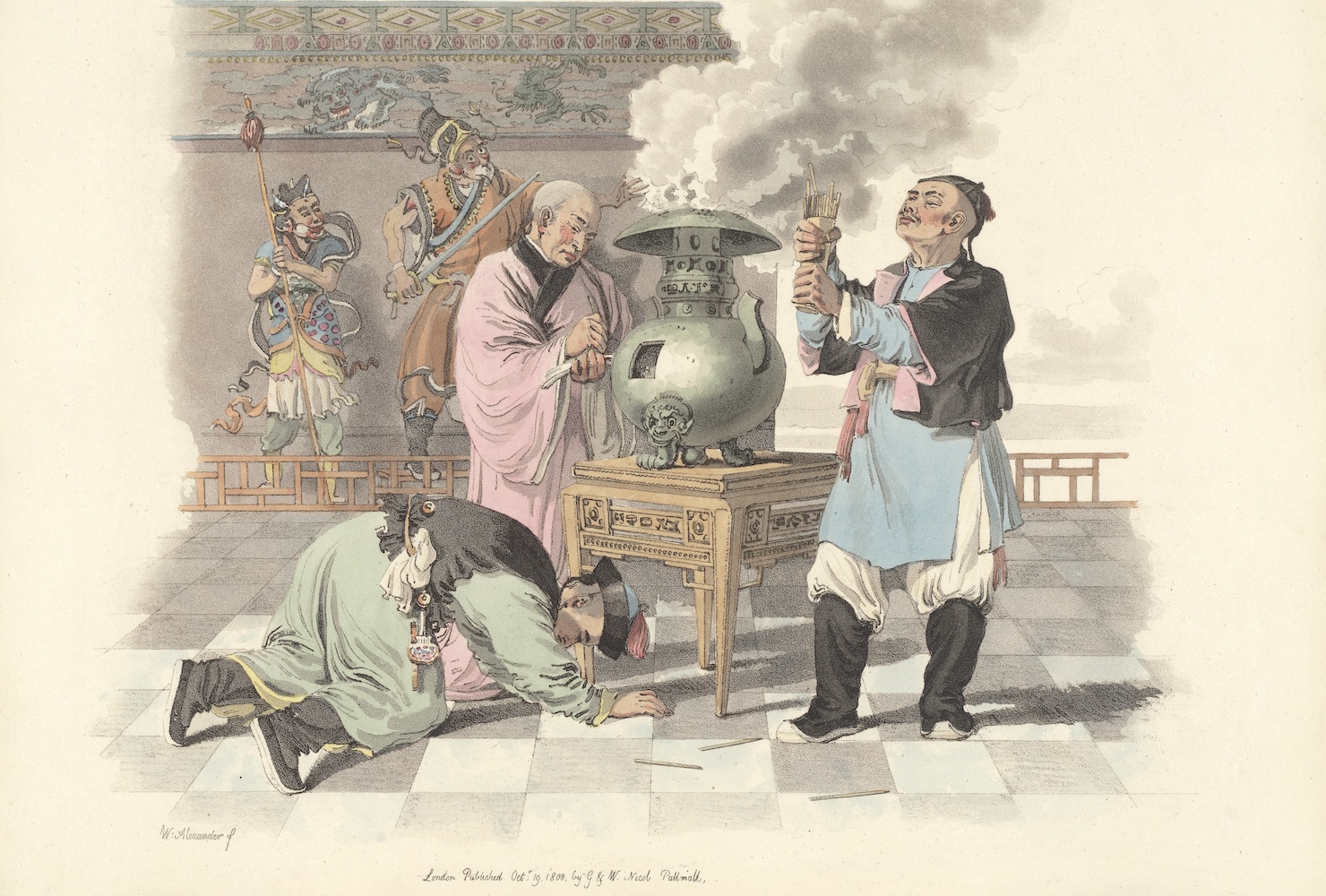
When London viewers opened elegant folio books like Oriental Scenery or The Costume of China they were not just engaging with visual and cultural difference. They were also seeing an image process that was quite familiar. Polite interest in picturesque sketching meant that many Britons had experience drawing outlines, “dead coloring” shadows, and adding enlivening watercolor touches. This three-stage process also occurred in aquatint printmaking; a finely etched outline was made, broad washes of tone were added, and then strategic watercolor flourishes completed the print. This lecture frames that familiarity as the “haptic picturesque,” which surely sounds like an oxymoron for those who think of the picturesque as a purely visual encounter. Aquatint travel books, which were at their height between 1780 and 1830, took the familiar process of “tinted drawings” to distant lands. These luxury books enabled metropolitan viewers to imagine themselves sketching an Indian market or a Chinese temple. They constructed an empire of imaginative projections. As a term, the haptic picturesque unsettles rigid categories between periphery and center, and it suggests that landscapes of sense and sensibility were also landscapes of tactile sensation.
About the Speaker
Douglas Fordham is Professor of Art History at the University of Virginia where he currently serves as Department Chair. As a historian of art and the British empire, Fordham is interested in a wide range of visual arts from the seventeenth century to the present in the Anglophone world. He is a co-editor of Art and the British Empire (2007) which helped to place empire at the center of the study of British art. His first monograph, British Art and the Seven Years’ War: Allegiance and Autonomy (2010) examined the relationship of imperial politics to artistic organization in eighteenth-century London. His second monograph, Aquatint Worlds: Travel, Print, and Empire (2019) considered how the newly discovered medium of aquatint printmaking conditioned the representation of cultures beyond Europe circa 1800. Douglas has worked with the Fralin Museum of Art and the Kluge-Ruhe Collection of Aboriginal Art on a number of exhibitions including Boomalli Prints & Paper: Making Space as an Art Collective (2022). His most recent article, “English Graffiti and the Printed Image,” will appear shortly in the journal Art History.
This event is part of Rare Book School’s 2026 Summer Lecture Series.