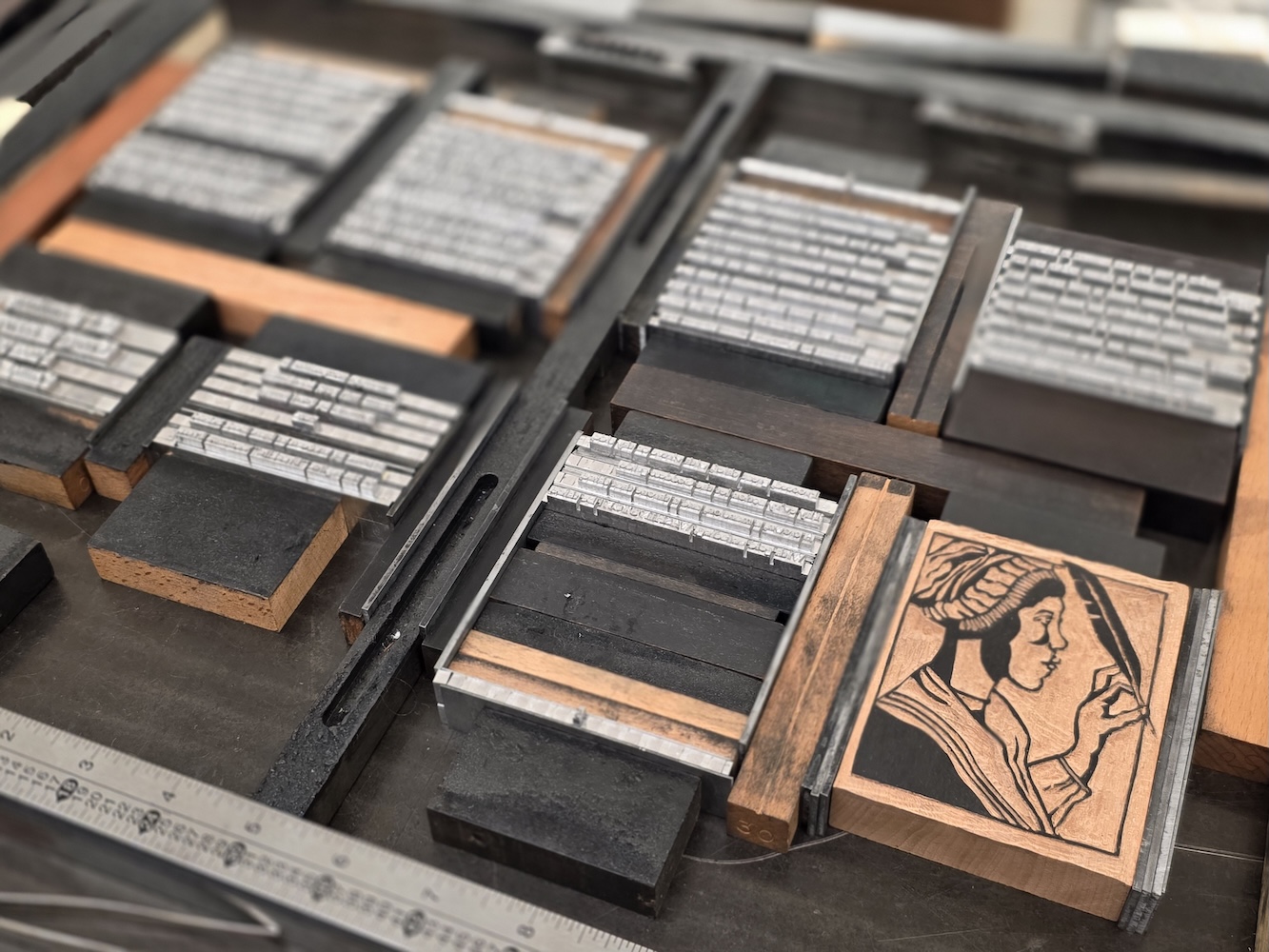
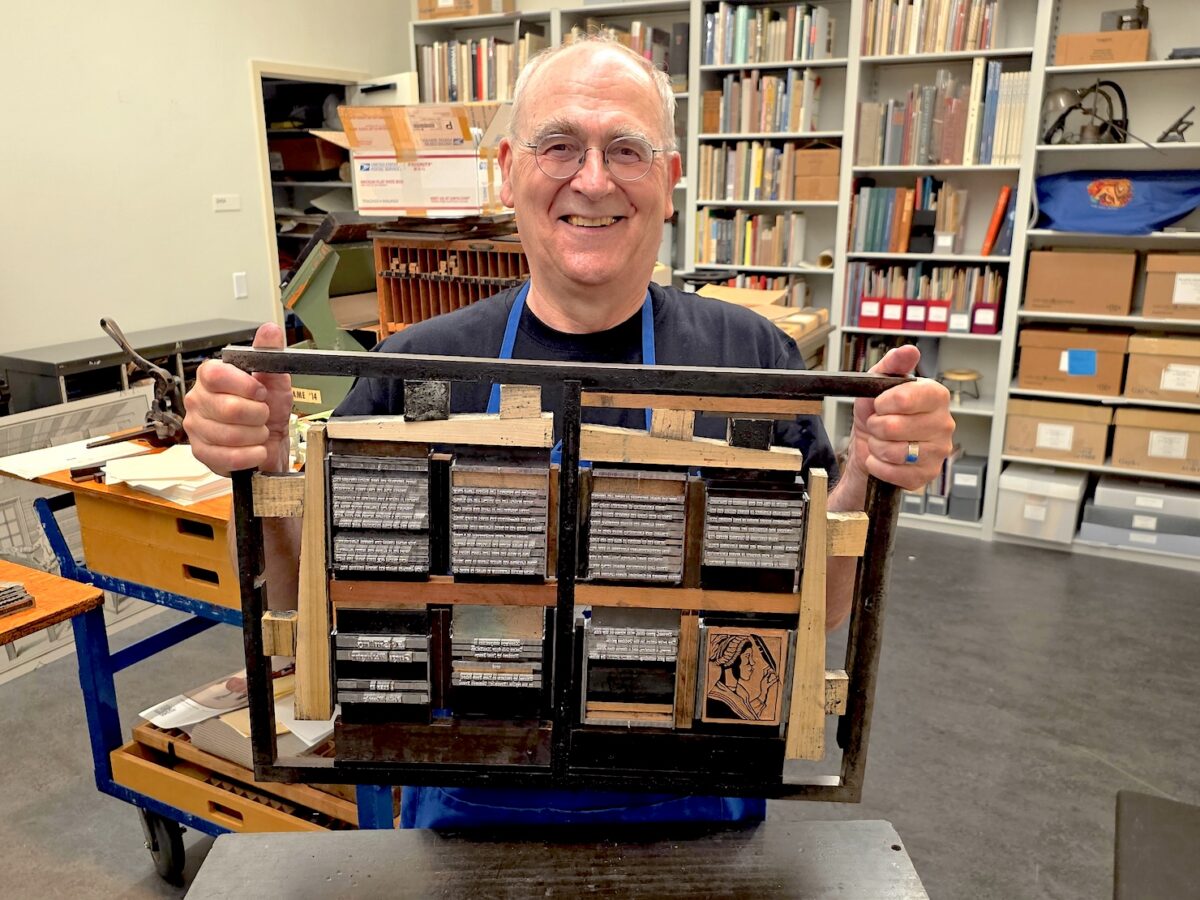
On a rainy afternoon in late May, Josef Beery is in Rare Book School’s Printing Office, locking type into a form for printing a short booklet edition of Phillis Wheatley’s 1775 poem His Excellency General Washington. Beery checks for any loose pieces of type, making occasional adjustments to the furniture holding the lines in place, then he cautiously lifts the unbacked form from the imposing stone. It holds, and he breathes a sign of relief. His labor has not been in vain.
An alumnus of the University of Virginia (UVA), Beery studied history and architecture in the mid-1970s before moving into the field of graphic design. In 1975, Beery’s first-year roommate introduced him to UVA Special Collections curator Clint Sisson. Sisson, in turn, introduced Beery to the world of historical printing—a passion that has shaped his subsequent career.
In 1995, Beery helped to establish the Virginia Arts of the Book Center (VABC) in Charlottesville, which became Virginia Book Arts (VBA) in 2025. As Beery notes on his website, “The support and encouragement of amateur historian Cal[vin P.] Otto and professional librarian Terry Belanger were seminal in our success.” Belanger, Rare Book School’s Founding Director, had recently moved the School to UVA from its former home at Columbia University. Beery and Belanger moved in the same circles, building connections throughout Virginia’s bibliographical community.
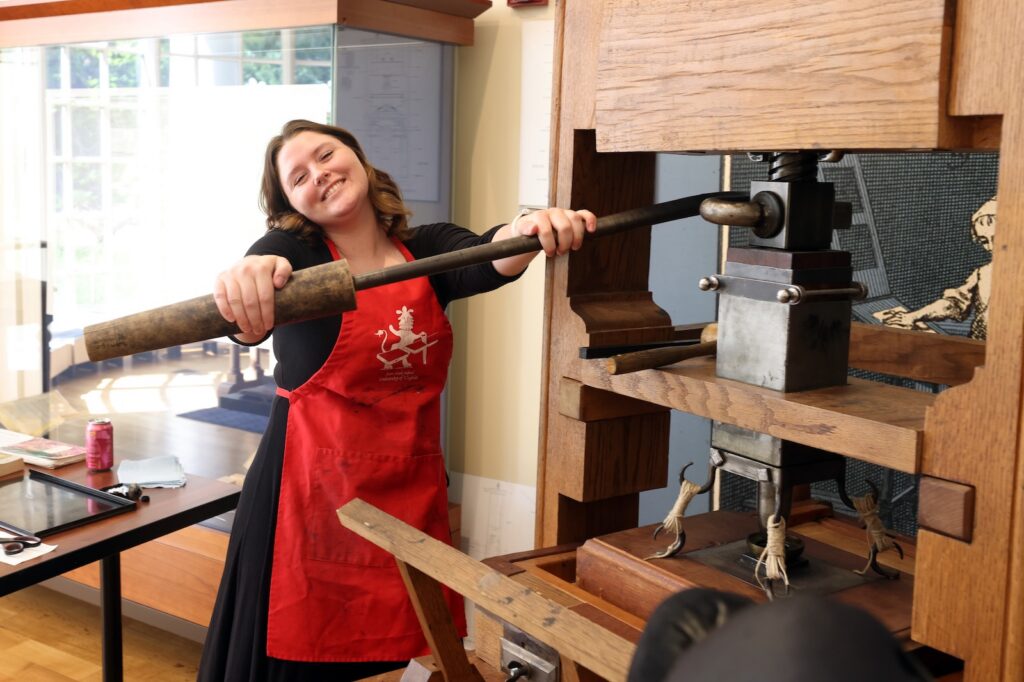
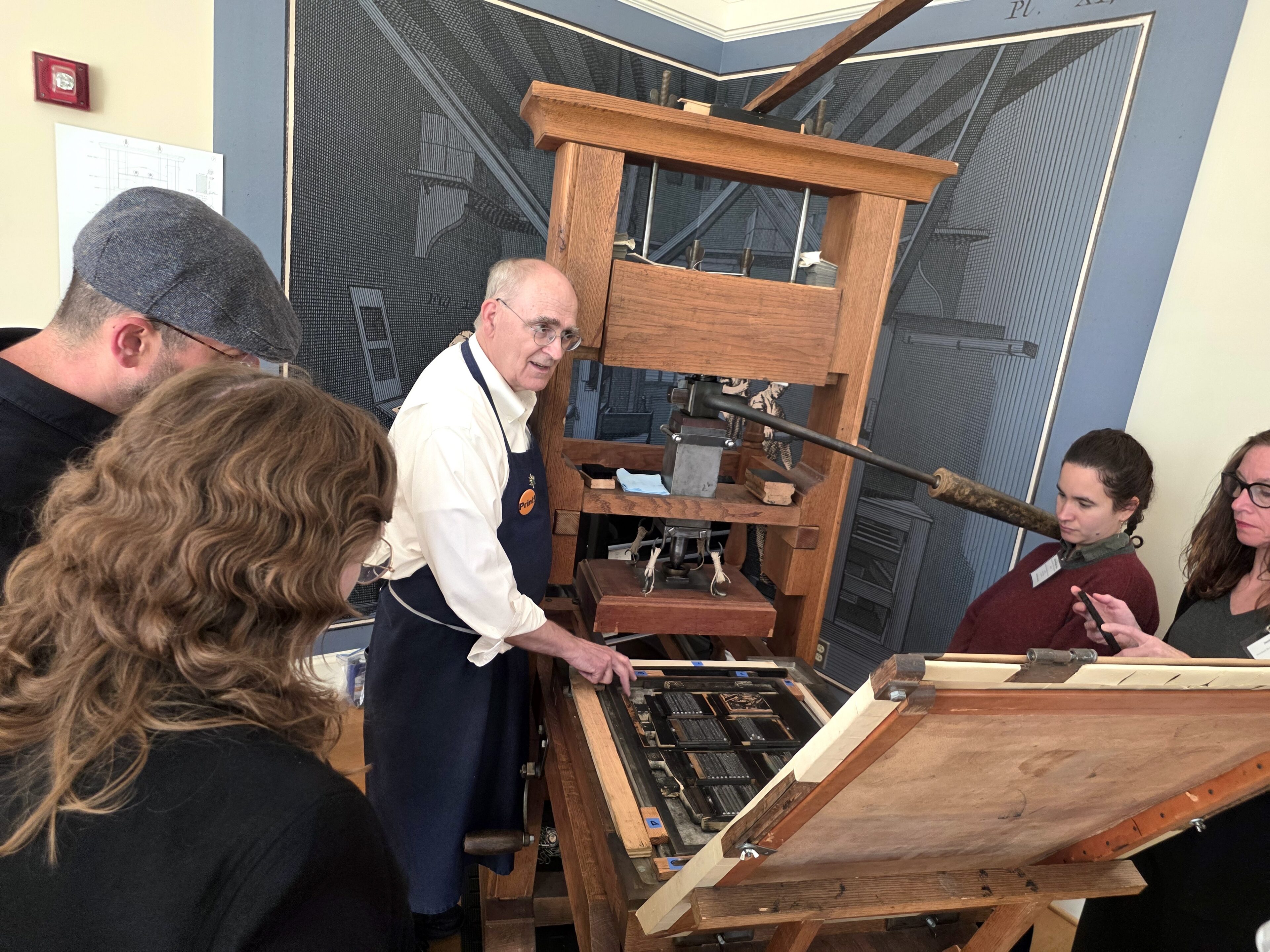
Beery eventually began running printing demonstrations for Rare Book School on UVA’s replica eighteenth-century press, built by Sisson in 1978, after the nation’s bicentennial. Sisson had modeled his design on the c.1720 “Franklin” common press—so called because Benjamin Franklin purportedly printed on it in London—at the Smithsonian Institution’s National Museum of American History (NMAH, at the time the Museum of History and Technology). Sisson built a second replica of this press for the NMAH’s 1985 exhibition “American Democracy: A Great Leap of Faith,” but his original reconstruction stayed at UVA, where it is currently housed in the Harrison Institute/Small Special Collections Library’s South Gallery. For more than a decade, Beery has used this press to teach hundreds of RBS students about hand-press printing techniques.
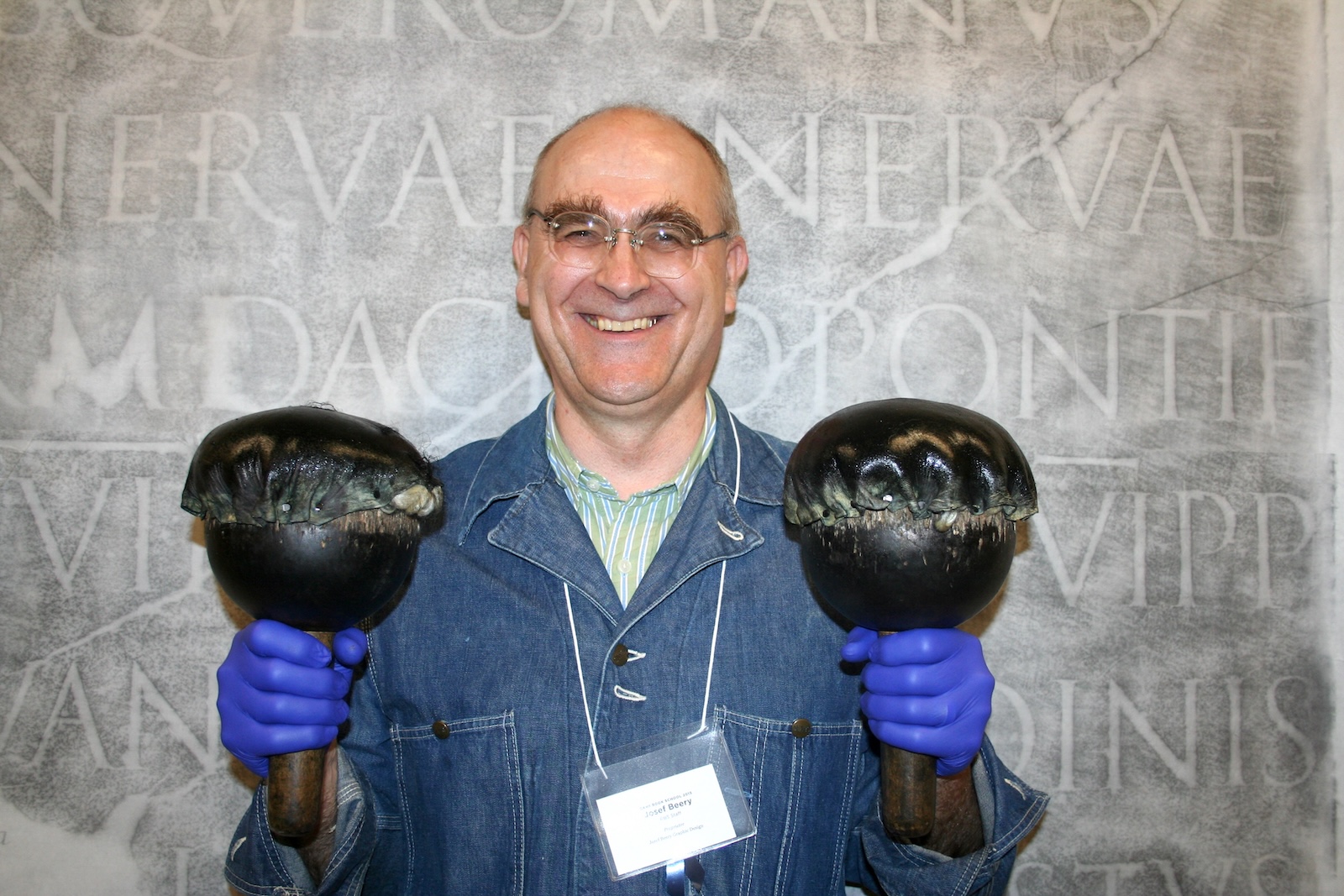
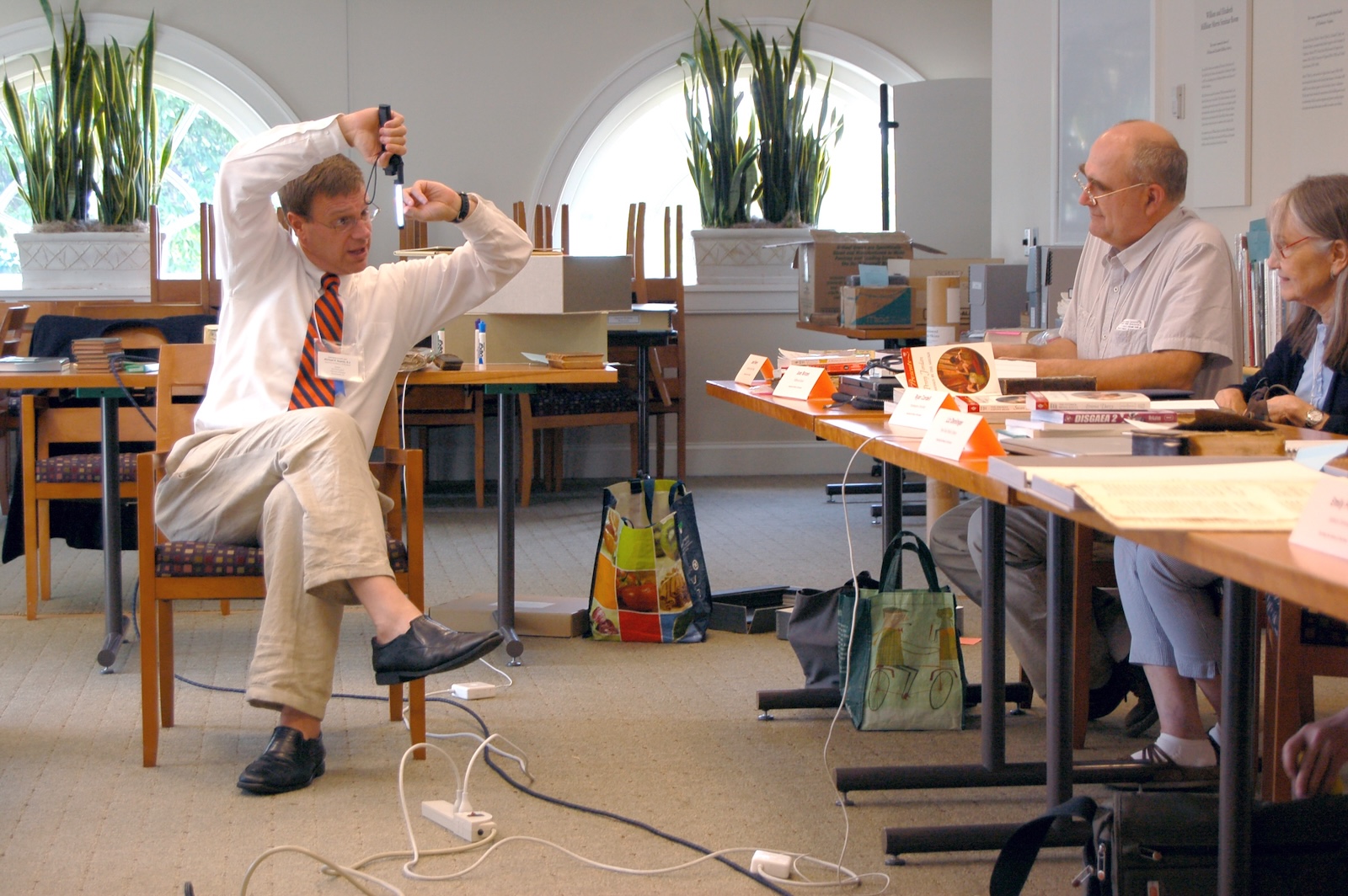
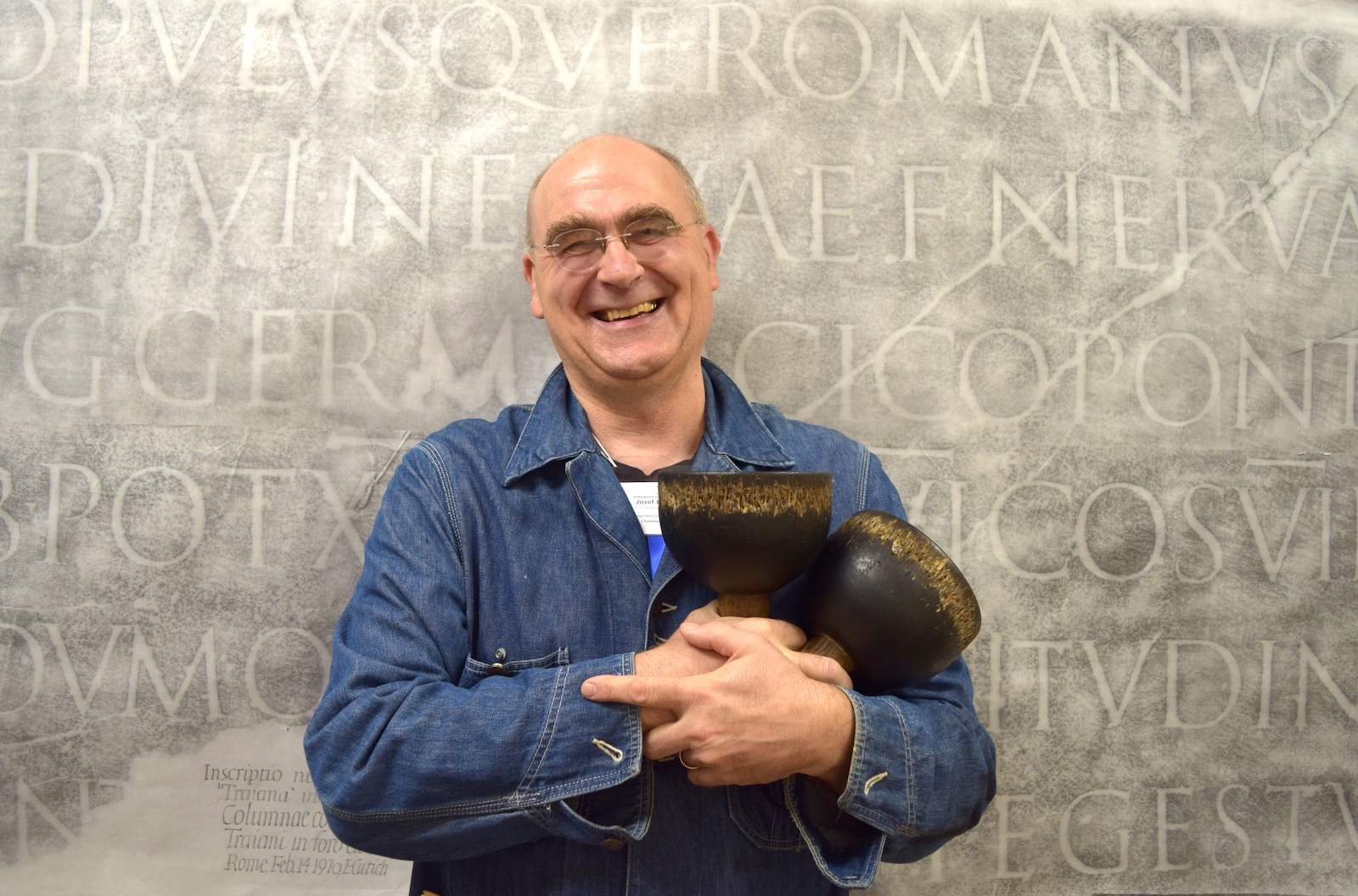
In exchange for leading these printing demonstrations for Rare Book School, former Programs Director Amanda Nelsen invited Beery to enroll in RBS courses. In 2014, he took H-90: Teaching the History of the Book, taught by Belanger’s successor, Executive Director Michael F. Suarez, S.J. Also in the class that year were Emily Friedman (now Jean Wickstrom Liles Associate Professor of English at Auburn University) and Ryan C. Cordell, a member of RBS’s Society of Fellows in Critical Bibliography (now Associate Professor in the School of Information Sciences at the University of Illinois Urbana-Champaign). Friedman and Cordell asked Beery if he might lead further printing demonstrations for them, but their institutions did not have any historical printing presses for them to use.
Ever the innovator, Beery considered the problem. “I took a little flower press that we had in the Book Center I had started downtown,” he recalls, “and I said, ‘I wonder if you could print on this?’ And I found out that you could. So, I put it all together and took it down to Auburn. We had a great time, and I came back, and Ryan said, ‘Could you make one of those for me?'” Thus was born the idea for the BookBeetle, Beery’s portable tabletop hand press.
Beery’s creation proved a success. He has sold more than 100 of the small handmade presses to institutions seeking an affordable, space-friendly alternative to large historic or replica hand presses like the Franklin press. Cordell, for instance, explains that his idea for a community-focused printing and learning space at the University of Illinois Urbana-Champaign took root while “doing really cool hands-on stuff” at RBS. To get buy-in for his Skeuomorph Press, Cordell set up a BookBeetle on a media cart, which “allowed me to show my department how excited students get about this stuff.”
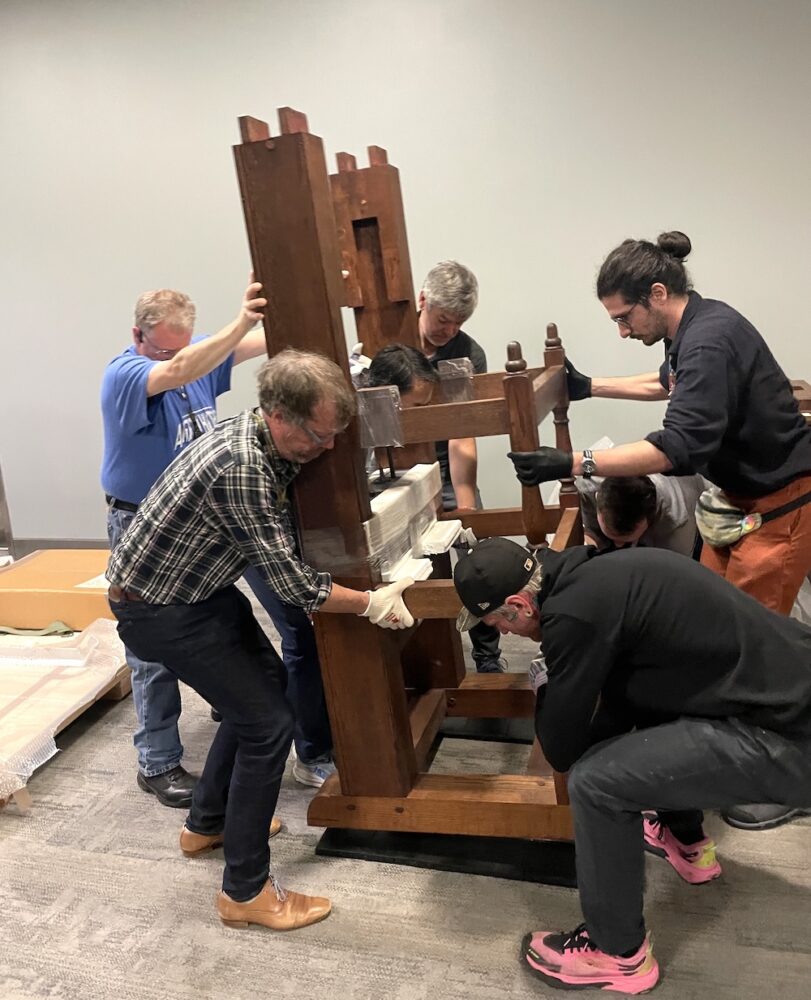
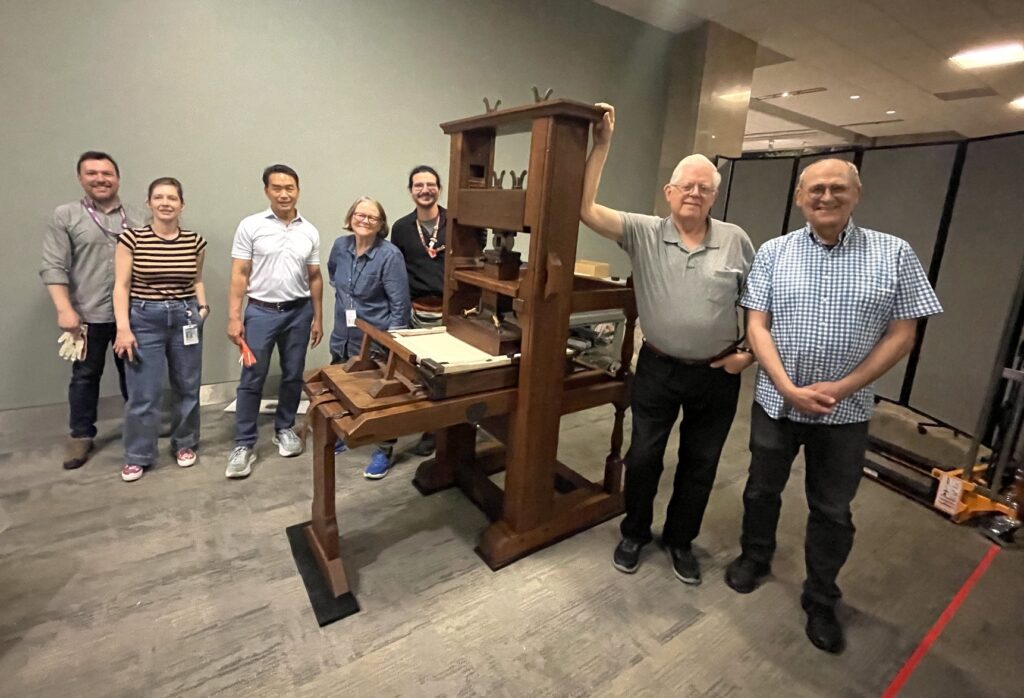
The BookBeetle’s portability is a particular strength, as it can easily be operated not only in the classroom, but also for public outreach events. As part of the Smithsonian Institution’s America 250 commemorations this year, the National Museum of American History has brought Sisson’s replica “Franklin” press out of storage. The museum assembled a team of experts, including Josef Beery; NMAH education coordinator Heather Paisley-Jones; typographer, former NMAH curator, and emeritus RBS faculty member Stan Nelson; and several others to assemble the press in a space on the museum’s second floor. A BookBeetle will be set up on a table alongside it. Visitors to the museum will be able to watch the Declaration of Independence be printed on a press similar to the one on which the original Declaration was printed, and then to print their own souvenir broadsides on the nearby BookBeetle.
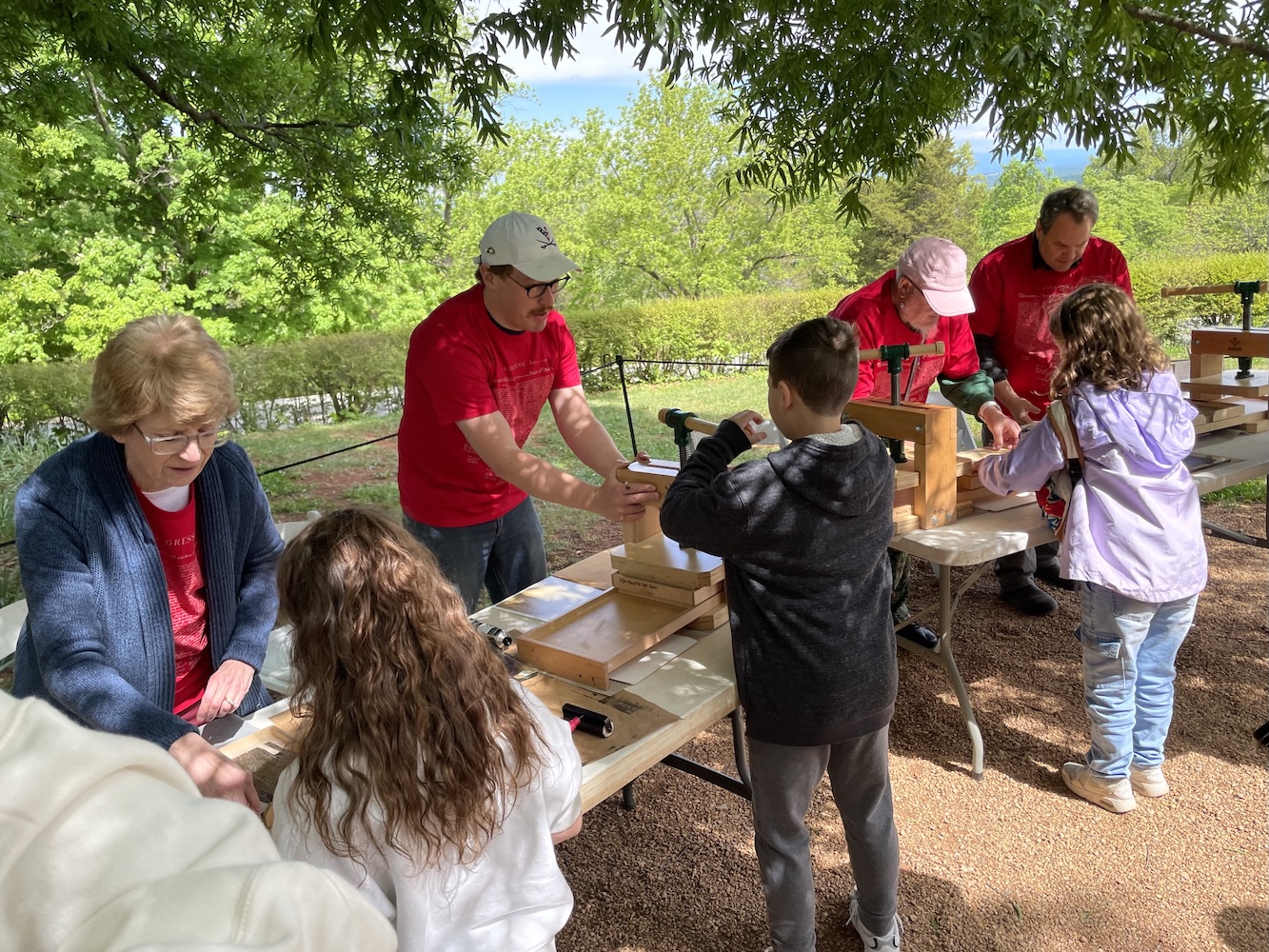
In Charlottesville, Beery has partnered with the California-based Arion Press to lead a series of Declaration of Independence Print Shop programs at Thomas Jefferson’s Monticello this summer. Visitors to Jefferson’s home will have the opportunity to print their own copy of the Declaration broadside during these events. Beery also has been working with UVA Special Collections Curator of Exhibits Holly Robertson to organize a Revolutionary Printing event on the Fourth of July, part of the University’s UVA250 public programming. Beery will be printing the Declaration from a new plate based on UVA’s Small Dunlap Broadside copy of the document, replacing the older plate used in past years, which was made from the University’s damaged McGregor Dunlap Broadside. Members of the public will be able to print their own Declarations, watch print demonstrations, and more during this event, which is co-sponsored by Rare Book School.
Back in the RBS Printing Office, Stan Nelson has pointed Beery to a diagram from French philosopher Denis Diderot’s (d. 1784) Encyclopedie. Always eager to learn from others both past and present, Beery removes the adjustable metal furniture from his Phillis Wheatley lock-up and replaces the pieces with angled wooden blocks, or quoins. At last satisfied with his creation, Beery carefully transfers the newly locked type block next door to the bed of UVA’s “Franklin” press. The form is now ready, he jokes, for a new cohort of Rare Book School students to learn “the history of printing according to Josef Beery.”
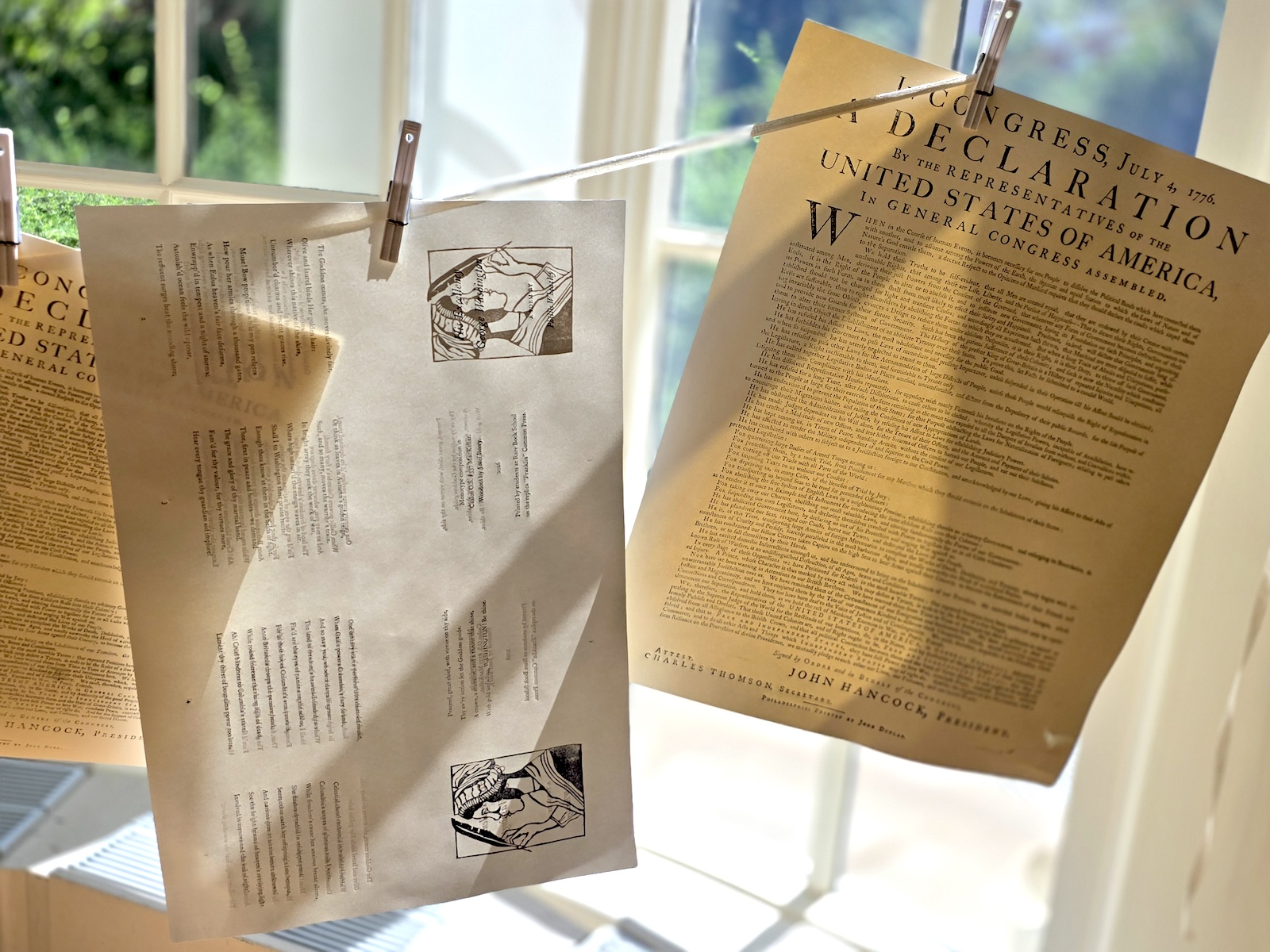
Cover photo by Andrew Shurtleff Photography, LLC, 2025.