
Course Description
A primary aim of this course is to give participants a toolkit to identify and date English bindings on historic books, distinguishing the contemporary from the later and the repaired, covering the progression of decorative styles, which enable simple as well as upmarket bindings to be recognized. It will focus on external, visible features rather than internal features. Although English bindings form the backbone of the course, bindings from continental Europe will be brought in to compare, contrast, and set the wider context. Consideration will also be given to the book historical landscape in which bindings should be seen, understood, and interpreted. “What are the questions I should ask when looking at a historic binding?” is a theme that will run through this course, and it is hoped that students will come to the end of the week better equipped both to pose and to answer those questions.
The course is designed for individuals who work regularly with historic books on which English bindings are likely to feature: librarians and curators, humanities researchers, collectors and dealers. It is not a practical course to learn how to bind, and its philosophy is book historical, not art historical–it will cover bindings of all kinds, the cheap, temporary, and simple as well as the extravagant and luxurious. Illustrated teaching sessions will be supplemented by opportunities to see and handle examples from the Rare Book School collections, and one day will be dedicated to a trip to the Folger Shakespeare Library in Washington, D.C., where we will look at about 80 bindings from their outstanding holdings.
Please note: the tuition for this course is $1,595, owing to the expenses associated with the scheduled field trip.
Faculty
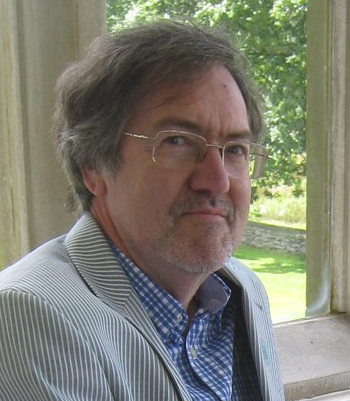
David Pearson
David Pearson retired in 2017 as Director of Culture, Heritage and Libraries for the City of London Corporation, after a professional career of 35 years or so working in various …
Advance Reading List
Advance Reading
Extensive pre-course reading is not a requirement for this course, which will be taught using examples and images to help build a personal toolkit for recognising and dating bindings. The best preparation will be personal experience of a range of historic bindings, handled in institutional or personal collections, combined with a wish to know more about where and when they were made, and what they might tell us.
David Pearson, English Bookbinding Styles, 1450–1800 (New Castle, DE: Oak Knoll Press, 2014, a slightly revised reissue of the original edition, London and New Castle, 2005) reflects the backbone around which the course is structured, so some familiarity with this is desirable, though it doesn’t need to be read in advance.
Other useful advance reading is:
Foot, Mirjam J. The History of Bookbinding as a Mirror of Society. London: British Library, 1998.
Foot, Mirjam J. Bookbinders at Work: Their Roles and Methods. London: British Library and New Castle, DE: Oak Knoll Press, 2006. Read Chapter 1, “Bibliography and Bookbinding History,” pp. 3–32.
Lock, Margaret. Bookbinding Materials and Techniques, 1700–1920. Toronto: The Canadian Bookbinders and Book Artists Guild, 2003.
Miller, Julia. Books Will Speak Plain: A Handbook for Identifying and Describing Historical Bindings. Ann Arbor, MI: Legacy Press, 2010. Read the Introduction, pp. 1–12.
Pickwoad, Nicholas. “Onward and Downward: How Binders Coped with the Printing Press before 1800.” In A Millennium of the Book: Production, Design, and Illustration in Manuscript and Print, 900–1900, edited by Robin Myers and Michael Harris, 61–106. New Castle, DE: Oak Knoll Press, 1994.
If not already familiar with them, have a look at the following:
Nixon, Howard M. and Mirjam M. Foot. The History of Decorated Bookbinding in England. Oxford: Clarendon Press, 1992.
Nixon, Howard M. Five Centuries of English Bookbinding. London: Scolar Press, 1978.
Foot, Mirjam J. The Henry Davis Gift: A Collection of Bookbindings. Vol. II: A Catalogue of North-European Bindings. London: British Library, 1983.
Course Evaluations
Course History
-
2018–
David Pearson teaches this course.