
Course Description
Blending book history, bibliography, and publishing networks with Indigenous systems of knowledge allows us to view Indigenous collections as belongings entwined with agency and familial relations. Drawing on current and foundational scholarship by Indigenous information professionals, librarians, curators, and archivists, we can begin to braid our knowledge of print culture with practices embedded in Indigenous ways of knowing, intervening in the historical bibliographical practices and research paradigms that have been imposed upon Indigenous-authored materials. This course will explore questions such as: what if we viewed books as relatives, and libraries as dance, song, and traditions? How do we (book historians and information professionals) strengthen our ability to envision Indigenous futures in book history, where Indigenous agency and diverse ways of knowing of Indigenous Peoples are brought to the forefront? Course participants will engage in a variety of discussions and exercises focused on Indigenous sovereignty through assignments, readings, library research, digital humanities tools, and guest speakers that promote practical skill development, context recovery, and deeper understanding of Indigenous realities within the bibliographic record. This course will explore the ways in which Indigenous agency, knowledge, and protocols can be communicated through collections management tools in libraries and archives as well as ethical approaches to collection development and outreach to Indigenous communities.
Course Meeting Times
This course will meet online 11:00 a.m.–2:30 p.m. ET on Monday through Thursday, 13–16 July. Each course day will follow the schedule below:
- 11:00 a.m.–12:30 p.m. ET — First Class Session
- 12:30 p.m.–1:00 p.m. ET — Break
- 1:00 p.m.–2:30 p.m. ET — Second Class Session
Faculty

Brandon Castle
Brandon Castle is the Native American & Indigenous Studies Librarian at the University of Massachusetts Amherst and an enrolled member of the Ketchikan Indian Community (Tsimshian) from Ketchikan, Alaska. As …
Michael Kelly
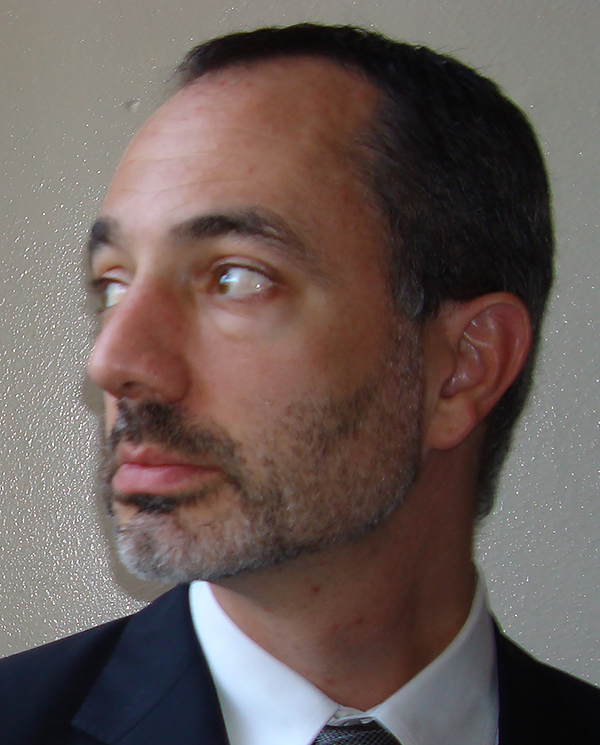
Mike Kelly is the Head of the Archives & Special Collections at Amherst College, where he oversees the school’s collection of more than 80,000 rare books along with a host …
Advance Reading List
Required Reading
Crossman, Lisa, Erdrich, Heid. Boundless: Native American Abundance in Art and Literature. Amherst College Press, 2025
Durate, Marisa. Belarde-Lewis, Miranda. “Imagining: Creating spaces for Indigenous ontologies.” Cataloging & Classification Quarterly, vol. 53, issue 5-6, July 2015, pp. 677-702. Access here.
First Archivist Circle. Protocols for Native American Archival Materials, Northern Arizona University, 2007.
Hutchinson, Elizabeth. “From Pantheon to Indian Gallery: Art and Sovereignty on the Early Nineteenth-Century Cultural Frontier.” Journal of American Studies. May 2013, Vol. 47 Issue 2, p313-2337. 25p.
Indian Arts Research Center. Guidelines for Collaboration. Facilitated by Landis Smith, Cynthia Chavez Lamar, and Brian Vallo. Santa Fe, NM: School for Advanced Research. 2019.
The Indigenous Archives Collective, Eds. The Indigenous Right of Reply to Archives: Working towards Indigenous Sovereignty, Healing, and Justice in Archival Practice. Routledge, 2025.
• Watch “A Difficult Story: Understanding Indian Boarding Schools in Michigan” This panel includes Eric Hemenway (Odawa), a regular visitor to Amherst and a thought partner in our work.
Littletree, Sandra, et al. “Information as a Relation: Defining Indigenous Information Literacy.” Journal of Information Literacy, vol. 17, no. 2, Dec. 2023, pp. 4–23. Open Access.
Littletree, Sandra; Belarde-Lewis, Miranda; and Duarte, Marisa. “Centering Relationality: A Conceptual Model to Advance Indigenous Knowledge Organization Practices” IN KnowledgeOrganization, 2020, volume 47, issue 5, pages 410-426
- Read along with Robert Darnton’s “What is the History of Books?” (Daedalus, vol. 111, no. 3, July 1982, pp. 65–83.) and think about how the two models might connect. Available through JSTOR.
- Also read McKee, Stuart. “How Print Culture Came to Be Indigenous.” Visible Language44, no. 2 (May 2010): 161–86. Open Access. A useful critique of the colonial bias in major book historical works.
Loyer, Jessie. “Collections Are Our Relatives: Disrupting the Singular, White Man’s Joy That Shaped Collections.” IN Meagan Browndorf, Erin Pappas, and Anna Arays, eds. The Collector and the Collected: Decolonizing Area Studies Librarianship. Sacramento: Library Juice Press, 2021.
McCracken, Krista, Hogan-Stacey, Skylee-Storm. “Recognizing Colonial Frameworks”. Decolonial Archival Futures. American Library Association, Neal-Schuman, 2023.
Miron, Rose. “New Narratives for Public Audiences”. Indigenous Archival Activism : Mohican Interventions in Public History and Memory. University of Minnesota Press, 2024.
National Native American Boarding School Healing Coalition.
Optional viewing: Coming to Light (2002) a documentary about Edward Curtis and his photographic project The North American Indian (1907-1930), a major source for popular images of Native people.
O’Brien, Jean M., and JSTOR eBooks. Firsting and Lasting : Writing Indians out of Existence in New England. University of Minnesota Press, 2010. Available through JSTOR.
- Read “Introduction: Indians Can Never Be Modern” and “Chapter 1 Firsting: Local Texts Claim Indian Places as Their Own”
National Native American Boarding School Healing Coalition. “Intro to Boarding School History.” US Indian Boarding School History. 2026. https://boardingschoolhealing.org/us-indian-boarding-school-history/
- Read/watch “Introduction to Native Boarding Schools”
- Watch “A Difficult Story: Understanding Indian Boarding Schools in Michigan” This panel includes Eric Hemenway (Odawa), a regular visitor to Amherst and a thought partner in our work.
- Carlisle Indian School Research Center. One of the most famous boarding schools in the country is now home to a remarkable project to digitized publications and archival records related to the school. What can you learn about the Printing Department and other training programs at Carlisle?
Wilson, Shawn. Research Is Ceremony: Indigenous Research Methods. Halifax and Winnipeg: Fernwood Publishing, 2008.
Course History
-
2026-
Brandon Castle & Michael Kelly co-teach this course online.