
Course Description
The identification of primarily European illustration processes and techniques, including (but not only) woodcut and wood-engraving, etching, line engraving, stipple, aquatint, mezzotint, lithography, steel engraving, collotype, gravure and aquatint photogravure, and process line and halftone black-and-white and three-color relief printing.
Almost the sole medium of instruction in this lecture course will be actual examples of original prints drawn from the extensive RBS collections. Most of these examples have been divided into individual packets all from the same (or a very similar) source, with one example for each student. Students will study the packets under close supervision, using 8X loupes and 30X microscopes (both provided), as necessary.
The course will include laboratory sessions in which students will make and proof a relief cut, an etching, and a drypoint. No artistic talent is assumed or expected.
The course, which is aimed at students who have had little previous instruction or experience in identifying illustration processes, is not best suited for those who are interested primarily in a single illustration process or chronological period, or who have significant experience in making intaglio and relief prints. Students are required to upload a copy of their most recent CV along with their personal statement.
Faculty
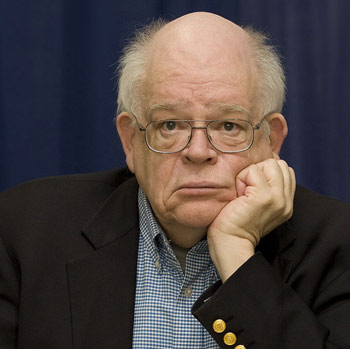
Terry Belanger
In September 2009, Terry Belanger retired as Founding Director of Rare Book School and as University Professor and Honorary Curator of Special Collections at the University of Virginia. He is …
Advance Reading List
Preliminary Advices
Before coming to class, please read (and, preferably, reread) all of:
Gascoigne, Bamber. How to Identify Prints. Second edition. London and New York: Thames and Hudson, 2004.
Gascoigne is both comprehensive and excellent. Check viaLibri or a similar Internet bookfinder to get the lowest online price. Many museum bookshops carry copies of the book, and in any event it should be relatively easy to get via interlibrary loan. There are plenty of copies of Gascoigne available in class, but you may wish to bring a copy with you to your session, so that you can review various sections of the book outside of class, between sessions or overnight.
I’ll be referring constantly to Gascoigne in class, and you will get a lot less out of this course if you have failed to look seriously at the book before coming to RBS.
There is always a waiting list for this course (and usually a long one). If you find that you do not have time to read Gascoigne before coming to RBS, please withdraw from the course or postpone attending until another time in order to make way for someone who is able to complete the advance reading.
You may also want to take a good look at an excellent general history of prints and printmaking:
Hults, Linda C. The Print in the Western World: An Introductory History. Madison, WI: University of Wisconsin Press, 1996. Hults’ admirable book provides a starting point from which to acquire a broad overview both of separately published prints and of prints in books.
Course Evaluations
Course History
-
2005–
Terry Belanger teaches this course as “Book Illustration Processes to 1900.”
-
2001–2004
Terry Belanger teaches this course as “Book Illustration Processes to 1890.”
-
1995–2000
Terry Belanger teaches this course as “Book Illustration to 1890.”
-
1991–1994
Terry Belanger teaches this course as “Book Illustration to the Year 1880.”
-
1990
Terry Belanger teaches this course as “Book Illustration to the Year 1900: Techniques in Context.”
-
1983–1987
Terry Belanger and Joan Friedman co-teach this course as “Book Illustration to 1860: Techniques in Context.”