
Course Description
There have been tremendous advances in science as it relates to the history of the book. This course will introduce the major technologies currently available to most librarians. During each session, Hark will present the scientific background necessary to make sense of the technology, and will offer an example of that technology as it has been applied to book history. Most of the examples will come from Hark’s own work, either currently taking place or projects that have been completed. The goal is to foster a community of librarians who are interested in promoting science to further our understanding of the history of the book. On several days there will be virtual demonstrations of the analytical techniques discussed in the course that will take place in the laboratory.
Class size is limited to 12 students.
Topics
Monday
Birth of authentication of historical materials and use of chemical reagents to reveal palimpsests—moving from a primitive, destructive, and not terribly specific approach to more specific, less destructive approaches. Radiocarbon dating
Tuesday
Multispectral imaging (MSI)
Wednesday
Elemental spectrography—X-ray fluorescence spectroscopy (XRF), hand-held, and scanning instruments
Thursday
Privacy and DNA testing for long-dead readers and peptide mass fingerprinting (PMF) for identification of the animal source of parchment
Friday
Molecular analysis—Raman and infrared spectroscopy (FTIR)
Faculty
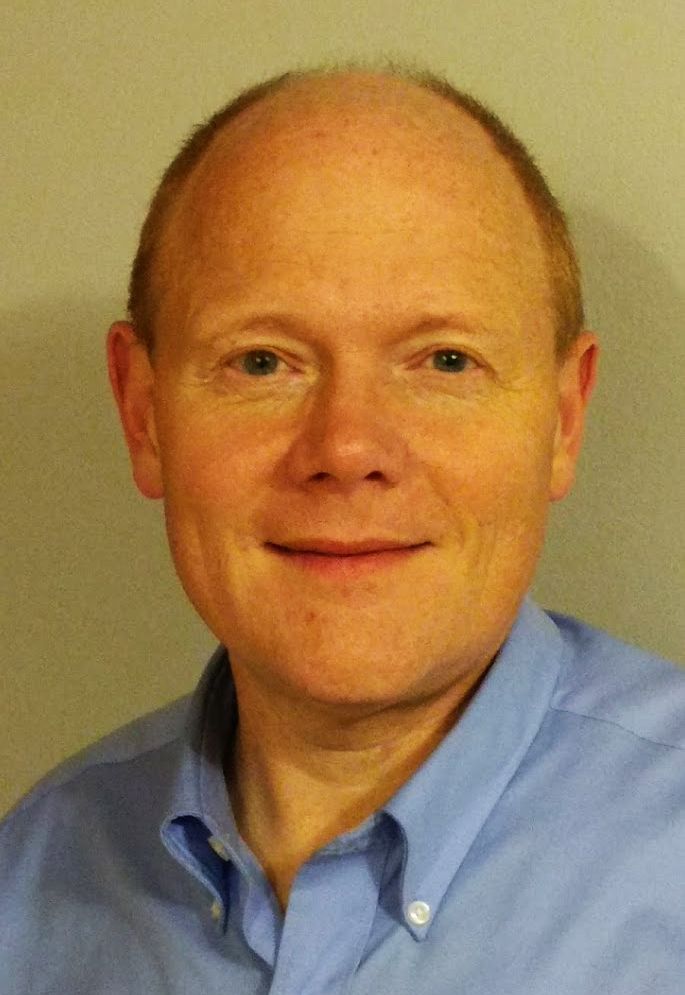
Richard Hark
Dr. Richard Hark is a conservation scientist at Yale’s Institute for the Preservation of Cultural Heritage (IPCH), where he works principally with the collections of the Yale Center for British …
Advance Reading List
Preliminary Advices
Most of the readings will be made available to admitted students in the Dropbox folder for this class, or are readily available online. It is ideal to read everything and then review before class. For the non-scientist for whom this course is geared, many of the readings will be difficult because of the terminology. Students are encouraged to please read what they can; Richard Hark especially will be able to illuminate any unclear scientific concepts. Ray Clemens can help with any book terms that might be difficult.
Recommended Readings
Taylor, Paul. Condition: The Ageing of Art. London: Paul Holberton Publishing, 2015. [This is a great book, and, although it largely deals with painting, there is much here for those working on books.]
Craddock, Paul T., ed. Scientific Investigation of Copies, Fakes and Forgeries. Amsterdam; Boston: Elsevier / Butterworth-Heinemann, 2009. [Also, on many different objects; good reference work. We’ll be reading at least two chapters from his book for class.]
Clemens, Raymond, and Timothy Graham. Introduction to Manuscript Studies. Ithaca: Cornell University Press, 2007. [If you haven’t had a book history class, this book, although showing its age, like its co-author, is still a useful reference work for how medieval manuscripts were made (see chapters 1-4).]
Brown, Michelle, Elizabeth C. Teviotdale, and Nancy Turner. Understanding Illuminated Manuscripts: A Guide to Technical Terms. Los Angeles: The J. Paul Getty Museum, 2018. [A useful reference for book terms.]
Reading to Complete Prior to the Course
“Sources, Motives, Approaches and Disclosures,” in Craddock, Paul T. Scientific Investigation of Copies, Fakes and Forgeries. Amsterdam; Boston: Elsevier / Butterworth-Heinemann, 2009: 1-21.
Easton, Roger L., and William Noel. “Infinite Possibilities: Ten Years of Study of the Archimedes Palimpsest.” Proceedings of the American Philosophical Society 154, no. 1 (2010): 50-76.
France, Fenella G., Doug Emery, and Michael B. Toth. “The Convergence of Information Technology, Data, and Management in a Library Imaging Program.” The Library Quarterly: Information, Community, Policy 80, no. 1 (2010): 33-59.
As much of Taylor, Paul. Condition: The Ageing of Art. London: Paul Holberton Publishing, 2015 as you can, but at least the Introduction, “1. Terms and Techniques,” and “6. Cleaning.”
Urbanus, Jason, Malin Grunberg Banyasz, Eric A. Powell, Samir S. Patel, Marco Merola, Jarrett A. Lobell, Zach Zorich, Daniel Weiss, and Hyungeun Kim. “From the Trenches.” Archaeology 69, no. 1 (2016): 9-10, 12, 14, 16.
Readings for Each Course Day
Monday
Albrecht, Felix. “Between Boon and Bane. The Use of Chemical Reagents in Palimpsest Research in the Nineteenth Century.” Care and Conservation of Manuscripts. Proceedings of the Seventh International Seminar Held at the Royal Library, Copenhagen 18th-19th April 2002 13 (2012): 147-65.
Tuesday
Chapter 5: “Physical Dating Techniques I: Radiocarbon Dating,” in Craddock, Paul T., ed. Scientific Investigation of Copies, Fakes and Forgeries. Amsterdam; Boston: Elsevier / Butterworth-Heinemann, 2009: 87-109.
Wednesday
Burgio, Lucia, Robin J. H. Clark, and Richard R. Hark. Raman Microscopy And X-ray Fluorescence Analysis of Pigments on Medieval and Renaissance Italian Manuscript Cuttings. Proceedings of the National Academy of Sciences of the United States of America 107 (2010): 5726-31.
In addition, please read Section 2.1 of Handheld XRF in Cultural Heritage: A Practical Workbook for Conservators.
Thursday
Burgio, Lucia, Robin J. H. Clark, and Richard R. Hark. “Spectroscopic Investigation of Modern Pigments on Purportedly Medieval Miniatures by the ‘Spanish Forger’.” Journal of Raman Spectroscopy 40, no. 12 (2009): 2031-36.
Fiddyment, Sarah, Matthew D. Teasdale, and Jiří Vnouček. “So, You Want to Do Biocodicology? A Field Guide to the Biological Analysis of Parchment.” Heritage Science 7 (2019): https://doi.org/10.1186/s40494-019-0278-6.
Friday
Easton, Roger L., and William Noel. “Infinite Possibilities: Ten Years of Study of the Archimedes Palimpsest.” Proceedings of the American Philosophical Society 154, no. 1 (2010): 50-76.
Urbanus, Jason, Malin Grunberg Banyasz, Eric A. Powell, Samir S. Patel, Marco Merola, Jarrett A. Lobell, Zach Zorich, Daniel Weiss, and Hyungeun Kim. “From the Trenches.” Archaeology 69, no. 1 (2016): 9-10, 12, 14, 16.
France, Fenella G., Doug Emery, and Michael B. Toth. “The Convergence of Information Technology, Data, and Management in a Library Imaging Program.” The Library Quarterly: Information, Community, Policy 80, no. 1 (2010): 33-59.
Course Evaluations
Course History
-
2023
Richard Hark teaches this course in person at Yale University.
-
2021–2022
Raymond Clemens and Richard Hark teach this course online (22 hours).