
Course Description
Assisted by Jessica Grzegorski (7–12 June) & Amy Tims (5–10 July).
“Every single day was as useful and relevant as the last. I’m walking away not only a better, ‘sleeker’ cataloger, but an inspired one as well!” — 2017 student
Emphasis will be on books of the hand-press era, with some consideration of nineteenth- and twentieth-century books in special collections. Topics include:
- application of codes and standards, especially DCRM(B)
- transcription, collation, and physical description
- concepts of edition, impression, issue, state
- genre/form terms, relationship designators, other special files
- copy-specific description
- cataloging policy in institutional contexts
This course is restricted to working catalogers experienced in AACR2/RDA and MARC 21, and general cataloging principles and practices. No prior knowledge of early books is necessary. The goal of the course is to provide instruction and practice in each of the primary elements of the rare book catalog record, so that students will be equipped to catalog their institution’s rare books and special collections materials to national standards. Please note that this course covers printed monographs only—not serials, manuscripts, maps, music, graphics, or scrapbooks.
Special note on RDA: Instruction in this course will be on DCRM(B)—both classic (based on AACR2, as published) and RDA-compliant (as amended by the PCC Bibliographic Standard Record). Please also note that, although Descriptive Cataloging of Rare Materials (RDA Edition) has been published, for the time being this course will continue to use DCRM(B) as the standard, until the Library of Congress and the Program for Cooperative Cataloging (PCC) have fully implemented the Official RDA toolkit.
Admission criteria include:
- sound knowledge of standard cataloging principles and practices, demonstrated by the bibliographic sample records
- practical experience with AACR2 or RDA records in the MARC format, demonstrated by the sample records and detailed in the personal statement
- relevance of the course to the applicant’s current or immediately forthcoming position and duties, as articulated in the personal statement. Include a brief description of the types, languages, and date range of materials that the applicant expects to catalog using DCRM(B)
To apply: In their personal statement, applicants should describe their experience producing AACR2/RDA MARC cataloging, and provide a brief description of the types, languages, and date range of materials they expect to catalog with DCRM(B). In addition, applicants are required to submit three typical bibliographic records of materials they are currently cataloging, preferably of modern books. The submissions may be original or copy cataloging; if the latter, please submit before-and-after versions. The three bibliographic records should be combined and submitted as a single PDF.
Format attached filenames following these guidelines:
- personal statement as <LastName>-<FirstInitial>-<course#> (e.g., Lion-R-L30)
- bibliographic records as <LastName>-<FirstInitial>-<course#>-records (e.g., Lion-R-L30-records).
Please note that this course will be offered twice in 2026 (7-12 June and 5-10 July). If you are applying for both, please submit a separate application for each session, and add a line at the beginning of your personal statement identifying your session preference, if any.
Faculty
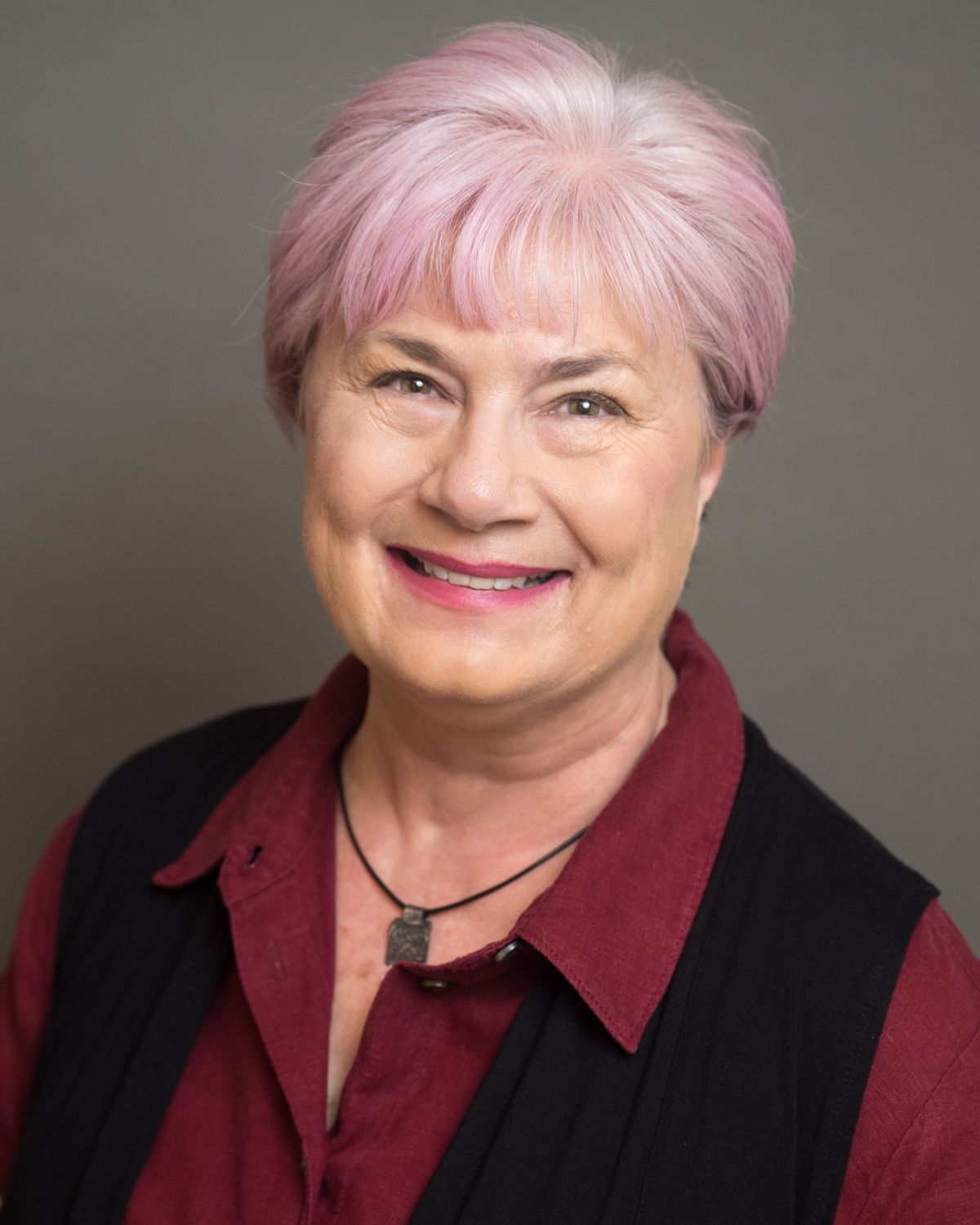
Deborah J. Leslie
Deborah J. Leslie is Senior Cataloger at the Folger Shakespeare Library, before which she held positions as Rare Book Cataloger at Yale University and the Library Company of Philadelphia. She …
Advance Reading List
Advance Advices
Please read the following and bring a copy with you to class:
- Descriptive Cataloging of Rare Materials (Books). Washington, D.C.: Library of Congress Cataloging Distribution Service, 3rd printing with corrections, 2011 (ISBN:970-0-8444-1162-0). DCRM(B) is out of print, and is freely available as a PDF. Note that the front cover is available as a separate PDF file. An electronic copy is also available through Cataloger’s Desktop (subscription service through the Library of Congress). Before coming to class, familiarize yourself with this manual, paying special attention to the preface and introductory sections, area 4, and Appendix G. Make sure you have this title and not Descriptive Cataloging of Rare Books, or the 1st or 2nd printings of DCRM(B). Please be sure to bring either a print or electronic version of DCRM(B) to class.
Special note: Although Descriptive Cataloging of Rare Books (RDA Edition), or DCRMR, has been released as a minimum viable product, in this instructor’s opinion it is not quite ready for use; for the time being, this course will continue to use DCRM(B) as the standard with reference to differences coming down the pike. - Belanger, Terry. “Descriptive Bibliography.” In Book Collecting: A Modern Guide, edited by Jean Peters, 97–115. New York & London: R.R. Bowker, 1977. Note: Students admitted to this course will receive further instructions for accessing this reading.
Please also bring with you to class: - Wifi-enabled laptop or tablet
- RBS will provide information on accessing UVA’s wifi network
- Most cataloging in class and during after-hours sessions will be performed in a shared Google drive
- Past students have reported more satisfaction with laptops over tablets because of larger screens
- Downloads and credentials for other subscription resources you like to use, such as:
- ClassWeb
- RDA toolkit
- Connexion
Read Before Coming to Class
- Gaskell, Philip. A New Introduction to Bibliography. Oxford: Clarendon Press, 1972, revised 1974, &c. 1995 paperback version currently in print (Winchester: St Paul’s Bibliographies & New Castle, DE: Oak Knoll Books). Familiarize yourself with the scope and contents of Gaskell before coming to class, read pages 313–320 (“Identification”), pages 328–335 (“Formula”), and as much else as you have time for. It will not be necessary to bring to class.
- Werner, Sarah. Studying Early Printed Books, 1450-1800: A Practical Guide. Hoboken, NJ: Wiley Blackwell, 2019, parts 1–3. It will not be necessary to bring to class.
The following posts from the Folger blog The Collation relating to cataloging are informative, in bite-size pieces: - Cataloging at the Folger: a primer
- Physical description in book cataloging
- Deciphering signature marks
- Signature statements in book cataloging
- Uncut, unopened, untrimmed, uh-oh
- Decoding library catalog citations
- V, u/v and library transcription rules
- Untangling Lady Day dating and the Julian calendar
- A briefing on brevigraphs, those strange shapes in early printed texts
- Time writing
- Woodcut, engraving, or what?
Watch Before Coming to Class
General
- The Art of Making a Book (hand press): https://www.youtube.com/watch?v=T17aCX2iBBY
- Making books (1947) (machine press): https://www.youtube.com/watch?v=hBztGX-2i1M
- The Anatomy of a Book: Format in the Hand-Press Period: https://www.youtube.com/watch?v=Efxddk09p0g&. Don’t worry if this seems difficult or overwhelming—we will have plenty of time to explore and practice recognizing format in class.
- The Making of a Renaissance Book (optional): https://www.youtube.com/watch?v=ZHprwjOJIn8
Papermaking
- Chancery Papermaking: https://www.youtube.com/watch?v=e-PmfdV_cZU
- Papermaking by Hand at Hayley Mill, England in 1976: https://www.youtube.com/watch?v=Xs3PfwOItt
- Handmade papermaking and handcasting type: https://www.youtube.com/watch?v=7MTb7Nt9jNY
Hand Printing and Printmaking
- Het drukproces in Museum Plantin-Moretus. A series of ten unnarrated videos put out by the Musea Stad Antwerpen. Watch in this order:
- Cutting the punch: https://youtu.be/ACShxt0n8uI?list=PL1DD2DC2ECAE66A19
- Creating the matrix: https://www.youtube.com/watch?v=ACShxt0n8uI&list=PL1DD2DC2ECAE66A19&index=3
- Casting type: https://youtu.be/q981Whe3xF4?list=PL1DD2DC2ECAE66A19
- Setting type: https://youtu.be/EWp_Rxaaq4M?list=PL1DD2DC2ECAE66A19
- Tying up the galley: https://youtu.be/F7JYaeTYyfM?list=PL1DD2DC2ECAE66A19
- Imposing: https://youtu.be/yfRr01NvDZY?list=PL1DD2DC2ECAE66A19
- Letterpress printing: https://youtu.be/IO6l74AWJSs?list=PL1DD2DC2ECAE66A19
- Engraving: https://youtu.be/JooTfqw3UIY?list=PL1DD2DC2ECAE66A19
- Etching: https://youtu.be/KYvLBBC4I-U?list=PL1DD2DC2ECAE66A19
- Rolling press printing: https://youtu.be/ebNfdjDkEnE?list=PL1DD2DC2ECAE66A19
- Woodcut Printing:. https://www.youtube.com/watch?v=mgCYovlFRNY
Binding
- Bookbinding 101. https://www.youtube.com/user/BookbindersChronicle/videos. A series of nine videos on hand bookbinding. Watch the videos in reverse order as they appear on the page, starting with “Sewing with cloth tapes.”
Warm-Up Exercises
Students will be given two warm-up cataloging exercises to be completed prior to the start of class—so you’ll be ready to hit the ground running!
Course Evaluations
Course History
-
2025–
Deborah J. Leslie teaches this course, generally once or twice per year, assisted by Amy Tims & Jessica Grzegorski.
-
2022–2024
Deborah J. Leslie teaches this course, generally once or twice per year, assisted by Brenna Bychowski.
-
1998–2019
Deborah J. Leslie teaches this course, generally once or twice per year.
-
1995–1997
Eric Holzenberg teaches this course.
-
1993–1994
Suzy Taraba teaches this course.
-
1987–1991
Suzy Taraba and Stephen Young co-teach this course.
-
1983–1984
John Lancaster and Earl Taylor co-teach this course.