
Course Description
This course treats the scholarly, theoretical, institutional, and practical issues involved in the digitization of our various and shared cultural heritage—an activity we will consider at many levels of scale (from “boutique” editorial projects to efforts in mass digitization) and across many types of objects and collections (from literary and historical documents to scientific specimens, art objects, and material culture). It is not, however, a training program in specific tools, standards, or workflows. Instead, we will consider what is at stake, both locally and systemically, for large institutions and for individual scholars or librarians who create, deliver, and use digital surrogates. We will divide our attention between close examination of physical texts and objects from the UVA Library, RBS, and cultural heritage institutions in Washington, DC on the one hand, and broadly-accessible digital libraries, archives, and data collections on the other. Students will consider topics like markup and metadata, user experience, accessibility and universal design, visualization and analysis, interoperability and linked data, aesthetics and sensory perception, and digital stewardship both from a conceptual standpoint and with specific examples brought to bear. Our attention will also be directed toward larger pragmatic concerns, including: inclusive, community ownership and engagement; the creation of institutional partnerships; the role of digitization in times of conflict, war, and environmental stress; and the sustainability of digital projects. Students are asked to come with a specific digitization project or case study in mind, which they can use in workshops and design exercises throughout the week. Also central to the course will be visits and conversations with practicing curators, librarians, scholars, and digital stewards—drawing on people and projects connected with the University of Virginia (Book Traces, the Scholars’ Lab, NINES, UVA Library Digitization Services, and RBS) and with the Digital Library Federation and its partners and collaborators among library organizations and major cultural heritage institutions in Washington, DC. A one-day field trip to DC is planned, with transportation provided by RBS. We welcome participation by anyone who would like to explore the implications of cultural heritage digitization and the stewardship of “born-analog” information from an academic and institutional perspective. Our goals are to help course participants advance their own, specific projects; become better informed about the impact of digitization on inquiry across the disciplines; and explore the broader roles they and their institutions might play in mitigating the risks and maximizing the social and scholarly benefits of digitization. All readings for the course will be available online. Several exercises require that students be ready to describe, workshop, re-imagine, and present on a collection, library or museums interface, or scholarly digitization project with which they are familiar—preferably one in which they are currently or soon to be engaged. Prospective students should therefore offer brief descriptions of their proposed case studies when applying for the course. N.B., The tuition for this course is $1,495 owing to the expenses associated with the scheduled field trip.Faculty

Bethany Nowviskie
In July of 2019, Bethany Nowviskie will become Dean of Libraries and Professor of English at James Madison University. Meanwhile, she is a Distinguished Presidential Fellow at CLIR, where she …
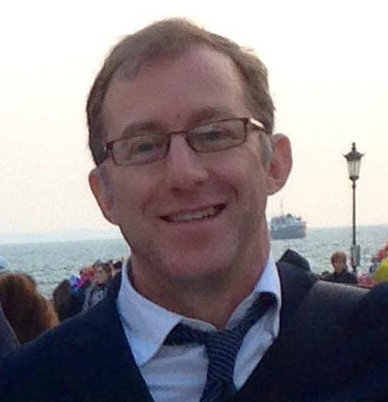
Andrew Stauffer
Andrew Stauffer is the Director of NINES (Networked Infrastructure for Nineteenth-century Electronic Studies), a hub for online discovery and scholarship, and a peer-reviewing organization for digital projects, and the founder …
Advance Reading List
Course Readings
Please review all readings, but feel free to skim or dig in as most interests you. We will gear class discussion toward the readings that capture the group’s imagination.
Berthoud, Heidy, et al. Zine Librarians Code of Ethics. November 2015.
Brylawski, Sam, et al. ARSC Guide to Audio Preservation. Council on Library and Information Resources. May 2015. Read Chapter 1, “Preserving Audio,” pp. 1–13.
Clough, G. Wayne. Best of Both Worlds: Museums, Libraries, and Archives in a Digital Age. Smithsonian Institution, 2013.
Dempsey, Lorcan et al. “Collection Directions: Some Reflections on the Future of Library Collections and Collecting.” portal: Libraries and the Academy 14:3 (2014). Read pp. 393–423.
Digital Library Federation. “Digitizing Special Formats” wiki.
Digital Library Federation and DLF Assessment Working Group. Surveying the Landscape: Use and Usability Assessment of Digital Libraries. December 2015.
Digital Public Library of America. “New Self-Guided Curriculum for Digitization.” (October 2015)
Furlough, Mike. “Sepulchres,” an updated and abbreviated version of “What We Talk About, When We Talk About Repositories.”Reference & User Services Quarterly 49:1 (September 2009): 18–23, prepared for Hacking the Academy.
Garrett, Jesse J. The Elements of User Experience: User-Centered Design for the Web. New Riders, 2002. Read Chapter 2, “Meet the Elements.”
Hancock, Charity, Kari Kraus, et al. “Bibliocircuitry and the Design of the Alien Everyday.” Textual Cultures 8:1 (2013): 72–100. Available for download via http://www.karikraus.com/?p=334.
Henry, Charles. “Culture Under Threat and Digital Libraries,” CLIR Re:Thinking Blog (October 2015).
Kirschenbaum, Michael and Sarah Werner. “Digital Scholarship and Digital Studies: The State of the Discipline.” Book History 17 (2014): 406–58.
Levine-Clark, Michael. “Access to Everything: Building the Future Academic Library Collection.” portal: Libraries and the Academy 14:3 (2014): 425–37.
Meyer, Robinson. “What Good is a Library Full of Dead Plants?” The Atlantic. 18 March 2016.
Radford, Gary P. et al. “Alternative libraries as discursive formations: reclaiming the voice of the deaccessioned book.” Journal of Documentation 68:2 (2012): 254–67.
Robertson, Tara. “Digitization: Just Because You Can, Doesn’t Mean You Should.” 15 April 2016.
Scholarly Communication Institute 9 Report: “New-Model Scholarly Communication: Road Map for Change.” University of Virginia. 2011.
McGann, Jerome. “On Creating a Usable Future.” Profession 2011: 182–95.
National Digital Stewardship Alliance. 2015 National Agenda for Digital Stewardship.
Sherratt, Tim. “A Map and Some Pins: open data and unlimited horizons.” 2013. Also see data-enabled version at http://wraggelabs.com/shed/presentations/digisam/#/text.
Theimer, Kate. “What Is the Meaning of Archives 2.0?” The American Archivist 74:1 (Spring/Summer 2011): 58–68.
Treharne, Elaine. “Fleshing out the Text: the Transcendent Manuscript in the Digital Age.” postmedieval: a journal of medieval cultural studies 4:4 (December 2013).
Wooten, Kelly. “Why We’re Not Digitizing Zines.” Duke University Libraries Digital Collections. 21 September 2009.
Course Evaluations
Course History
- 2016–
Bethany Nowviskie and Andrew Stauffer co-teach this course, as “Digitizing the Cultural Record.”
- 2011–2014
Bethany Nowviskie and Andrew Stauffer co-teach this course.
- 2010
Andrew Stauffer teaches this course for the first time, as “Digitizing the Historical Record.”