
Course Description
The course will concern itself with both literary and non-literary texts, of different genres and eras; with both published and unpublished materials; and with manuscript, printed, and electronic sources. As such, it will be of special benefit for anyone preparing an edition (the lot of most academics at some point in their careers), for scholars and other readers wishing to understand the nature and reliability of the texts they use, and for teachers choosing editions for the classroom. It will also help those who wish to understand the terminology and concepts of textual scholarship. Additionally, it will benefit academics who think about what happens to texts made up of words or other visual symbols, in fields as diverse as law, religion, literature, and music. Finally, it will aid librarians and booksellers, who superintend and make available the documents by which the texts of works are transmitted, in understanding better the uses of the objects with which they deal.
The week will be structured largely according to activities involved in preparing a critical edition: locating materials, comparing them with each other, determining their relationships, establishing a new text according to some specified standard, and developing a format for presenting the results. It will include practical exercises as well as an introduction to devices such as the Hinman Collator. The course will culminate with each student presenting a thorough critique of an edition, either one already published or one of the student’s own now in progress. Because the focus is historical, the course will not address directly questions such as how a publisher’s editor ought to adjust the text of an author. And because it centers on texts themselves, it also will not deal with how to annotate the contents of a book.
In describing their interest in the course and the ways in which the course would be pertinent to their own work, applicants should indicate any previous editing experience, any plans for future editorial projects, and their level of bibliographical understanding (which is a strong advantage but not a prerequisite for the class).
Faculty
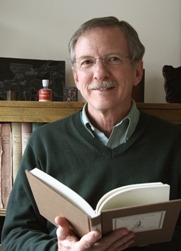
David Vander Meulen
David L. Vander Meulen is Professor of English at the University of Virginia, where he teaches eighteenth-century English literature, bibliography, and textual criticism and scholarly editing. Since 1991, he has …
Advance Reading List
Preliminary Advices
- The best way to prepare for the course will be to read a series of six essays by G. Thomas Tanselle that are collected in his book Textual Criticism since Greg: A Chronicle, 1950–2000. Charlottesville: Bibliographical Society of the University of Virginia, 2005. Tanselle here provides a clear and perceptive summary of the major contributions to textual scholarship in the half century following W. W. Greg’s groundbreaking article “A Rationale of Copy-Text” in 1949. In doing so, he also identifies the central questions that scholarly editors must address.
- The book can be obtained most easily through its distributor, Oak Knoll Books. Note that the book is different from an earlier one (published in 1987) bearing a similar title but containing only the first three articles. All six essays originally appeared in Studies in Bibliography and can be read in the printed volumes or online through JSTOR or the free website of the Bibliographical Society of the University of Virginia. They were published in the following volumes: 1975 (28: 167–229); 1981 (34: 23–65), 1986 (39: 1–46), 1991 (44: 83–143), 1996 (49: 1–60), and 2001 (54: 1–80).
- The course will follow the stages of the editorial process reflected in Part 1 (pp. 12–22) of Tanselle’s syllabus Introduction to Scholarly Editing (18th revision; Charlottesville: Book Arts Press, 2002). James Harner calls this syllabus, along with its companion one on bibliography, “The fullest lists of publications on bibliography and textual criticism” (Literary Research Guide, 6th ed.; New York: MLA, 2010), and students in the class will want to come to know it well. RBS makes it available without charge online [PDF].
- Part 1 of the Tanselle editing syllabus is entitled “Selected Introductory Readings on the Basic Steps in Preparing an Edition” and begins with even more fundamental subsections, “Introduction to Scholarly Editing” and “Basic Distinctions and Principles.” The essays listed here provide an orientation to the course, and students are encouraged to read as widely as possible in them in advance. Part 1 overall serves as an exit reading list for those who wish to explore further the ideas encountered in the short RBS week.
Course Evaluations
Course History
-
2012–
David Vander Meulen teaches this course.
-
1984–1987
G. Thomas Tanselle teaches a precursor course, “Scholarly Editing.”