
H-215v. Indigenous North American Cartographies
Caroline Wigginton
Course Length: 12 hours
Course Week: 6–10 July 2026 [This course will meet on the Wednesday, Thursday, and Friday (8, 9, 10 July) of the course week. See below for details.]
Format: online only
Fee: $900
This online RBS course explores Indigenous North American cartographies as a rich archive for critical bibliography. Focusing primarily on Indigenous American maps materially expressed through Western forms like the codex, this course introduces participants to the history of Indigenous North American cartographies from the earlier colonial periods through today. Maps are everywhere in Indigenous American books. There are the iconic endpaper maps of D’Arcy McNickle’s The Surrounded (1936) and Leslie Marmon Silko’s Almanac of the Dead (1991). The cover of Ella Deloria’s Speaking of Indians (1944) abstractly maps the tiyospaye, or Dakota camp circle, and similarly abstract representations of land, cosmos, and kin—drawn by the author’s father—are found throughout N. Scott Momaday’s The Way to Rainy Mountain (1969), which is itself a map as narrative. And these are just examples of maps and books that resemble Western forms. Métis scholar Dylan A. T. Miner argues that “contemporary artistic analysis” insufficiently accounts for the formal radicalism of Indigenous cartographies, which can meld land, text, image, and body. Taking a holistic approach, geographer Margaret Wickens Pearce (enrolled Citizen Band Potawatomi) rejects map-like in favor of map to describe the multiplicity of practices—such as chant or sand painting—that can co-constitute Indigenous cartographies.
The course will begin with an introduction to emblematic cartographic practices and maps. Next, the class will look at pre-1800 colonial books—e.g., travel narratives, printed and manuscript maps, deeds—to consider how these material texts are in relationship to Indigenous practices of mapmaking and placemaking. Then participants will turn to the nineteenth-century books to trace how Indigenous cartographies endured and evolved in the era of Industrial print and in response to the violences of settler colonial continental expansion. The class will then consider the presence of maps in Indigenous books from 1900 onward and how they illustrate ideas of ongoing sovereignty and presence. At conclusion, the class will include a workshop on mapping, inspired by the pedagogy of Margaret Wickens Pearce, and then a symposium, during which participants will present on one map or book.
Session Topics:
Session 1: Introduction to Indigenous American Cartographies
Session 2: Indigenous Cartographic Presences in Colonial Books to 1800
Session 3: Enduring and Evolving Indigenous Cartographies in the Nineteenth Century
Session 4: Illustrating Presence and Sovereignty in Modern and Contemporary Books
Session 5: Workshop on Mapping
Session 6: Symposium and Course Conclusions
Course Meeting Times
This course will meet online from 11:00 a.m.–4:00 p.m. ET from Wednesday, 8 July through Friday, 10 July. Each course day will follow the schedule below:
- 11 a.m.–1 p.m. ET — First Class Session
- 1–2 p.m. ET — Break
- 2–4 p.m. ET — Second Class Session
Course History
Faculty
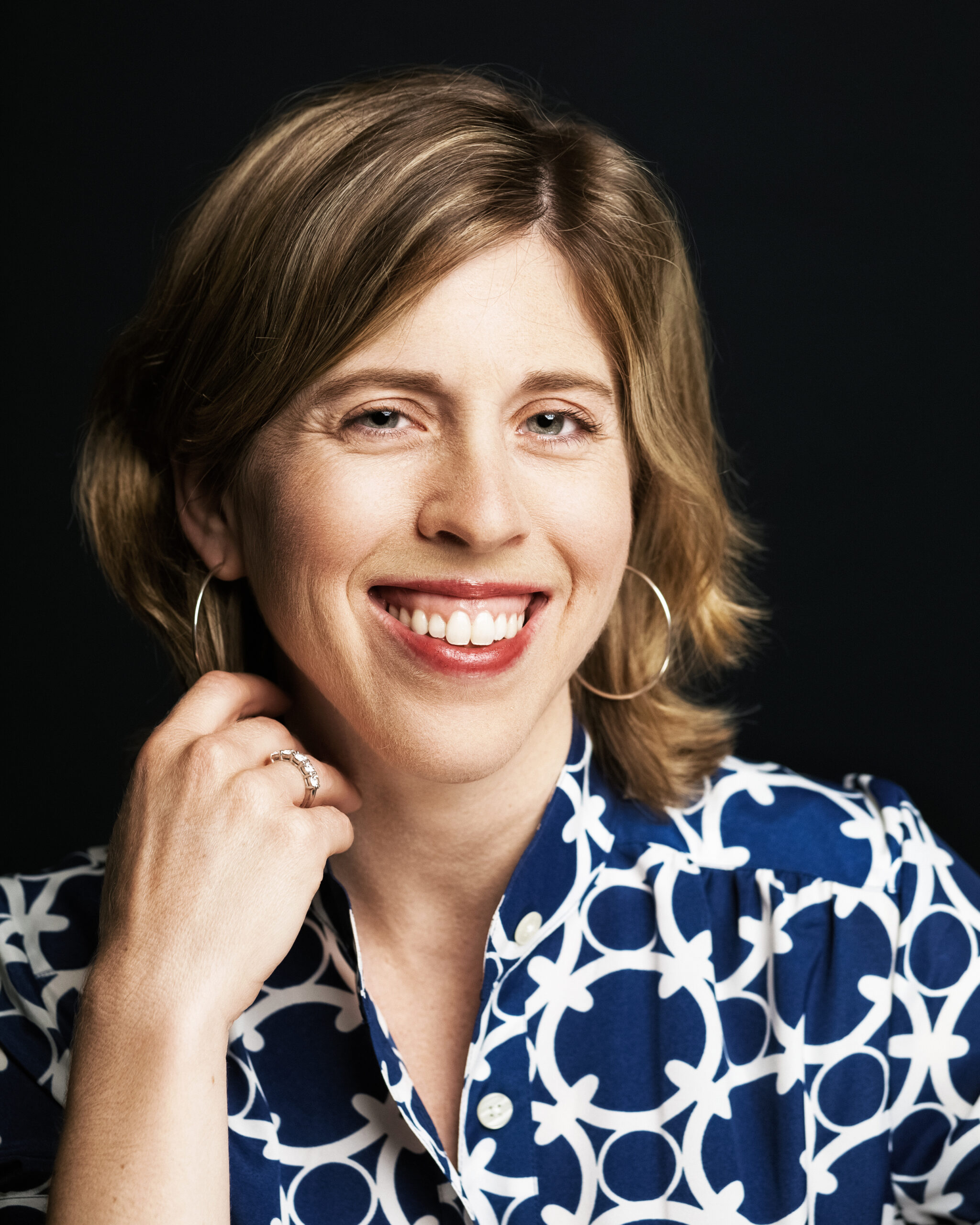
Caroline Wigginton
Caroline Wigginton is Chair and Professor of English at the University of Mississippi and Executive Coordinator of the Society of Early Americanists. She specializes in the study of earlier American literatures, Native American and Indigenous Studies, and critical bibliography and material cultures. She is the author most recently of Indigenuity: Native Craftwork and the Art of American Literatures (UNC, 2022), and her work has appeared in a variety of academic journals. Her first monograph, In the Neighborhood: Women’s Publication in Early America (Massachusetts, 2016), received the Early American Literature Book Prize in 2018. With Alyssa Mt. Pleasant and Kelly Wisecup, she co-edited an award-winning joint forum for the William and Mary Quarterly and Early American Literature on Materials and Methods in Native and Indigenous Studies. Originally from Ohio, she is a graduate of The Ohio State University, with a B.A. in English and a B.S. in Biochemistry. She received her M.A. and Ph.D. from the University of Texas at Austin.
Full Bio »