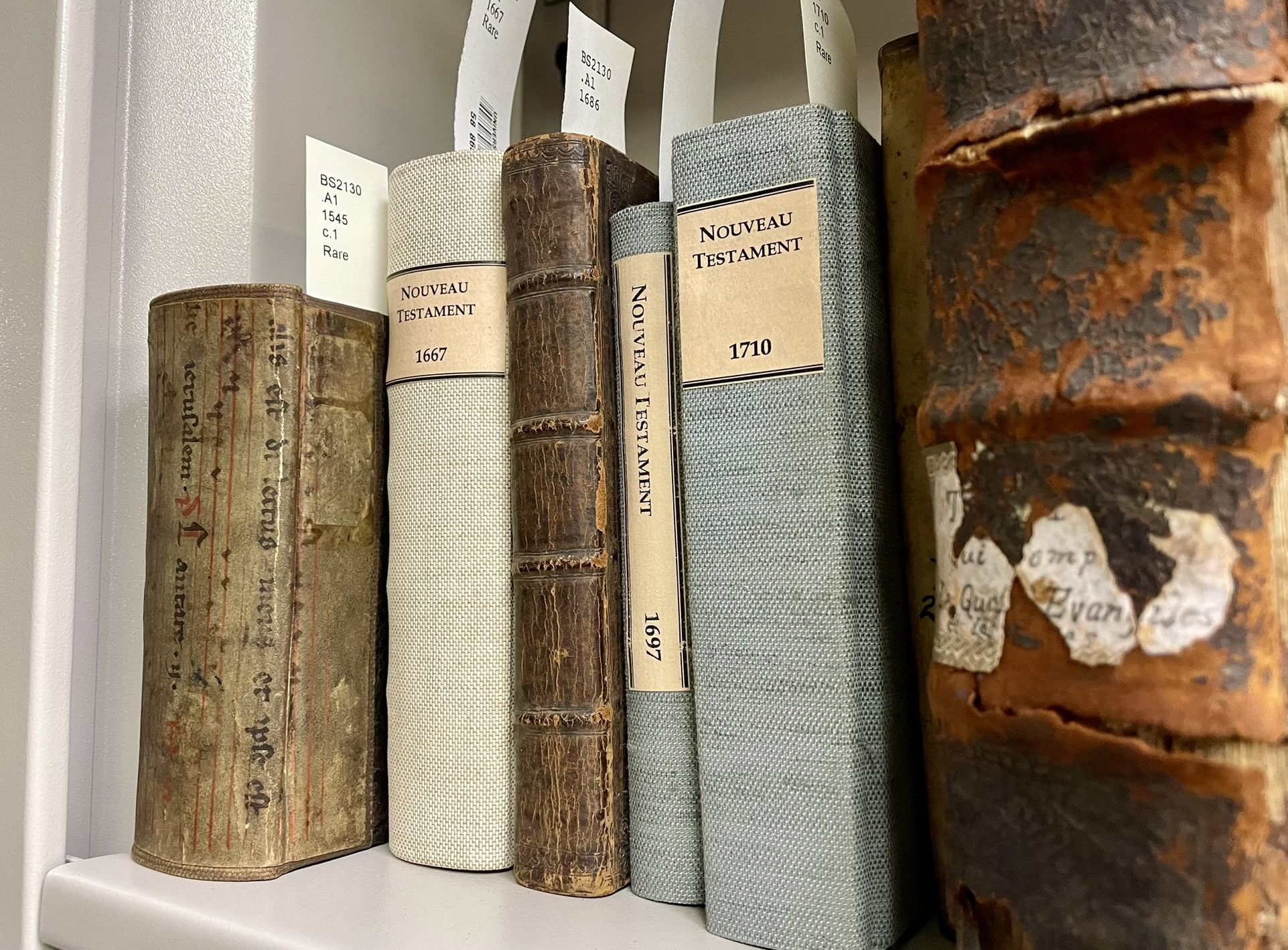
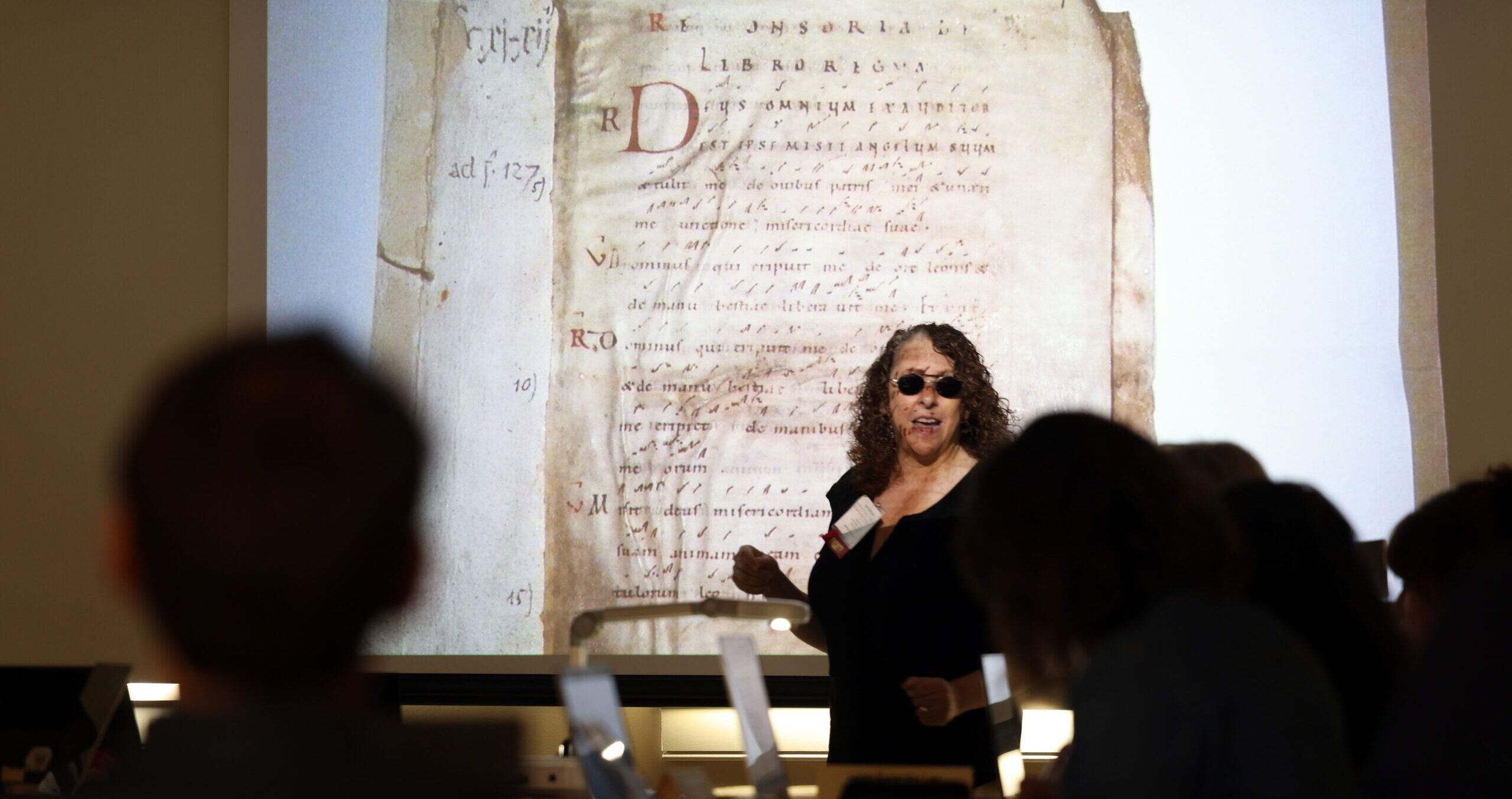
Medieval manuscript fragments can be particularly challenging to catalog: they are severed from their original codicological contexts, exist in various states of preservation, differ in size, and many times have been incorporated in situ as pastedowns or binding strengtheners within later books. Cataloging such items can be a time-consuming process, though with the rewarding outcome of piecing together missing parts of a puzzle. For Chicago librarians Megan Kelly and Rebecca Flore, Rare Book School has been integral to helping them do this work as they strive to make the medieval collections in their respective libraries more accessible to researchers.
In 2017, Chicago’s Newberry Library (an RBS partner institution) received funding to catalog some 8,000 religious items in its collections, including medieval manuscripts and fragments. Kelly, the Newberry’s Director of Collection Services, had previously taken Consuelo Dutschke’s 2012 RBS course M-10: Introduction to Paleography, 800–1500 and Erin C. Blake’s 2015 course I-10: The History of Printed Book Illustration in the West to help her gain the skills she needed to work with these items, but the manuscript fragments posed an additional challenge. “The fragments were not in our catalog at all,” says Kelly. Rather, these items were only listed—with varying degrees of accuracy—in one journal article from 1979.
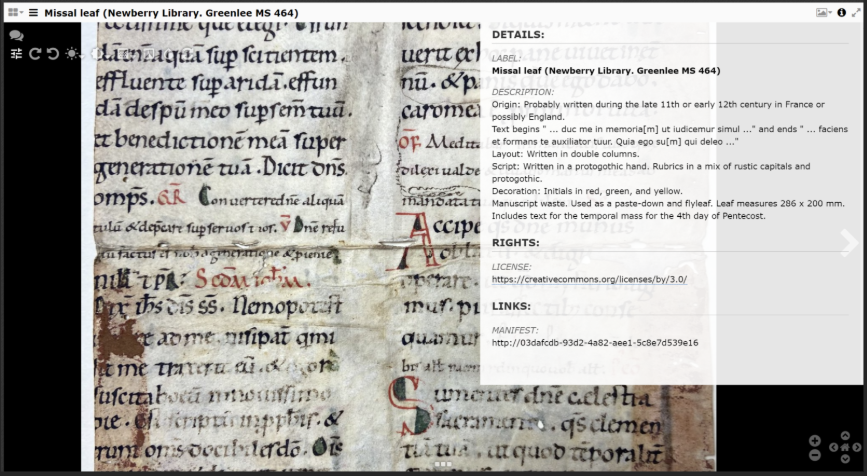
During the pandemic lockdowns of 2021, Kelly—whose background is in library science—was working from home, cataloging the Newberry’s medieval materials when she learned that RBS would be offering Lisa Fagin Davis’s online RBS course, M-100v: Fragmentology. “I just stopped,” Kelly recalls. “I was like, okay, I’m going to wait. I’m going to work on something else right now.” She enrolled in the course and found it immensely helpful for shaping her working process, especially when it came to interpreting and researching the chronology of a fragment. “I would take pictures [of the medieval fragments],” she says, “come home, research them, put the catalog records together, then I would go back into the library, do measurements, do the physical descriptions, and then they were done.”
Among the fragments in the Newberry’s collections, Kelly was able to identify several leaves from manuscripts broken up in the twentieth century by the notorious bookseller Otto Ege and to identify additional fragments by comparing them to ones in other libraries’ collections. “I was able to piece those together and put the shelf marks in the record to point others to it too,” she adds. The records she compiled are now linked to Digital Scriptorium, a consortium of American institutions dedicated to providing integrated digital access to information about manuscripts from global cultures held in their collections.
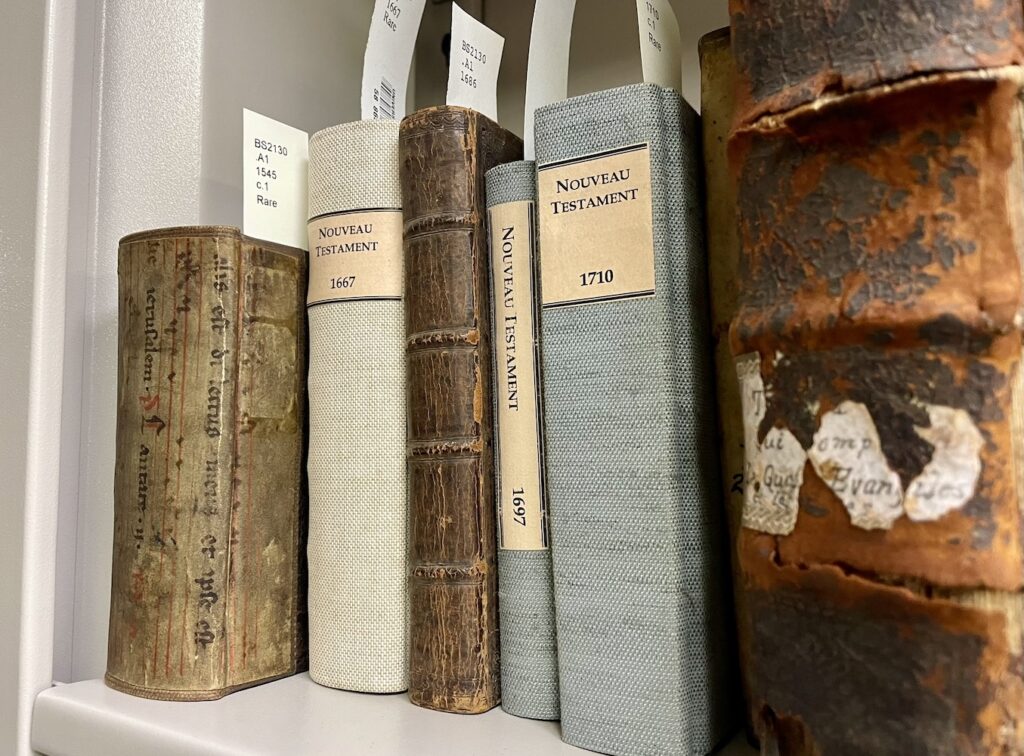
Rebecca Flore, who is Special Collections Metadata Librarian at the University of Chicago (another RBS partner institution), encountered similar challenges of discoverability with her library’s medieval materials. She recalls walking through the University’s special collections stacks when she was a graduate student. “I would see these snippets of manuscript material hanging out on the shelf, but short of some staff member taking the initiative to make sure that these are discoverable in the catalog, there’s no way to discover them.”
Flore’s former manager and RBS alumna Jennifer Dunlap (now Rare Materials Cataloguer at Brown University’s John Carter Brown Library)—who herself had first attended RBS with help from Megan Kelly at the Newberry—pointed Flore to RBS as the “gold standard of education” in rare books. In 2019, Flore enrolled in David R. Whitesell’s course G-20: Printed Books to 1800: Description & Analysis, which she describes as “just the most fun I’ve ever had in a class.” She later enrolled in H-25: Fifteenth-Century Books in Print and Manuscript with Paul Needham and Eric White at Princeton in 2022, and in G-65v: Forgeries, Facsimiles & Sophisticated Copies (online) with Nick Wilding in 2023.
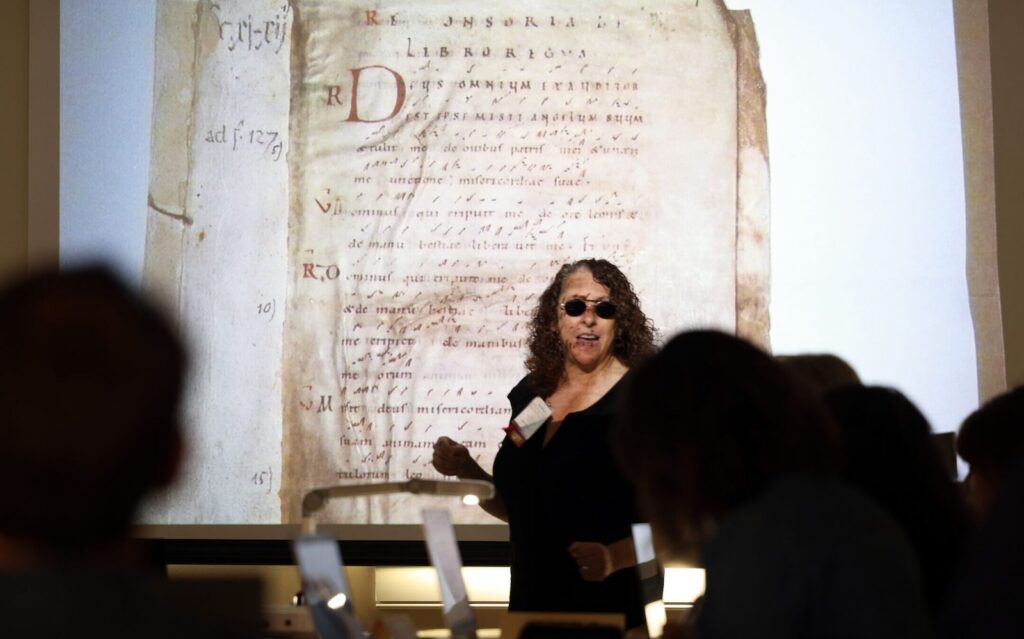
In her quest to catalog the University of Chicago’s medieval collections and make them accessible to users, Flore—whose research background is in music history and theory— turned in 2024 to Fagin Davis’s RBS course L-145: Medieval Manuscript Fragments: Cataloging & Discoverability. Flore used her new knowledge from the course to spearhead her library’s initiative to contribute metadata about its medieval manuscripts and in-situ fragments to the Digital Scriptorium catalog and the Fragmentarium laboratory for medieval manuscript fragments.
Flore points to what she learned not only from Fagin Davis, but also from conversations with her fellow RBS students about their own professional challenges and interests. “If I hadn’t taken Lisa’s class,” she says, “I wouldn’t have necessarily thought of Digital Scriptorium as an avenue for getting the descriptions out there for the in-situ fragments. It was really valuable, also, to build a network and see what other libraries are doing in this area.”
RBS courses about Indigenous book history in the Americas and about the history of censorship are running in Chicago from 9 to 14 August 2026. Learn more and apply today!