
Course Description
In the 1970s, librarians, cataloguers, and researchers confronted an issue that was barely conceivable to previous generations: a surplus of Black-authored books. Prior bibliographers had taken stock of a delimited set of authors from the eighteenth through the early twentieth centuries. The field shifted dramatically after World War II, however, when the number of authors and types of books increased to a dizzying degree. After a veritable revolution in Black print in the 1960s, bibliographers were challenged to identify every Black-authored book even in a single literary genre.
This weeklong, in-person seminar considers how the questions Black bibliography began to ask in the 1970s reverberate with contemporary literary scholarship and cultural theory. It begins with a survey of the history of Black bibliography and its practitioners, elucidating the early emphases on scarcity and recovery. The seminar then pivots to the revolution in Black print, taking up questions of access and ephemerality in literary production and bibliographical description. At this juncture, the seminar addresses how Black publications and their variants challenge traditional determinations of authority, impression, and edition. The difficulty in accounting for and describing Black-authored books coming out of the 1960s and 1970s becomes an opportunity for students to discuss why Black bibliography matters today.
The seminar is scheduled to take place in the Department of Special Collections at Princeton University Library. This location affords us access to the Library’s collection of Black-authored books, pamphlets, broadsides, and other materials. Lectures draw on these resources to illuminate Black bibliography in historical perspective and contemporary practice. Hands-on workshops allow students to engage with a variety of printed objects, from mimeographed productions to industrial books. While discussion focuses on the Black Arts movement and its legacies, the seminar attends to broader shifts in post-World War II publishing and literary culture. Between lectures, workshops, and discussions, students gain an understanding of how critical concepts such as temporality, performance, and speculation may be grounded in Black bibliographical analysis.
Outline of schedule
July 22
Focus: early Black bibliographies and their import to building collections
Objects: nineteenth- and early twentieth-century books, pamphlets, and broadsides
July 23
Focus: mid-twentieth-century literary culture and the temporality of reprints
Objects: books and reprints by Zora Neale Hurston, Ralph Ellison, and James Baldwin
July 24
Focus: the Black Arts movement and the issue of variation
Objects: materials associated with Broadside Press, Jihad Press, and Third World Press
July 25
Focus: the Black Aesthetic as a bibliographical strategy
Objects: books and reprints by Nikki Giovanni, ntozake shange, and Claudia Rankine
July 26
Focus: rethinking African American literary history through bibliography
Objects: books and reprints by Toni Morrison
Faculty
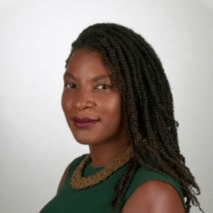
Jennifer Garcon
Jennifer Garcon, Ph.D., is the Librarian for Modern and Contemporary Special Collections at Princeton University, where she is responsible for the collection, curation, and care of twentieth- and twenty-first-century rare books, manuscripts, …
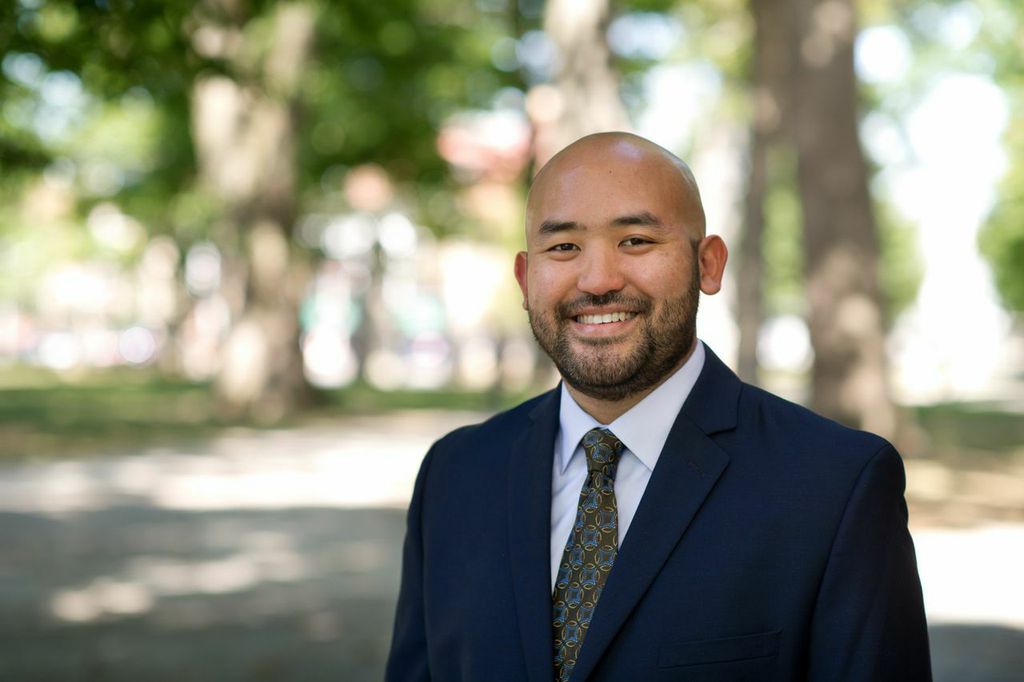
Kinohi Nishikawa
Kinohi Nishikawa is Associate Professor of English and African American Studies at Princeton University. He is the author of Street Players: Black Pulp Fiction and the Making of a Literary Underground (Chicago, …
Advance Reading List
Required Readings
Charles L. Blockson, “Black Giants in Bindings,” in Black Bibliophiles and Collectors: Preservers of Black History, ed. Elinor Des Verney Sinnette, W. Paul Coates, and Thomas C. Battle (Washington, D.C.: Howard University Press, 1990), 117-28.
**Percival Everett, Telephone. I Minneapolis, Minnesota: Graywolf Press, 2020.
Dorothy B. Porter, “Fifty Years of Collecting,” in Black Access: A Bibliography of Afro-American Bibliographies, comp. Richard Newman (Westport, CT: Greenwood, 1984), xvii-xxviii.
Arthur A. Schomburg, “The Negro Digs Up His Past,” Survey Graphic, March 1925, 670-72.
**Ntozake Shange, for colored girls who have considered suicide/ when the rainbow is enuf (date TBD), sample ISBN 9780684843261
Recommended Readings
Imamu Amiri Baraka (LeRoi Jones), “The Fire Must Be Permitted to Burn Full Up: Black ‘Aesthetic,’” and “Technology & Ethos: Vol. 2, Book of Life,” in Raise, Race, Rays, Raze: Essays since 1965 (New York: Random House, 1971), 117-23, 155-57.
Stephanie Leigh Batiste, “Performance,” in Keywords for African American Studies, ed. Erica R. Edwards, Roderick A. Ferguson, and Jeffrey O .G. Ogba. New York: New York University Press, 2018, 136-41.
Gerald Early. “The New Negro Era and the Great African American Transformation.” American Studies, vol. 49, no. 1/2, 2008, 9-19.
Teresa A. Goddu, “Slave Narrative As Material Text,” The Oxford Handbook of African American Slave Narrative, 2014, 149-64.
Teresa A. Goddu, “Fugitive Sight: African American Panoramas of Slavery and Freedom” in Selling Antislavery: Abolition and Mass Media in Antebellum America. Philadelphia: University of Pennsylvania Press, 2020, 175-217.
Frances Smith Foster, “Intimate Matters in This Place: The Underground Railroad of Literature,” Legacy 36.2 (2019): 245-48.
Alain Locke. “Legacy of the Ancestral Arts,” in The New Negro (New York: Touchstone, 1992), 266. Originally published by Albert & Charles Boni, Inc., 1925.
Meredith McGill, “Frances Ellen Watkins Harper and the Circuits of Abolitionist Poetry.” In Early African American Print Cultures, edited by Lara Langer Cohen and Jordan Stein, 53–74. Philadelphia: University of Pennsylvania Press, 2012.
Richard Powell, “The Aaron Douglas Effect” in Aaron Douglas: African American Modernist. edited by Douglas, Aaron, Susan Elizabeth Earle, and Renée Ater. New Haven: Yale University Press, 2007.
Howard Rambsy II, “Understanding the Production of Black Arts Texts” in The Black Arts Enterprise and the Production of African American Poetry (Ann Arbor: University of Michigan Press, 2011), 77-100.
Richard Wright, “The Man Who Lived Underground” in Cross-Section: A Collection of New American Writings, ed. Edwin Seaver. L. B. Fischer Publishing Corp, 1944.
Autumn Womack, Reprinting the Past/Re-Ordering Black Social Life, American Literary History, Volume 32, Issue 4, Winter 2020 ,755–80.
** Please bring personal copy of these items to session.
Course Evaluations
Course History
-
2023–
Jennifer Garcon and Kinohi Nishikawa co-teach this course in person at Princeton University.
-
2022
Kinohi Nishikawa teaches this course in person at Princeton University.
-
2021
Kinohi Nishikawa teaches this course online (6 hours).